16 Covered Patio Ideas, From a Simple Umbrella to a Real Roof
 Save
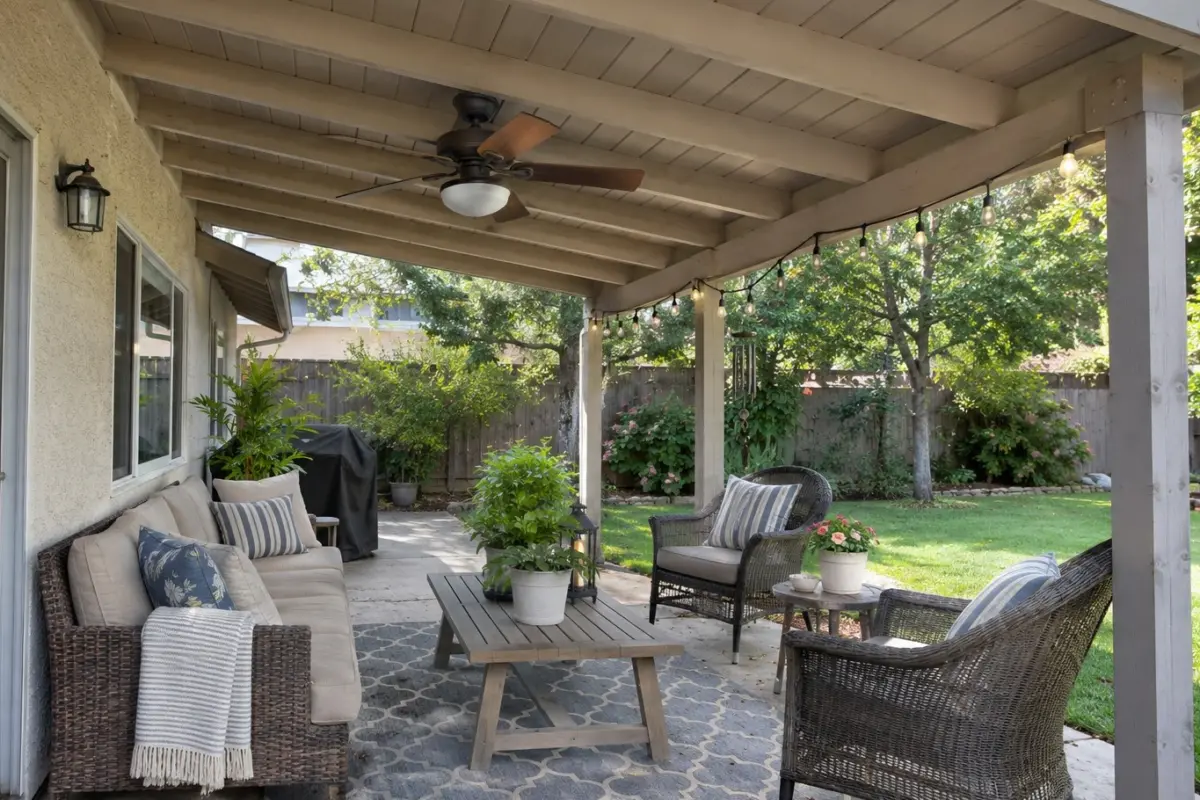
Good covered patio ideas start with one question: what are you hiding from, the afternoon sun, the rain or both? A shade sail and a solid roof solve very different problems, and they cost very different amounts. The ideas below go from the lightest cover to a real roof, then cover what makes the space usable underneath.
1. Track the Sun and the Rain Before Choosing a Cover
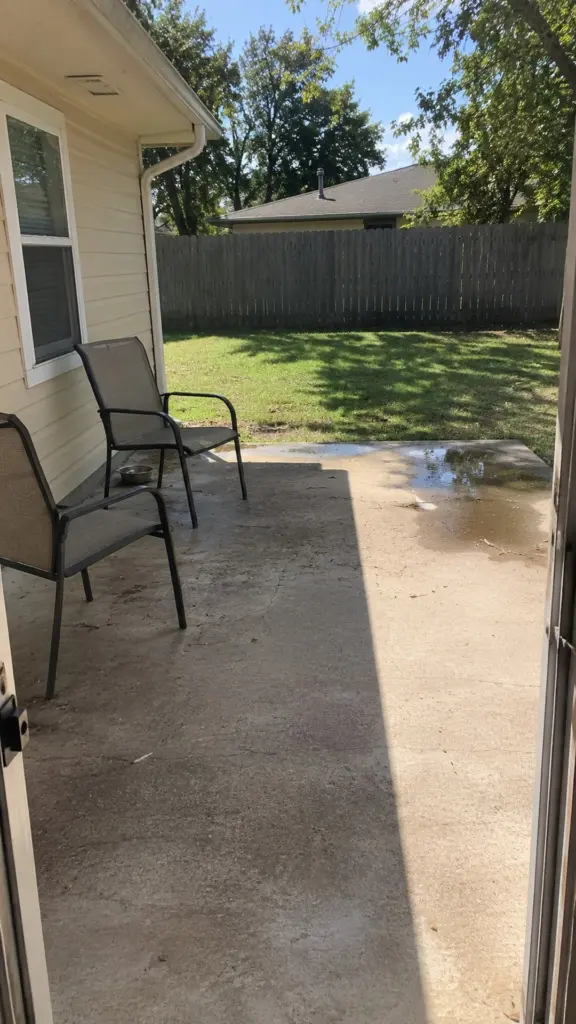
Spend one weekend watching the patio. Note where the shade falls at 10 a.m., 2 p.m. and 6 p.m., because the hot hours decide which side needs cover. After a rain, look for where water collects and which way the wind pushes it. A west-facing patio usually needs low evening shade from the side, not just a roof overhead. A patio you want to use in drizzle needs something waterproof, which rules out most fabric. Those notes point you to the right idea below, and they stop you from paying for a roof when an umbrella would do.
2. A Cantilever Umbrella That Follows the Shade
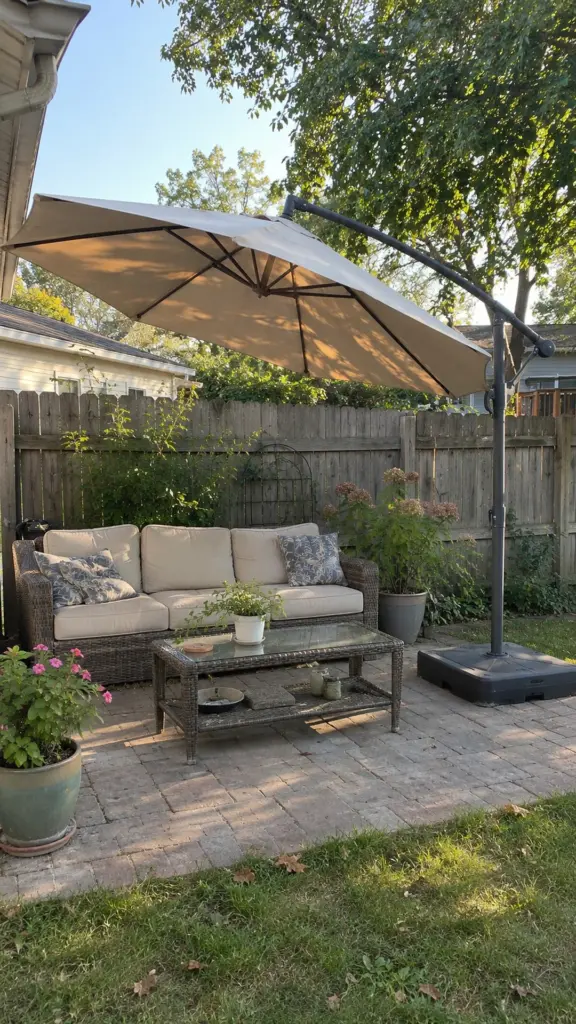
A cantilever, or offset, umbrella is the easiest covered patio idea and the only one you can move as the sun moves. The pole stands to the side, so the canopy hangs over a sofa or table without a pole in the way, and many tilt and rotate. Canopies often run from about 9 to 13 feet across. The base is the part people underestimate: it needs the weight the maker specifies, usually from heavy base plates or sandbags, and the umbrella should be closed when wind picks up and whenever you leave it unattended. It shades but does not keep you dry in a real downpour.
3. A Shade Sail Pitched So Rain Runs Off
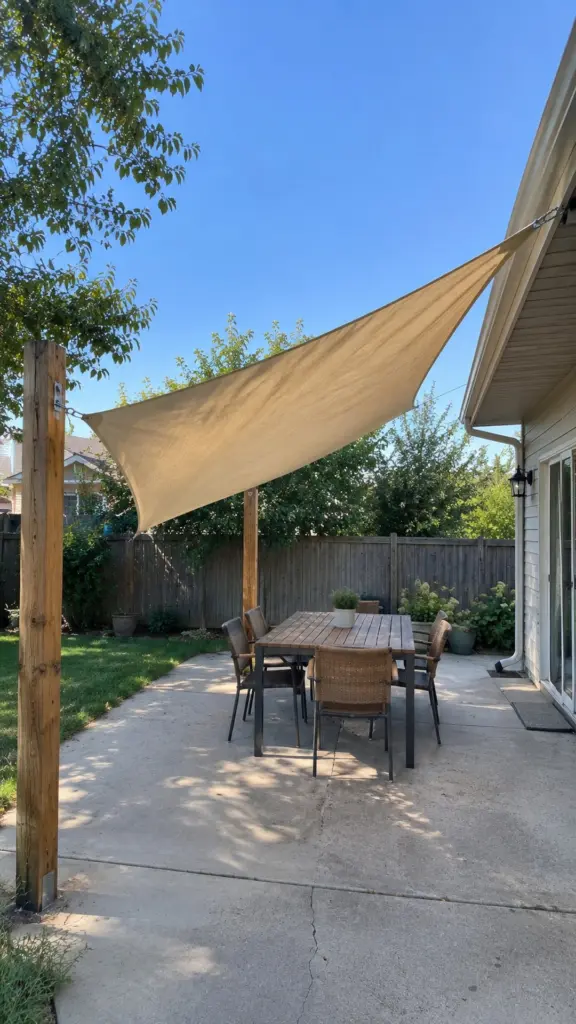
Shade sails cover a lot of patio for the money and look modern, but they only work as well as their anchor points. Each corner pulls hard, especially in wind, so sails are usually fixed to sturdy posts set in concrete, to a solid structure or to the house framing, not to gutters or fascia boards. On a four-corner sail, set the corners alternately high and low so the fabric twists; with proper tension and slope it looks better, stays tighter and lets rain run off instead of pooling. Most sail fabrics let some water through, so for rain you need a fabric sold as waterproof.
4. A Retractable Awning Over the Back Door
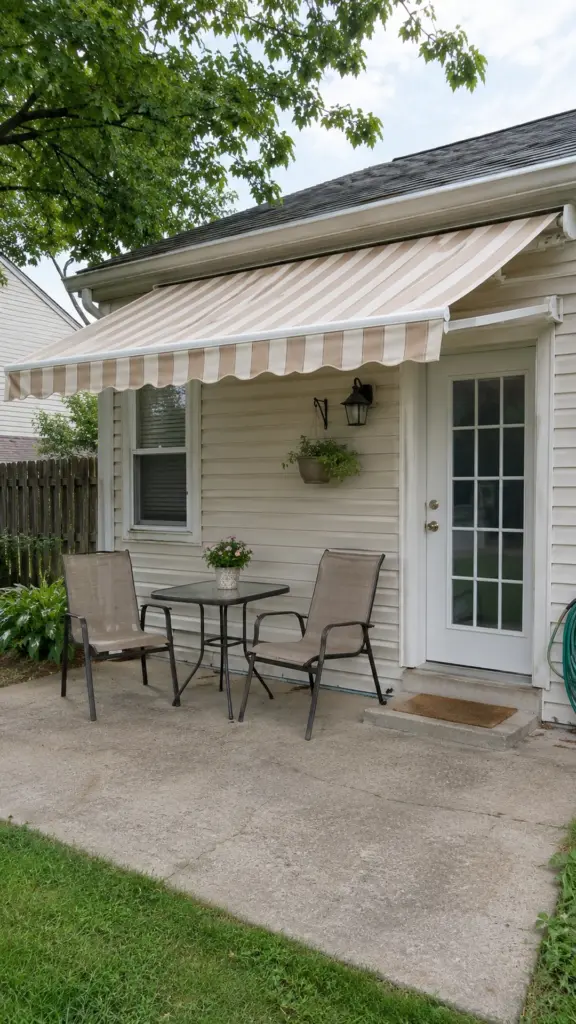
If the patio sits right outside the back door, a retractable awning gives instant shade where you step out, and rolls away when you want sun or winter light inside. It mounts to the house wall, so it needs solid framing behind the siding and, in many homes, a pro install. Manual crank models are simpler; motorized ones are easier to use every day and some add wind sensors. An awning is shade and light-rain cover, not a roof: most makers say to retract it in strong wind and heavy rain, because water can pool in the fabric and stretch it.
5. A Freestanding Pergola With a Slide-On Canopy
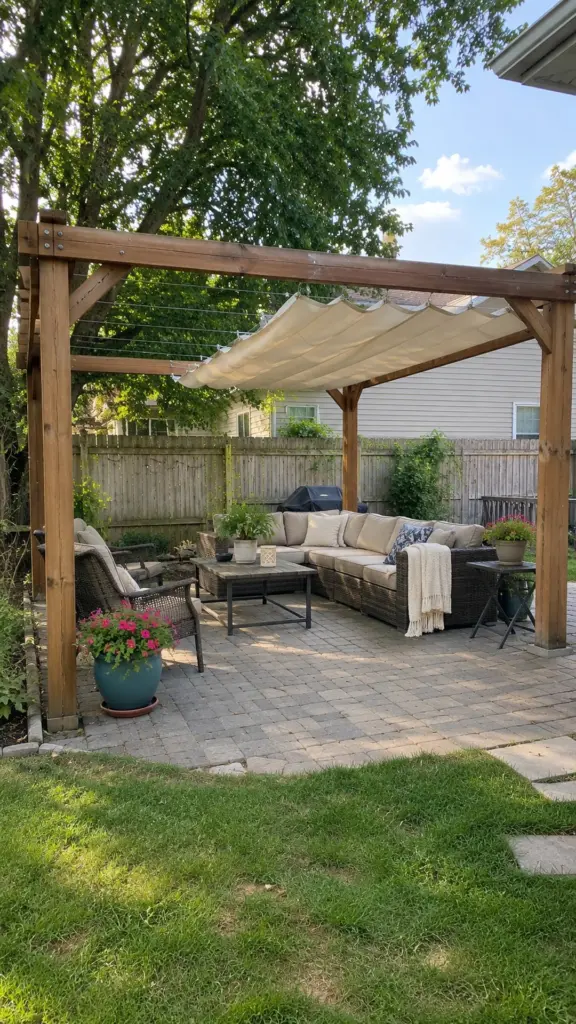
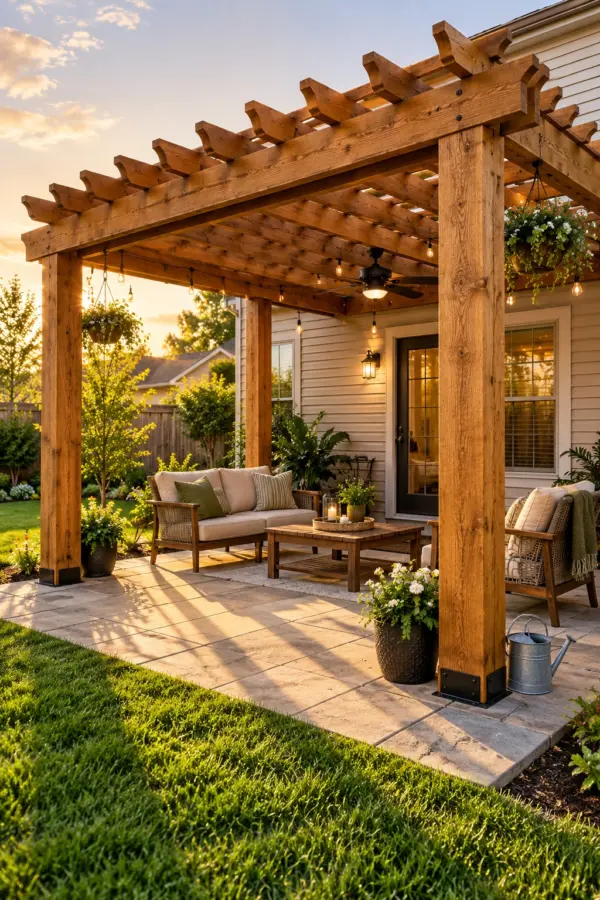
Most pergola patio ideas run into the same problem: a pergola on its own gives only partial shade, since the open rafters let sun through. Add a slide-on canopy, a fabric panel on wires or tracks above or below the rafters, and you can pull shade across at midday and push it back in the evening. Because the pergola stands on its own posts, it can sit in the middle of the yard, away from the house. Canopy kits are sold for many standard pergola sizes, and a custom one can be sewn for the rest. For the structure itself, see these freestanding pergola ideas, which cover sizes and footings.
6. Clear Polycarbonate Panels for Rain Cover That Keeps the Light
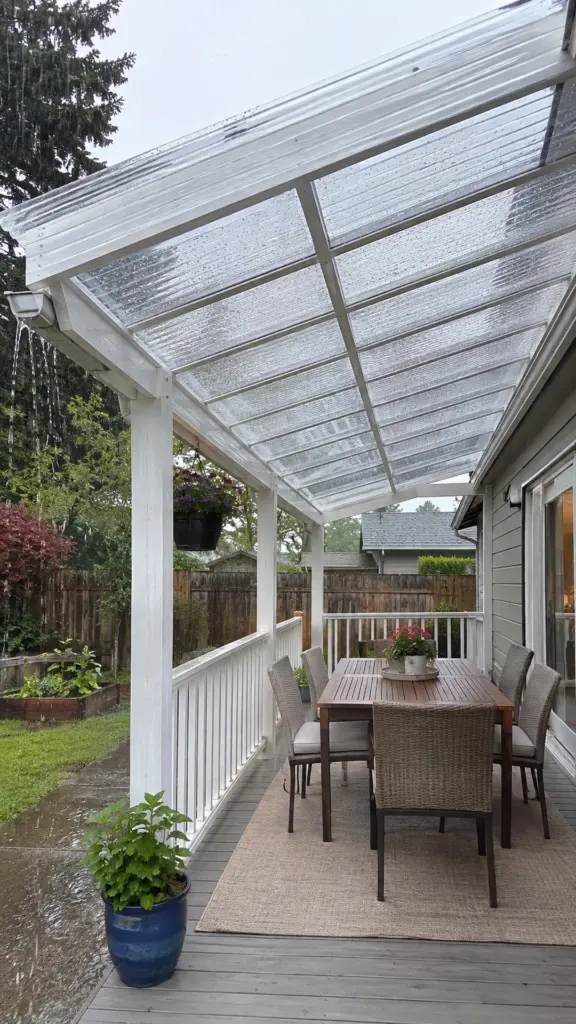
Right outside a window, a solid roof makes the room inside darker. Clear or tinted polycarbonate roof panels on a pergola like the one in idea 5, or on a patio frame, keep most of the daylight while shedding water. The roof must slope, so rain runs to one side; follow the panel maker's minimum pitch and screw spacing. Panels expand and contract with heat, so use the fastening system the panel maker specifies, which leaves room for that movement. Tinted panels cut glare and heat more than clear ones, which can feel hot on a sunny afternoon.
7. A Louvered Roof You Can Open and Close
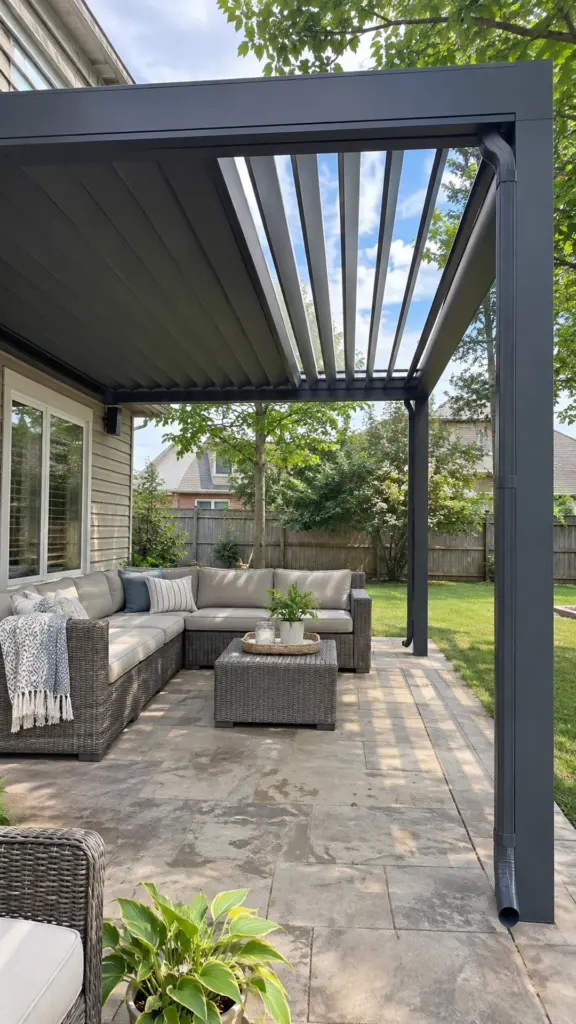
A louvered pergola has aluminum slats that rotate. Open, they let in sun and air; closed, they form a roof that sends most rain through built-in gutters and drains, though wind-driven rain can get through some systems. It is the most flexible cover here and usually the most expensive, so it suits a patio you use daily for most of the year. Many are motorized, and some close themselves when a rain sensor trips. Check the snow and wind ratings for your area before buying, and expect a permit and footings, since these are heavy, permanent structures.
8. A Solid Roof Cover Attached to the House
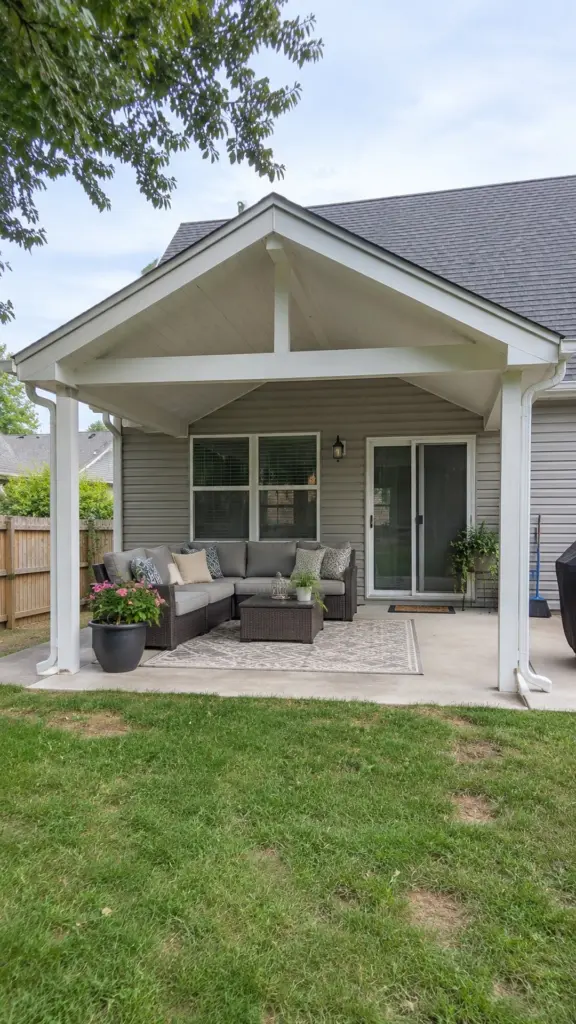
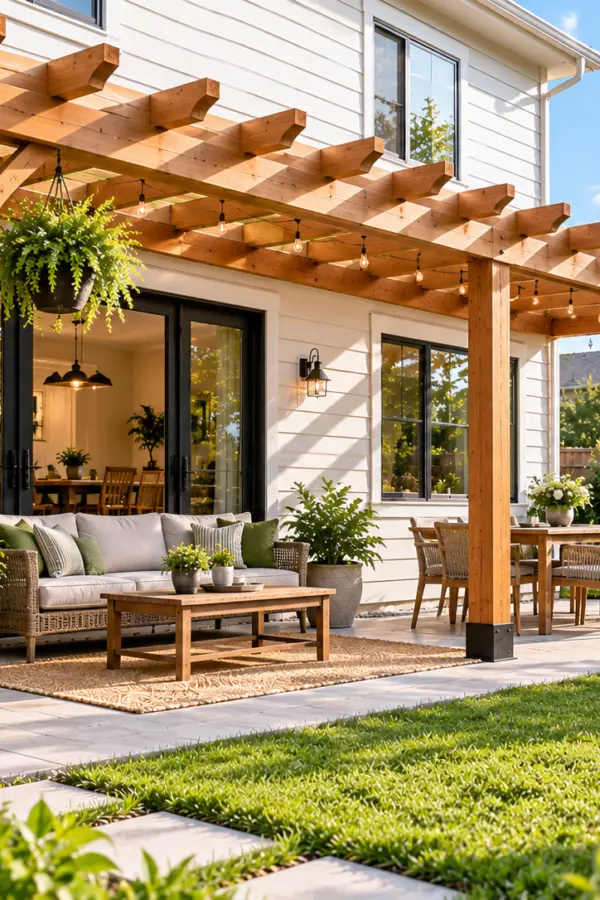
For a patio that works in any weather, a solid roof tied into the house is the classic answer: shingles or metal to match the house, a beamed ceiling underneath and gutters that carry water away. It is also the idea most likely to need a building permit, engineering for snow and wind, and a contractor, because the ledger board fastened to the house has to be flashed properly to keep water out from behind the siding. A solid roof darkens nearby rooms, so a skylight or a band of clear panels can help. These attached pergola ideas show lighter house-mounted versions.
9. A Freestanding Pavilion for a Patio Away From the House
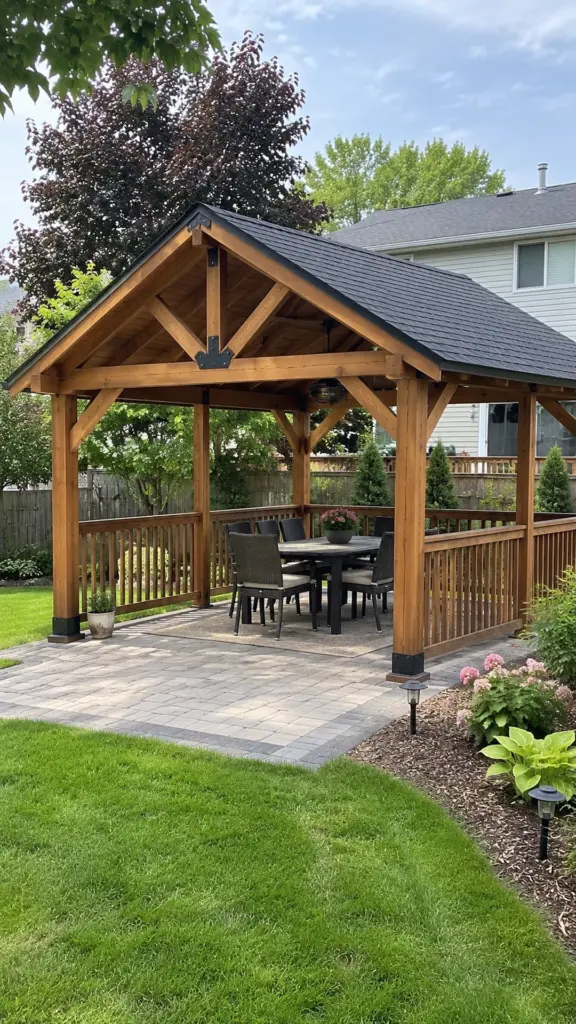
One of the bigger backyard patio ideas: when the patio is out in the yard, by a pool or a garden, a freestanding pavilion with a solid roof gives a covered room you walk to. A gable roof sheds rain and snow and leaves room for a fan. Pavilion kits come in wood and metal, and the posts need proper footings, so size the patio slab or pavers with the posts in mind. Plan power before the patio goes in if you want lights, a fan or outlets out there, with outdoor-rated wiring and GFCI protection put in by an electrician; trenching later is a much bigger job.
10. Climbing Vines on a Pergola for Living Shade
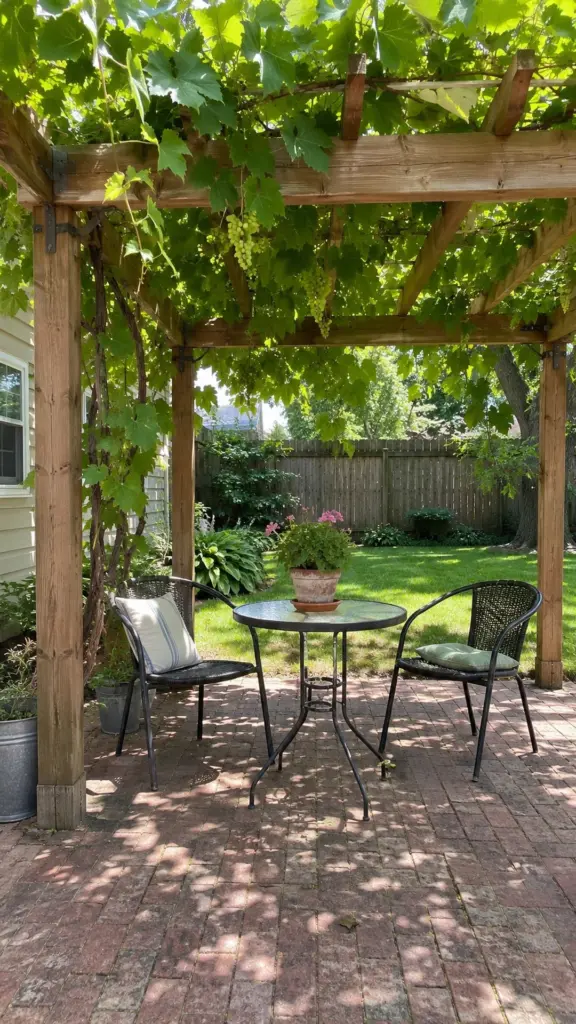
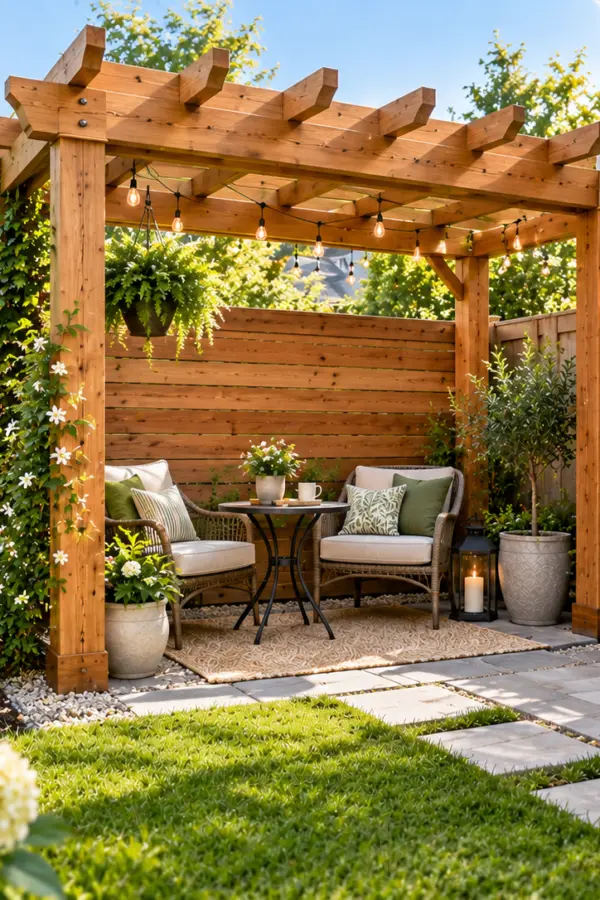
A vine-covered pergola gives dappled, cooler shade that changes with the seasons, and in many climates deciduous vines drop their leaves in winter to let the sun back in. Grapes, climbing roses and hardy kiwi are common choices; check what grows well where you live. Be careful with very vigorous vines: mature wisteria, for example, gets heavy and woody and can strain a light pergola. Vines take a few seasons to fill in, so pair them with a removable canopy, like the one in idea 5, while they grow.
11. Outdoor Curtains for Low Sun and Privacy
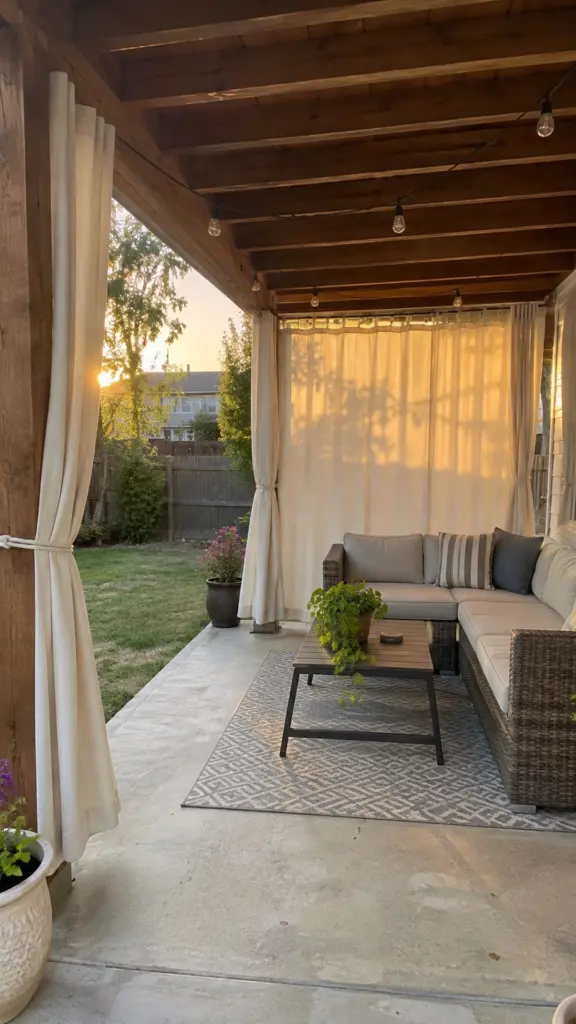
Overhead cover does nothing about the low evening sun that slides in from the side, and that is often the worst glare of the day. Outdoor curtains on the sunny side you marked in idea 1, hung from the beam of a pergola or patio roof, fix it and add privacy from neighbors. Choose solution-dyed outdoor fabric, which resists fading and mildew better than indoor cotton. Tie them back to the posts when not in use, and take them down or secure them as the maker advises in strong wind, since a big curtain acts like a sail and can strain the rod or the structure.
12. A Damp- or Wet-Rated Ceiling Fan Under the Roof
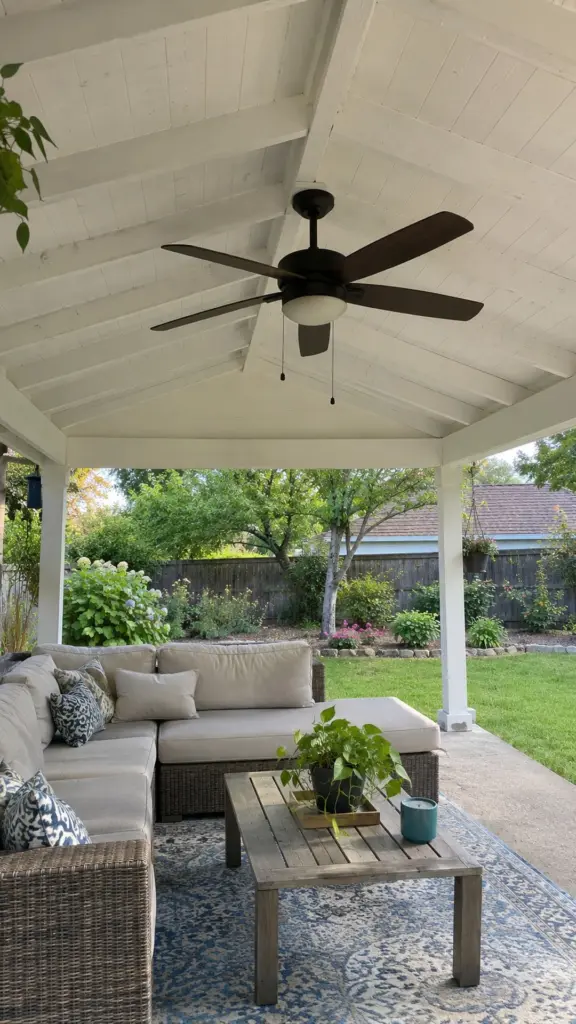
On a hot, still evening, a ceiling fan does more for comfort under a covered patio than any decoration. Under a solid roof like idea 8 or idea 9, indoor fans are still not built for outdoor moisture, so look for the rating on the box: damp-rated fans suit fully covered patios where rain cannot reach the fan, and wet-rated fans suit spots where rain or spray can hit it, like an open pergola or the edge of a roof. A fan needs a solid ceiling or beam and a fan-rated electrical box, which usually means an electrician.
13. Layered Lights Under the Cover
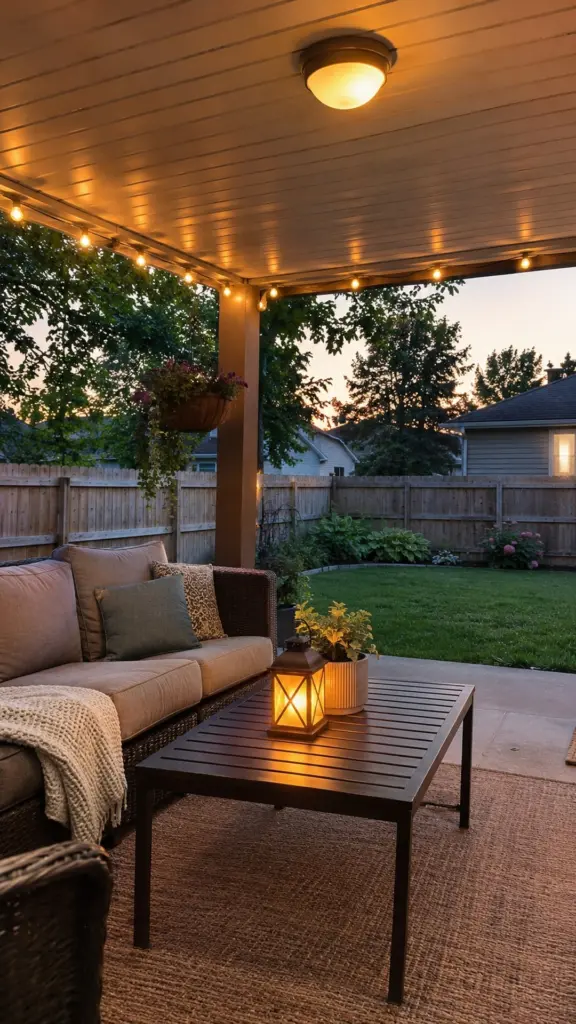
A covered patio gets dark early, especially under a solid roof. Plan three kinds of light. A main light, often in the fan or a flush fixture, for cleaning up after dinner. Softer light at seating height, like a lantern or an outdoor lamp, for evenings. And string lights or small sconces along the edge to mark the space from the yard. Use fixtures rated for damp or wet locations, the same rule as the fan in idea 12, and put the main light on a dimmer, with dimmable bulbs, so it does not glare. Warm white bulbs feel calmer outside than cool white.
14. Heat for Cool Evenings, Kept Safe Under a Roof
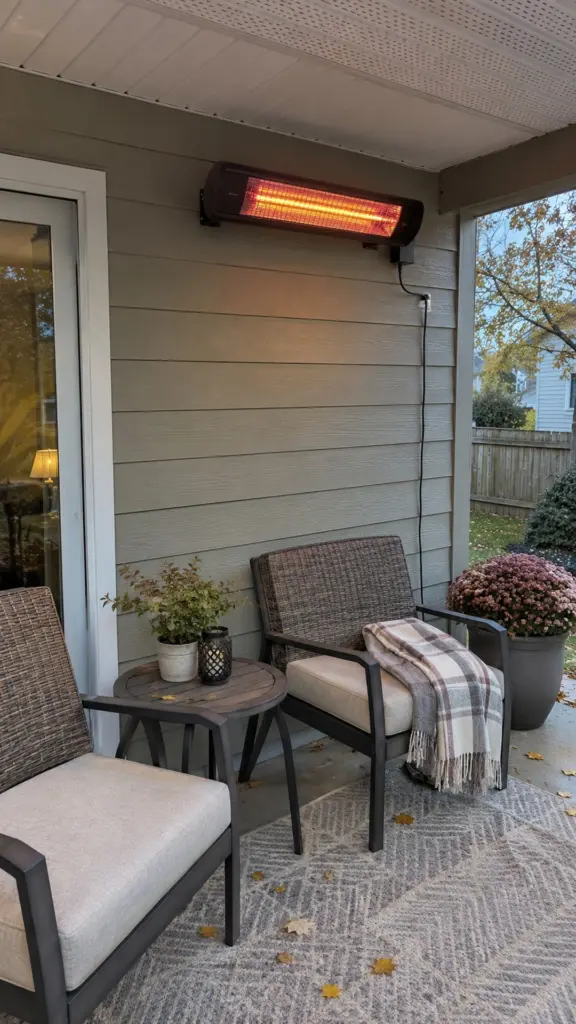
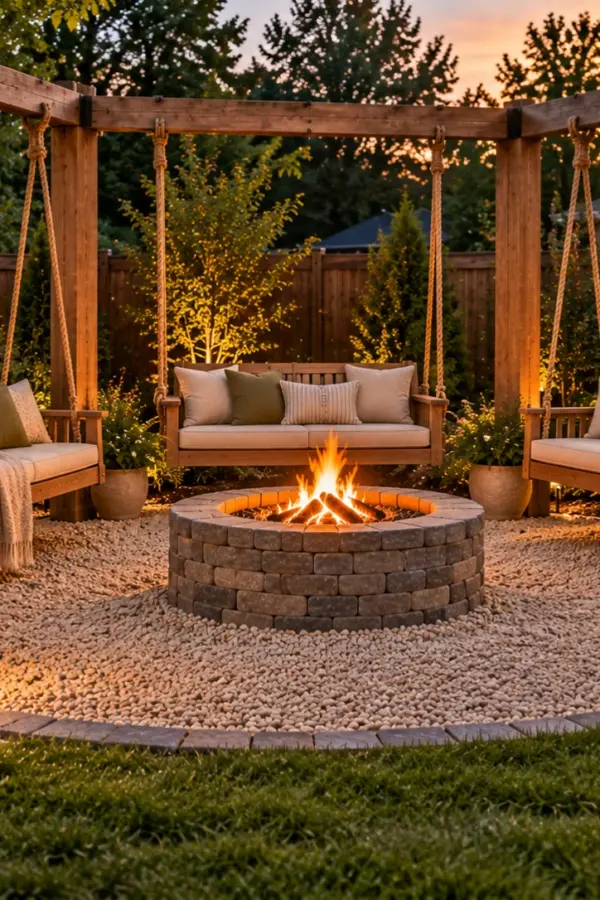
Cover makes a patio usable in spring and fall, and a heater stretches it further. Under a roof, the safe choices are heaters rated for covered spaces, usually electric infrared heaters mounted at the height and clearance their maker lists. Freestanding propane heaters need open air and their own ceiling clearances, and they are not for enclosed patios or the curtained sides from idea 11. A wood-burning fire pit belongs under open sky, never under a pergola canopy or roof; for that, see these fire pit seating ideas, which keep the fire out in the yard.
15. Gutters That Send Roof Water Away From the Patio
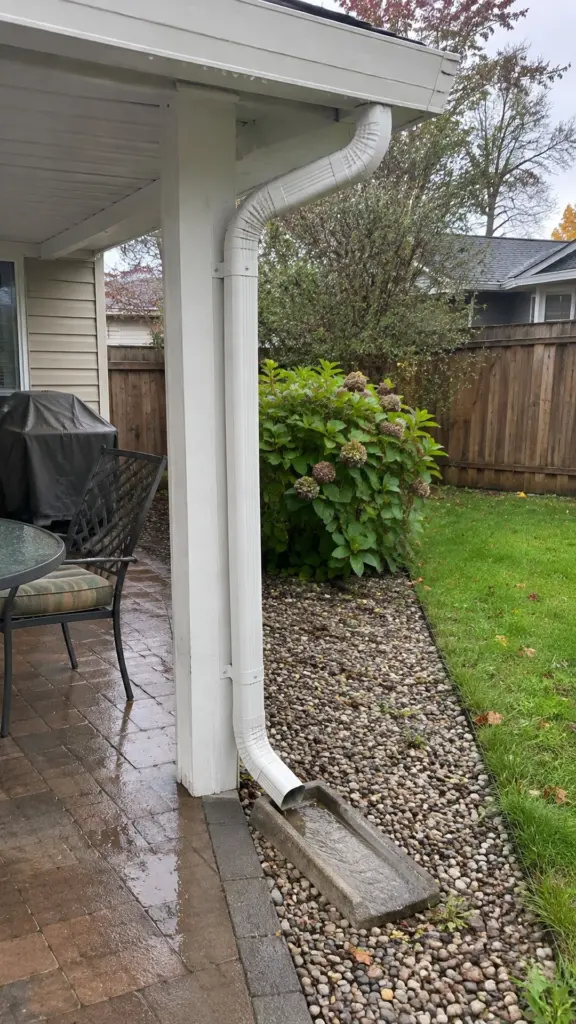
Any roof over a patio, from the panels in idea 6 to the solid cover in idea 8, collects rain, and without gutters it drops in a sheet right where people walk or where the patio meets the lawn. A gutter on the low edge and a downspout that empties onto a splash block or into a drain pipe, far enough out that the water does not soak the foundation or run under the pavers, keep the patio dry and stop soil washing out under the pavers. Check that the patio itself slopes slightly away from the house too, so any rain blown in drains out.
16. Furnish It Like a Room, Because Now It Is One
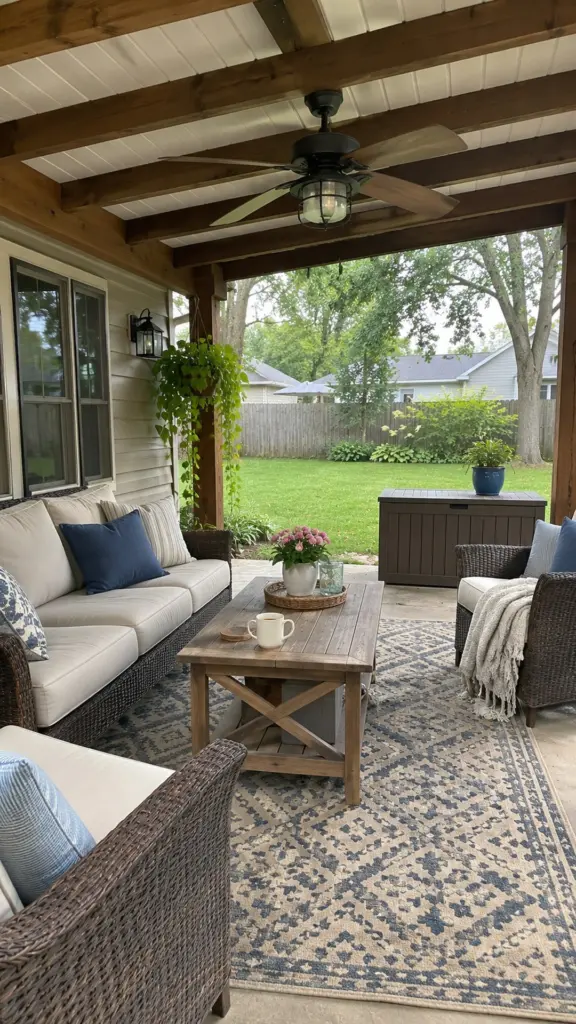
Once the patio has a roof, you can treat it more like a living room. An outdoor rug defines the seating area, deeper cushions are realistic because they stay drier, and a storage bench or deck box keeps throws and cushions out of blowing rain. Leave a clear path from the back door, and keep the busiest walkway out of the drip line at the roof edge that idea 15 deals with. Pick furniture sized to the covered area, not the whole yard, so everyone actually sits under the cover when the weather turns.
Final Thoughts
Match the cover to the problem. For afternoon sun only, an umbrella, a sail or an awning is usually enough. For rain, you need a sloped waterproof roof: polycarbonate panels, a louvered system or a solid cover, and those often mean permits. Then make the space livable with a rated fan, layered light and a heater that is safe under a roof.
Frequently Asked Questions
A cantilever umbrella usually costs the least and needs no permit. A shade sail is also cheap, but its permanent posts and footings can fall under local rules. Both block sun, but most do not keep you dry in heavy rain.
Often, yes, for permanent roofs attached to the house or freestanding structures over a certain size. Rules vary by city and HOA, so check with your local building department before you buy or build.
A sloped solid roof, polycarbonate panels or a closed louvered roof with gutters. Most shade fabrics let some water through unless they are sold as waterproof, and awnings should be retracted in heavy rain.
No wood-burning fire pit should go under a roof, pergola canopy or awning. Use a heater rated for covered spaces, mounted with the clearances its maker lists, and keep open fires out in the yard.
Loved this? Pin it so you can find it later.
Pin this post
Sana Ahmed
Hi! I’m Sana, and I’m always looking for fresh ideas to make outdoor spaces more beautiful and enjoyable. I love exploring everything from cozy patios and pergolas to backyard fire pits, privacy solutions, and charming garden sheds. I’ll be sharing the ideas that catch my eye and hopefully help you find a little inspiration for your own outdoor space.
All posts