15 Small Front Yard Landscaping Ideas That Stay Low Maintenance
 Save
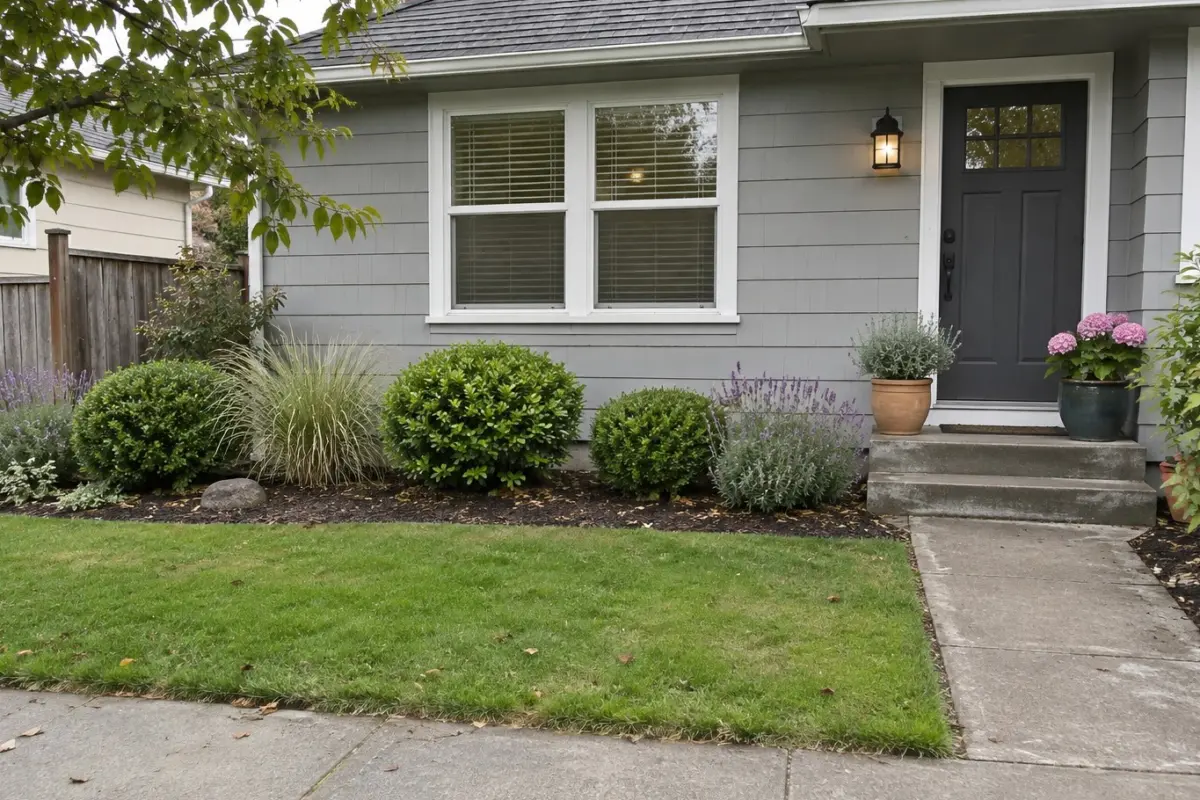
The best small front yard landscaping ideas cut the chores first and add the plants second. On a small lot, every overgrown shrub and every strip of grass that needs trimming shows from the sidewalk.
These 15 low maintenance front yard ideas start with the layout, move to the plants and finish with the upkeep. Only have a weekend? Start with ideas 3, 11 and 12.
1. Time the Chores Before You Plan the Plants
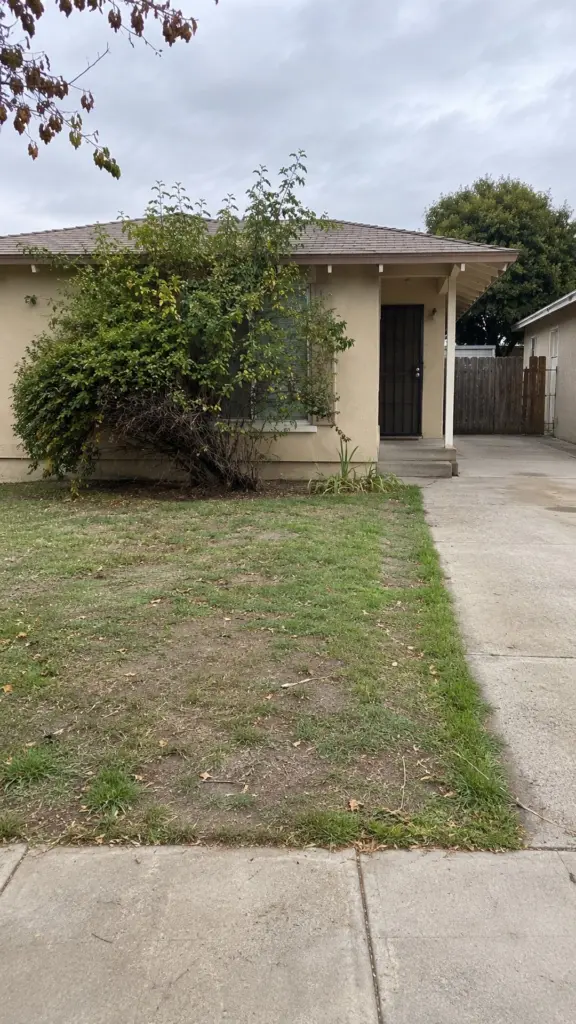
Before buying anything, write down what the yard asks of you in a normal month: mowing, edging, weeding, watering, pruning. Then walk it and mark where the work piles up. It is usually the same few places: a narrow strip by the driveway, a bed that dries out, a shrub blocking a window. Note where the sun falls too, because a plant in the wrong light turns into a chore. Those notes decide which of the ideas below are worth your weekend, so you fix the real problem and not just the look.
2. Shrink the Lawn to One Simple Shape
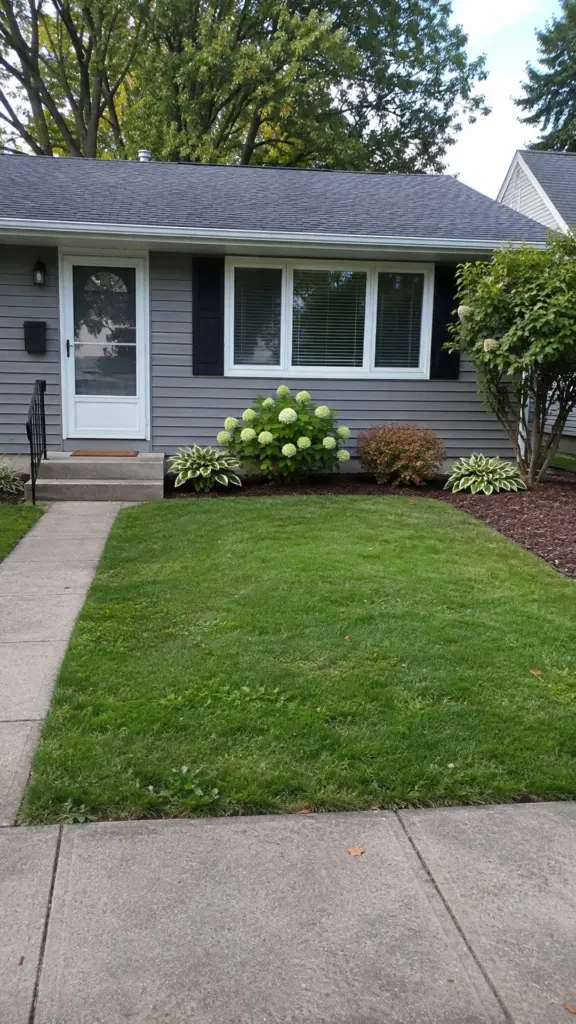
Wisconsin's extension service notes that low-maintenance landscapes usually have small lawns, and a small front yard gets there fast. Keep one clean rectangle or soft oval rather than strips and corners, since those are the parts you trim by hand. Give the rest to planting beds or a path. If you keep grass, a mulching mower helps: it returns nutrients to the soil, so the lawn needs less fertilizer. A tidy patch of green also rests the eye between the beds, which stops a small yard from looking busy.
3. Turn Awkward Strips Into One Wide Mulched Bed
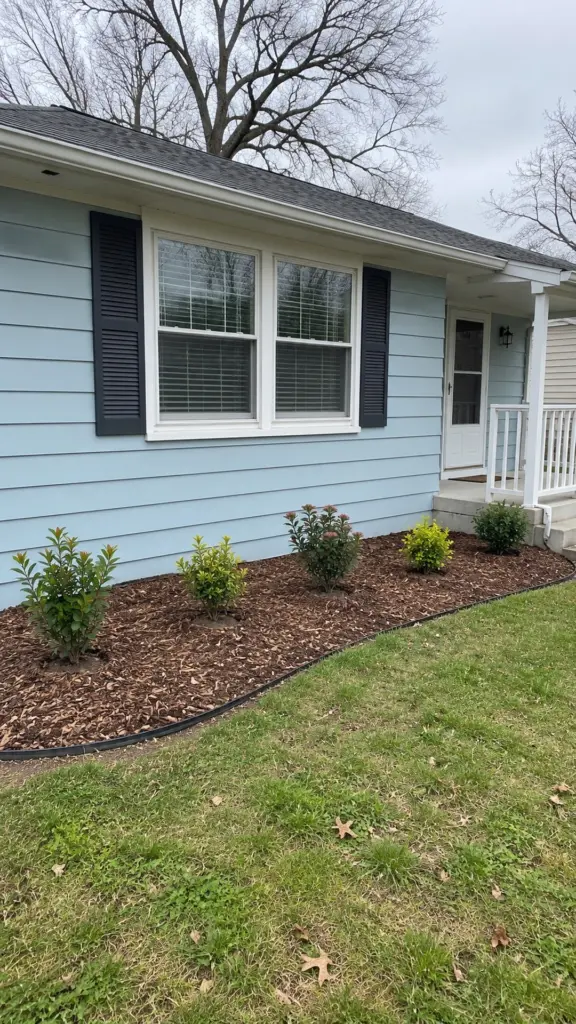
Several skinny beds mean several edges to keep neat. One wide bed along the front of the house is easier to care for and looks calmer from the street. Make it deep enough to hold a shrub at its full size, not just its nursery size. Cover bare soil with shredded bark or wood chips, which help the soil hold moisture. Wisconsin Extension suggests two to four inches, topped up every year or two. Skip plastic or landscape fabric under organic mulch, since it can trap weed seeds and stress plants.
4. Repeat Three Plants Instead of Mixing Ten
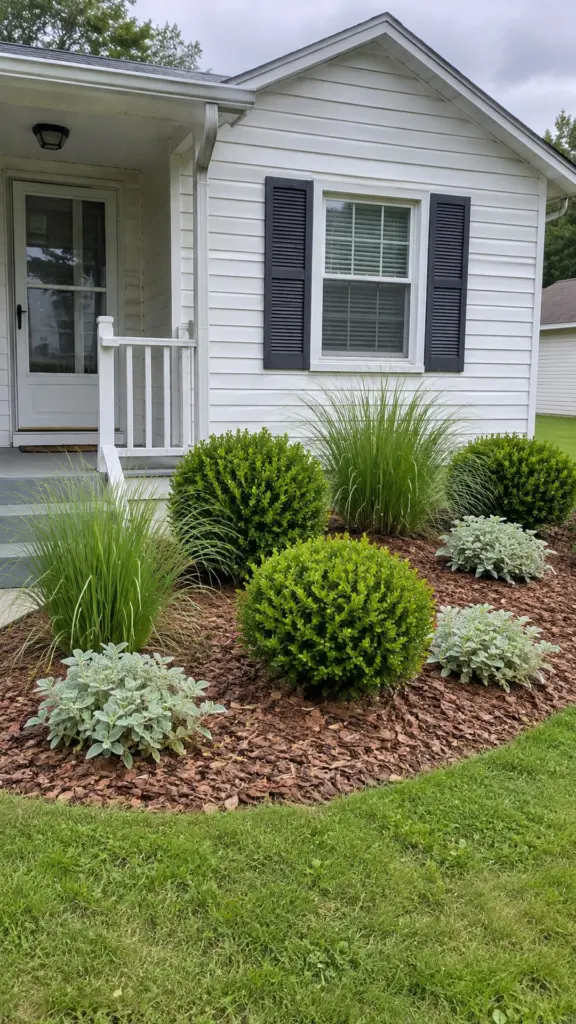
A small yard can't hide a plant collection. Choose one shrub, one grass or perennial and one low filler, then repeat them across the bed. Repetition reads as a plan from the sidewalk, and it simplifies the care: you learn three plants, not ten, and you do the same task to all of them on the same day. Odd numbers, such as three shrubs and five grasses, tend to look less stiff than matched pairs. Keep to one color theme and let the leaves carry the bed between flowering times.
5. Buy for the Mature Size, Not the Nursery Pot
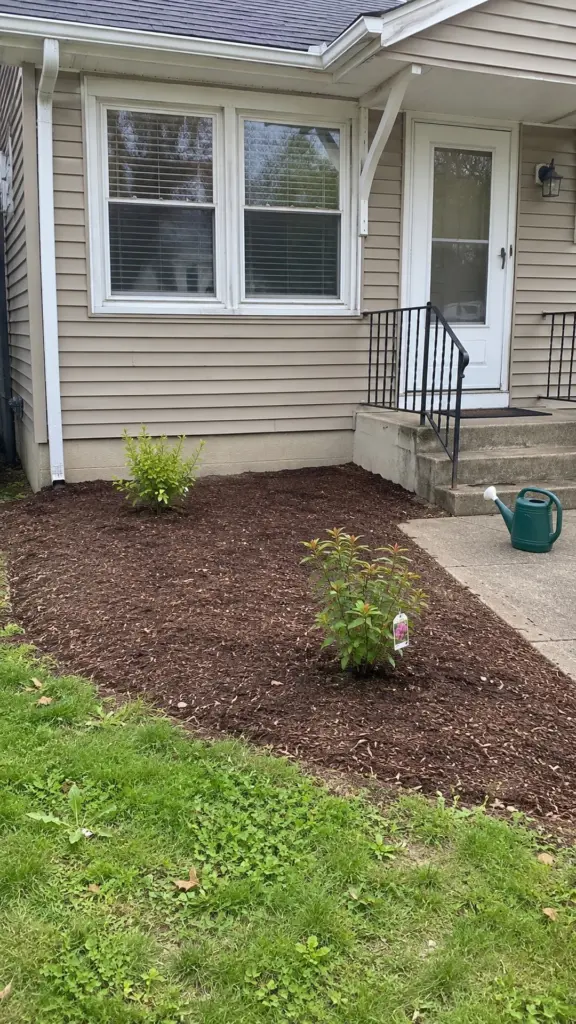
A shrub that looks right on planting day is often the wrong choice. Read the height and width on the tag and plan for those numbers. Wisconsin Extension warns that overplanting adds pruning, trimming and thinning work, and that properly spaced plants look sparse for the first few years. That empty look is normal. Those plants eventually form a canopy that shades out weeds, so mulch the gaps and wait. Planting extra to fill the bed right away is how an easy yard becomes a yearly pruning job, and idea 6 has a compact option.
6. Anchor the Bed With Compact Evergreens
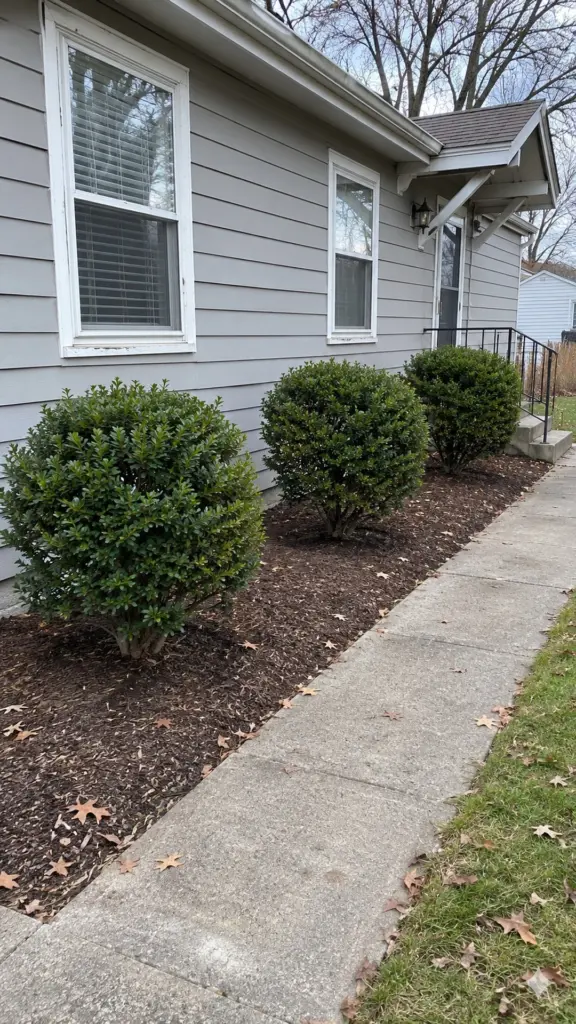
Evergreens keep the front of the house looking finished in January, when everything else has gone quiet. Low maintenance shrubs for the front of a house should be naturally compact, so you aren't cutting them back every year. Boxwood 'Green Velvet' is one example: the Missouri Botanical Garden lists it at 3 to 4 feet tall and wide, for zones 5 to 8, in full sun to part shade. Ask a local nursery what stays compact in your area. In snowy places, Wisconsin Extension advises against tall shrubs along walks you shovel by hand.
7. Add Ornamental Grass and Lavender in Full Sun
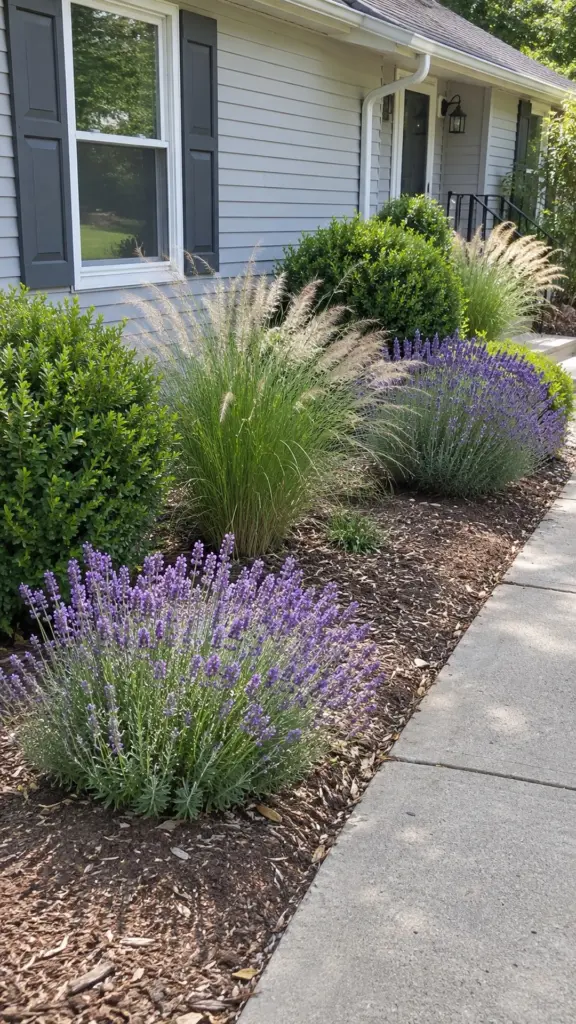
Sunny beds suit plants that don't want fussing. Clumping ornamental grasses add movement and stay interesting into winter, and lavender brings scent and color near a walk. Give lavender full sun and soil that drains well, because it dislikes sitting wet. Both look good in a group of three or five between evergreen shrubs. Check the mature size here too, since some grasses grow far taller than a small yard can handle, and the spacing advice in idea 5 applies to perennials as well.
8. Swap Thin Grass for a Groundcover
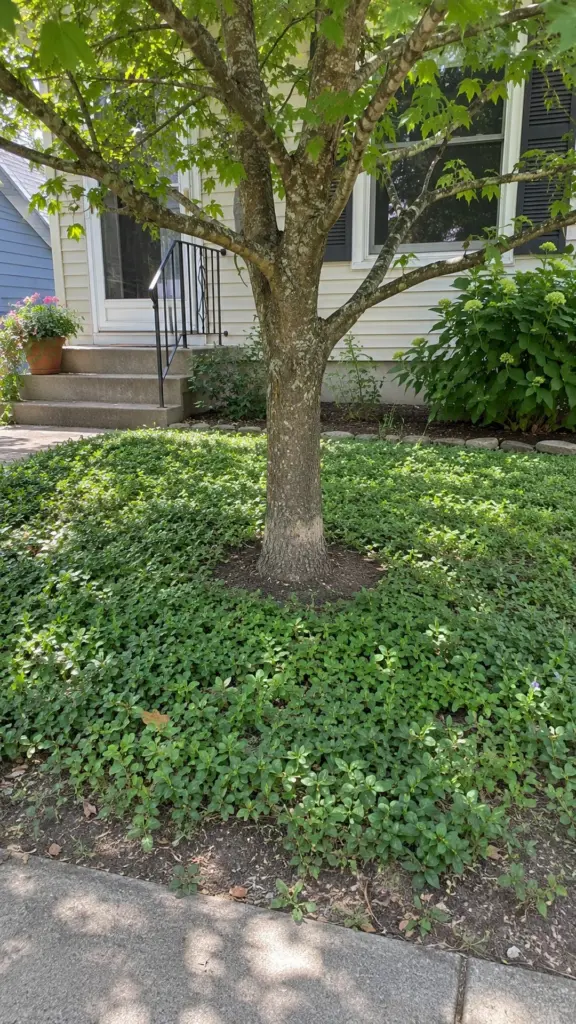
Under a tree or along a shady wall, grass often stays thin however much you feed it. A perennial groundcover is the easier answer there, and Wisconsin Extension suggests groundcovers under trees and shrubs to cut upkeep. In hot, sunny strips with good drainage, low sedums and creeping thyme are common choices. In shade, try hostas or another plant sold for your zone. Give them time to knit together. Ask a local nursery first, since University of Georgia Extension cautions that some groundcovers can turn invasive once established.
9. Use Gravel Where Nothing Needs to Grow
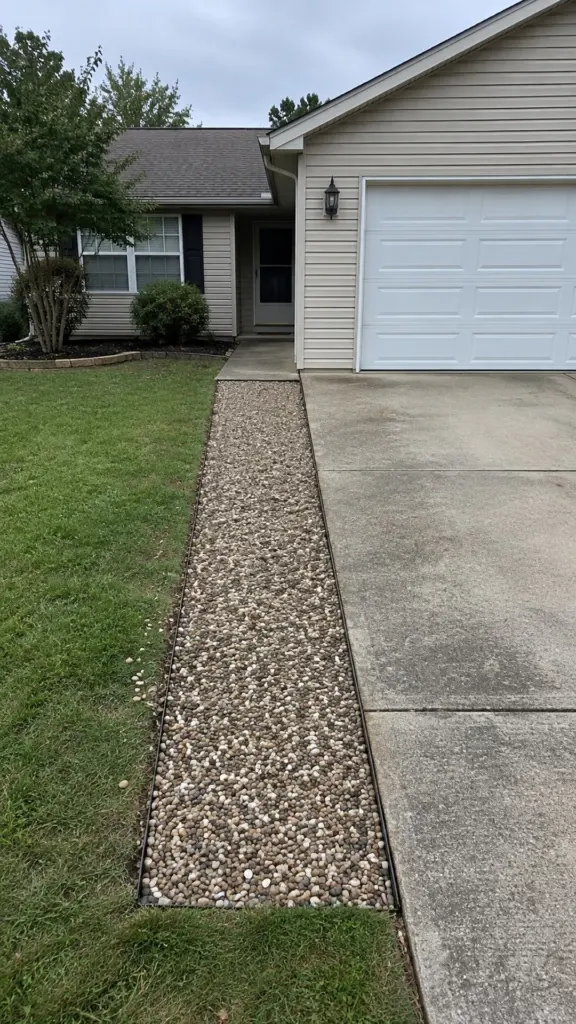
Rocks and gravel are popular in front yards, but they suit paths, side strips and spots beside the driveway better than planting beds. Wisconsin Extension advises against rock mulch for most ornamental plantings and around trees, so keep gravel for places with no roots to worry about. Pick a stone that matches the house and add firm edging (idea 11) so it stays out of the lawn. Expect to rake it back now and then and to pull the odd weed. Gravel cuts the work down without ending it.
10. Lay Stepping Stones Where People Really Walk
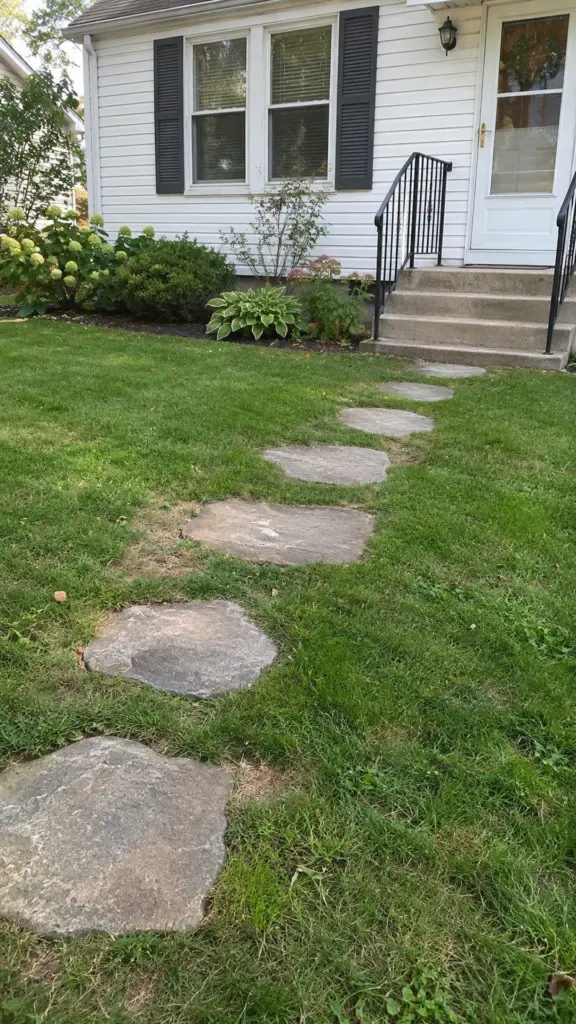
Watch how people cross the yard. If kids or delivery drivers cut the same corner, a bare track will form, so give them a path rather than fighting it. A short run of large stones looks clean and usually costs far less than a full paved walk. Start with the stones about 18 to 24 inches apart, center to center, then walk the line and adjust them to your stride before you dig them in. Keep each one level with the ground so a mower can pass over it.
11. Cut One Clean Edge Between Bed and Lawn
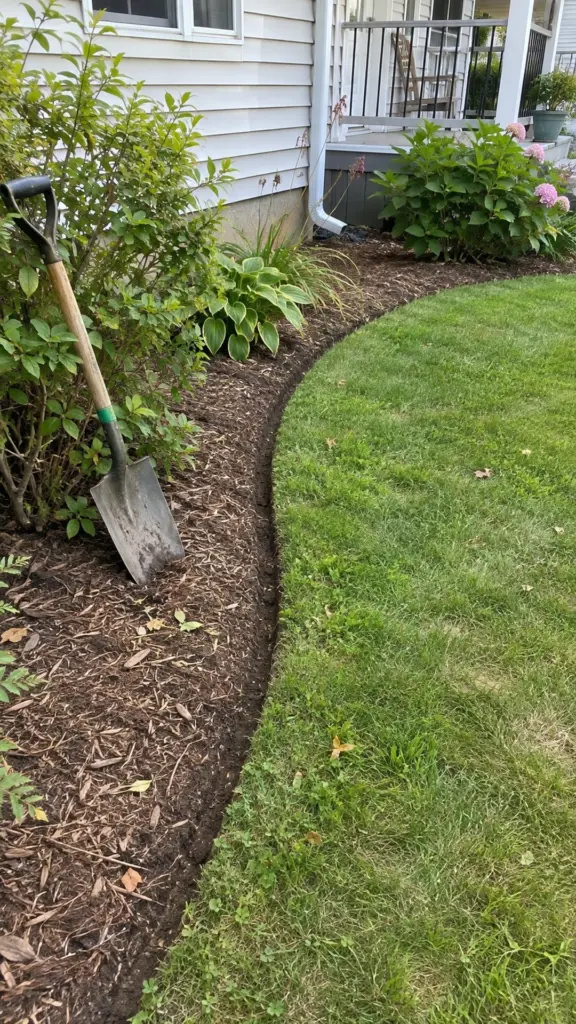
A sharp edge makes a simple bed look cared for, even while the plants are still small. The cheapest way is a straight-edged shovel, which Wisconsin Extension says needs repeating about every other year. If you'd rather not redo it, install edging that suits the house: stone, wood, brick, steel or plastic all work. Keep the line simple. Long easy curves or straight runs are quicker to mow around than tight wiggles, and low edging lets the mower run right along it, so there's less grass to trim by hand.
12. Keep the Color in Pots by the Door
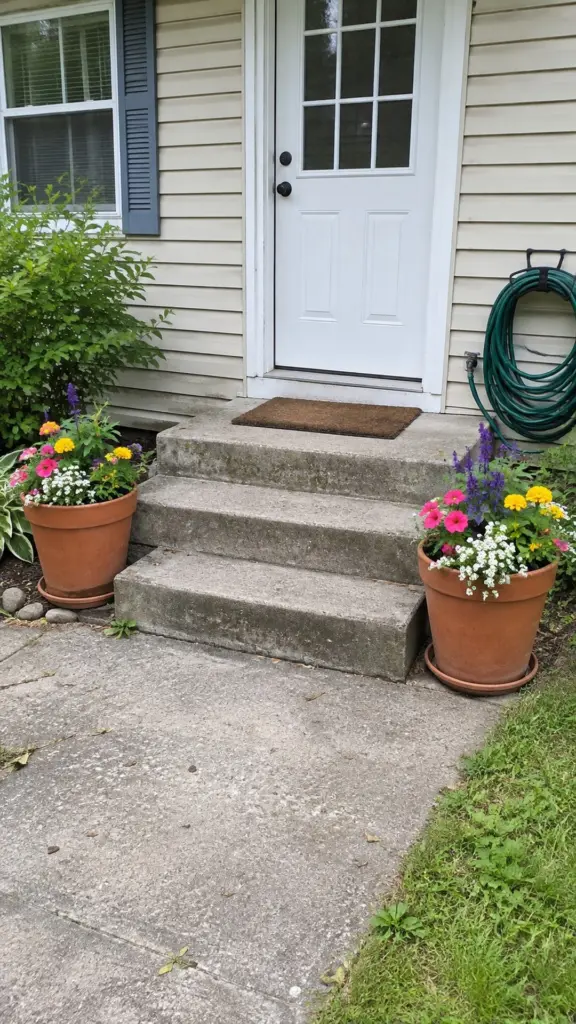
Annual flowers are the fussy part of a garden bed, so move them out of it. Wisconsin Extension suggests growing annuals in containers or small beds, which makes planting and removal easier. One or two large pots by the steps put seasonal color right where people look, and you can change them whenever you like. Choose big pots, since small ones dry out faster and need water more often. Set them where a hose reaches easily, and check them more often in hot, windy weather.
13. Keep Mulch Back From the House
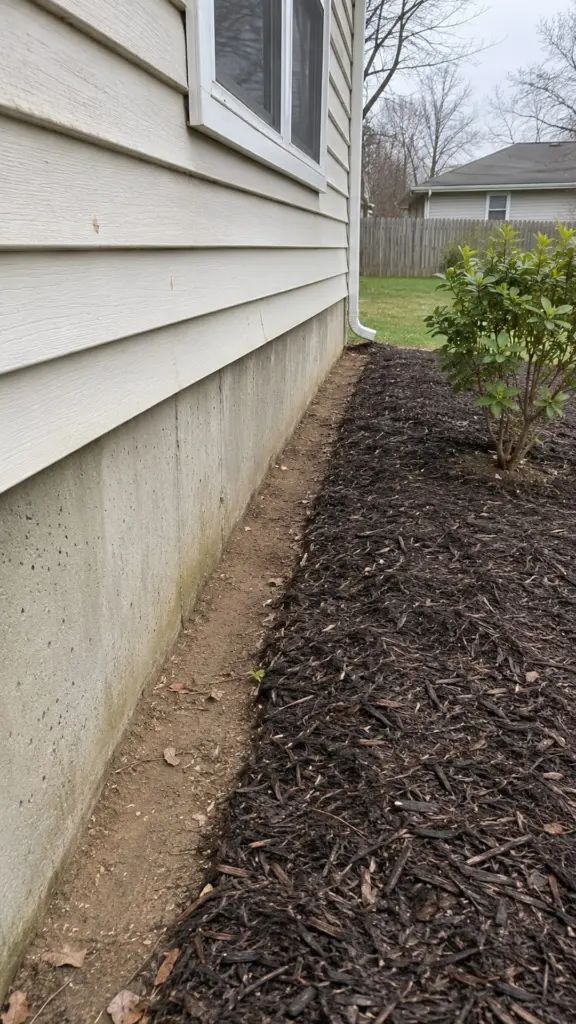
Mulch pushed up against the wall is an easy mistake on small lots, where beds sit close to the house. University of Kentucky entomologists say mulch should never touch wood siding or door and window frames, and that wood siding and frames should sit at least six inches above the ground. Termites favor consistently moist soil by a foundation, so go light there: they call a couple of inches usually adequate. Iowa State adds to keep mulch several inches from the foundation. Check this each spring, because beds creep upward with every top-up.
14. Water New Beds With a Drip Line
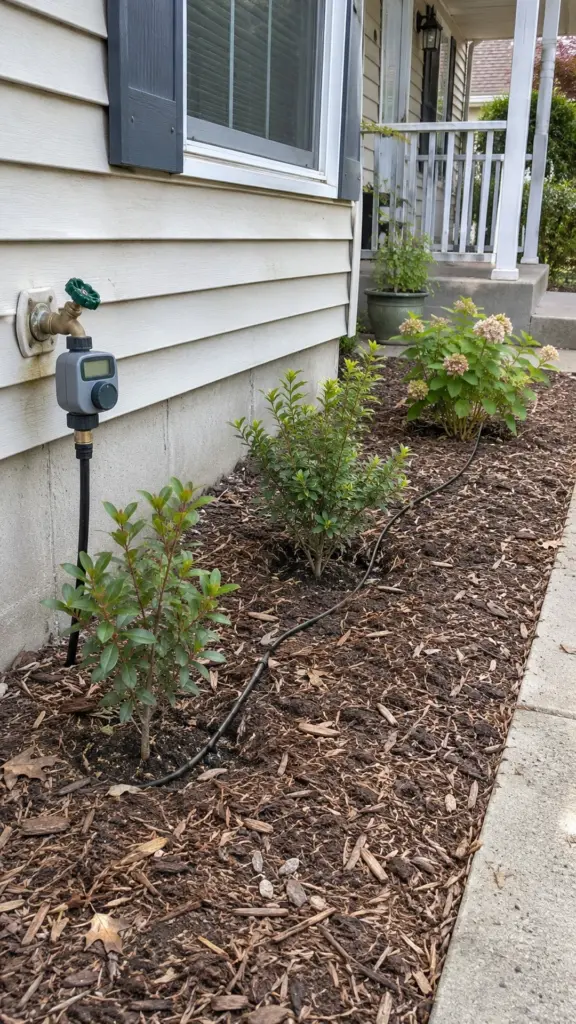
New plants need steady water while they settle in, even the tough ones, so plan that part rather than hoping for rain. A drip line under the mulch is easy to run along a small bed and puts water near the roots. The Pacific Northwest National Laboratory says drip systems use 20% to 50% less water than conventional pop-up sprinklers. Add a simple hose timer and the job mostly runs itself. Before watering extra, push a finger into the soil to see whether the bed really needs it.
15. Keep the Upkeep on One Short List
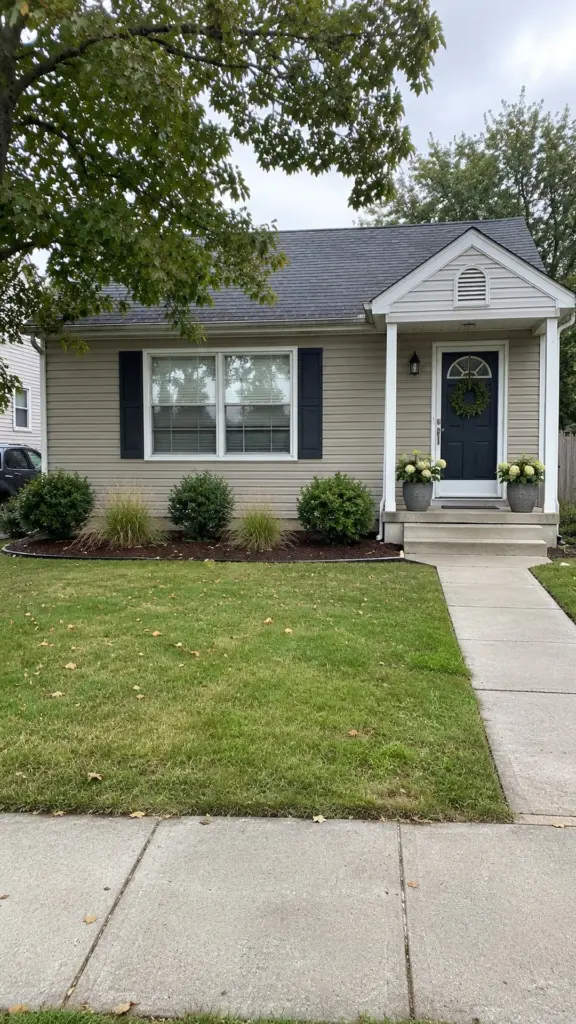
Low maintenance doesn't mean no maintenance. It means the jobs are few and you know when they're due. That is the real test of everything above. If a plant keeps demanding extra attention, it is probably in the wrong spot, and moving or replacing it beats fighting it every year. Expect more work in the first couple of years while plants settle, then less as they fill in. A short yearly list taped inside the garage door takes the guesswork out and keeps a small yard looking cared for.
Final Thoughts
A small front yard only needs a few good decisions: less grass, one wide bed, plants that fit their spot and a short yearly list. Start with the chore that annoys you most, not the whole yard, and add the rest as you go. Once the front is under control, the back is next, and these small pergola ideas or small backyard fire pit ideas are good places to start. Save this list for planting season.
Frequently Asked Questions
A small, simple lawn or none at all, one wide mulched bed, a few compact evergreen shrubs and a path where people really walk. Properly spaced shrubs eventually help shade out weeds, so the bed gets easier as it matures, but expect a sparse look for the first few years.
Use organic mulch around plants and gravel for paths and strips where nothing grows. Wisconsin Extension advises against rock mulch for most ornamental plantings and around trees, while organic mulch helps the soil hold moisture.
Yes, if your HOA and city rules allow it. Mulched beds, groundcover and stepping stones can replace the lawn, but give the space a clear shape so it doesn't look unfinished. Those beds still need weeding and mulch top-ups.
Loved this? Pin it so you can find it later.
Pin this post
Sana Ahmed
Hi! I’m Sana, and I’m always looking for fresh ideas to make outdoor spaces more beautiful and enjoyable. I love exploring everything from cozy patios and pergolas to backyard fire pits, privacy solutions, and charming garden sheds. I’ll be sharing the ideas that catch my eye and hopefully help you find a little inspiration for your own outdoor space.
All postsKeep reading