18 Stone Fire Pit Ideas: Fieldstone, Flagstone, Boulder and Cut Stone
 Save
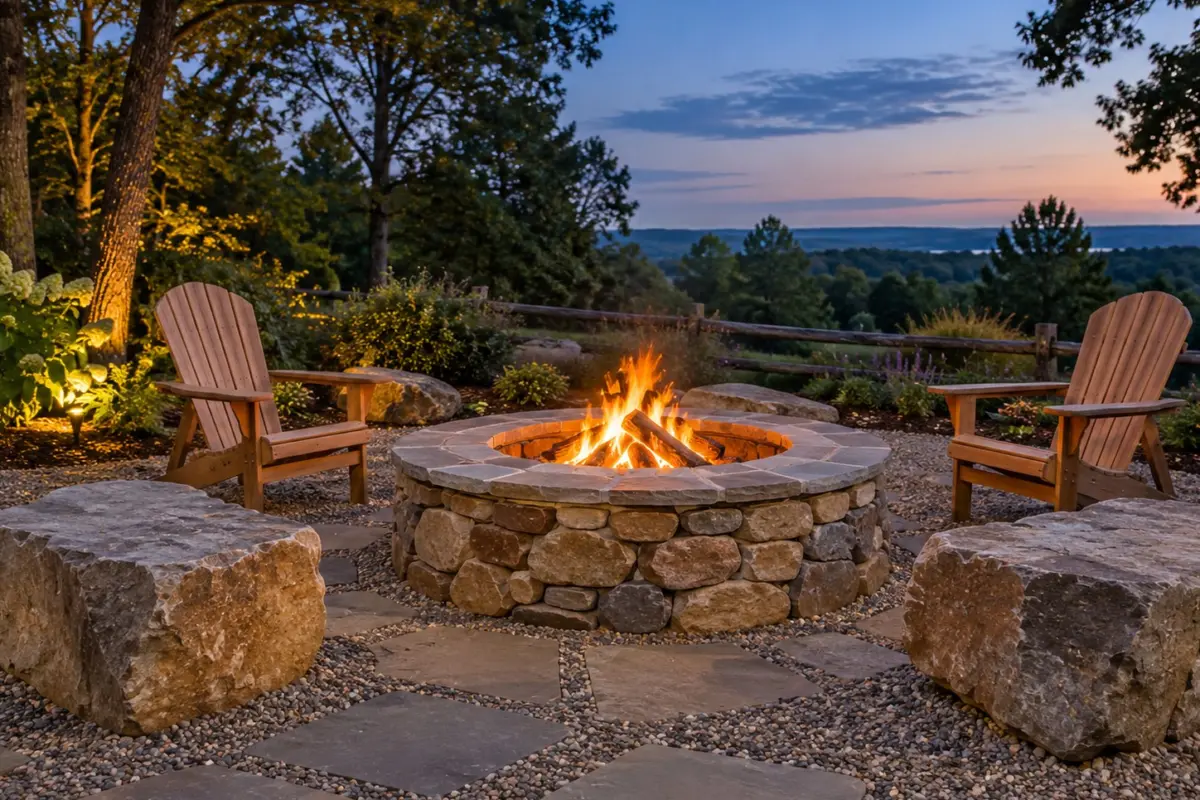
Stone fire pit ideas start with one question the photos never answer: which stone can take the heat. Some stones hold water and crack or pop when a fire gets hot, so the safe builds keep a steel fire ring or fire brick between the flame and the pretty stone. These 18 ideas are sorted by stone type and how it is laid, from dry-stacked fieldstone and flagstone to boulders and cut stone. Each one names the materials, a size or cost, and the mistake to avoid. Save this to Pinterest for when you pick your stone.
1. Dry-Stacked Fieldstone Fire Pit Ring With a Steel Liner
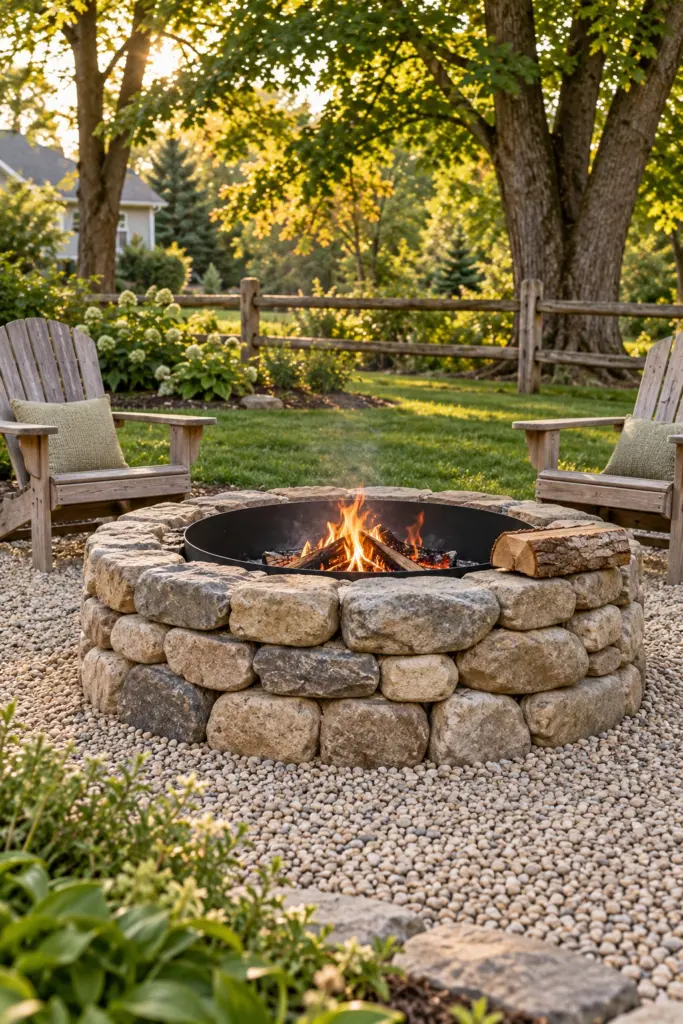
A dry-stacked fieldstone ring looks like it grew out of the yard, and the steel liner inside is what lets it survive the heat. Stack rounded fieldstones two or three courses high around a 36-inch steel fire ring insert, setting the flattest faces outward and tilting each course slightly in. No mortar is needed at this height. The liner keeps the flame off the stones, so the ring can be built from whatever stone the yard or a local supplier has.
2. Mortared Fieldstone Fire Pit With a Wide Flat Cap
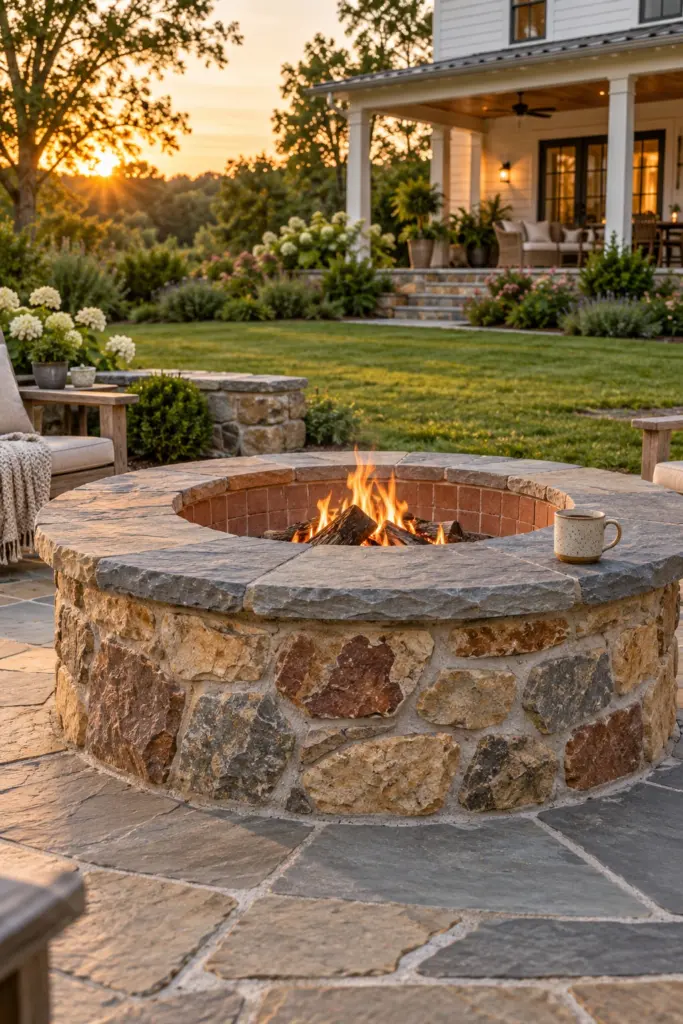
Mortaring the fieldstone and finishing it with a wide flat cap turns a rustic ring into something you can sit on or set a drink on. Build the wall from fieldstone over a poured concrete footing, use refractory mortar where stone meets the fire brick inside, and top it with cut flagstone caps about 12 inches wide. The cap is what most people touch, so pick a stone with a flat, smooth face. Fieldstone you collect yourself keeps the cost down.
3. Fieldstone Fire Pit Built From Stones Found on the Property
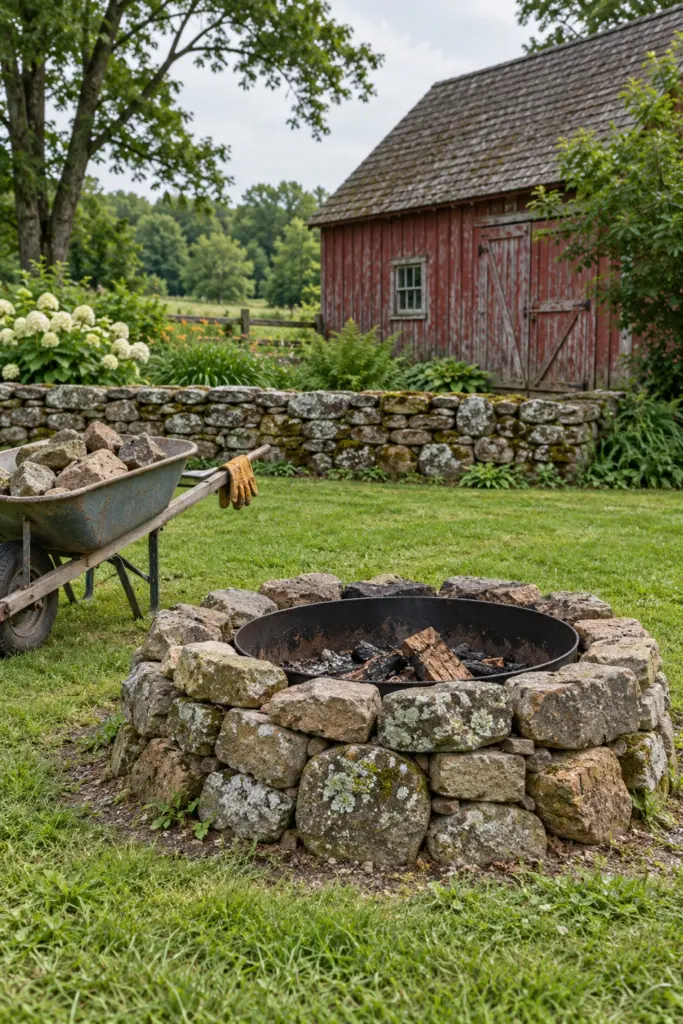
Stones dug up from the yard make the most personal fire pit, but where each stone came from decides whether it belongs near the flame. Dry, weathered fieldstone from a field edge or an old wall is usually fine for the outer ring. Stones pulled from a creek, a pond edge or soggy ground can hold water inside, and that water turns to steam when heated. Use found stone for the outside and a steel ring or fire brick on the inside.
4. Fieldstone Fire Pit Lined With Fire Brick
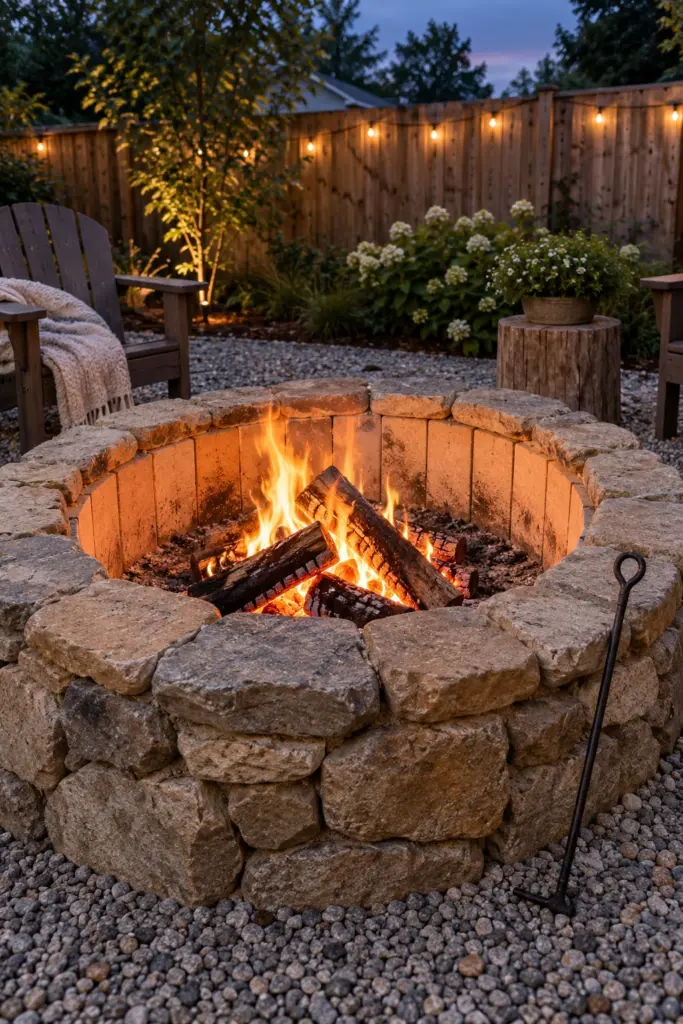
A fire brick lining inside a fieldstone wall is the long-lasting version of the look, because the brick takes the heat and the stone only has to look good. Lay one course of fire brick on edge as the inner ring, set it with refractory mortar, and build the fieldstone wall around it with ordinary mortar. It is the permanent version of the ring in idea 1. The lining adds about 5 inches to the wall thickness, so plan the footing wide enough.
5. Flagstone Fire Pit Area With Pea Gravel Joints
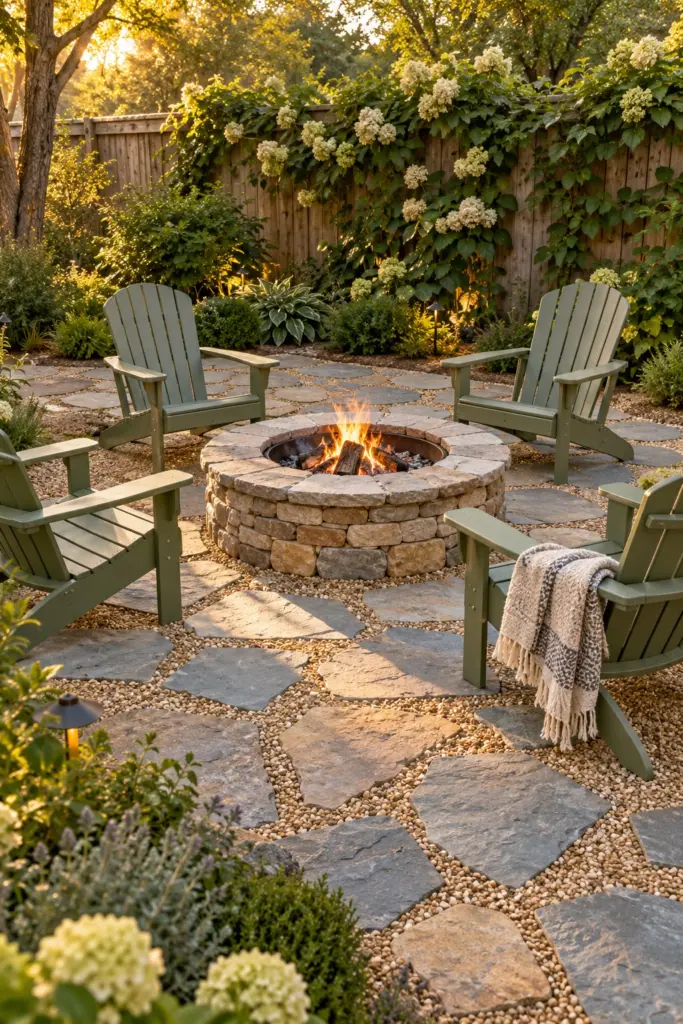
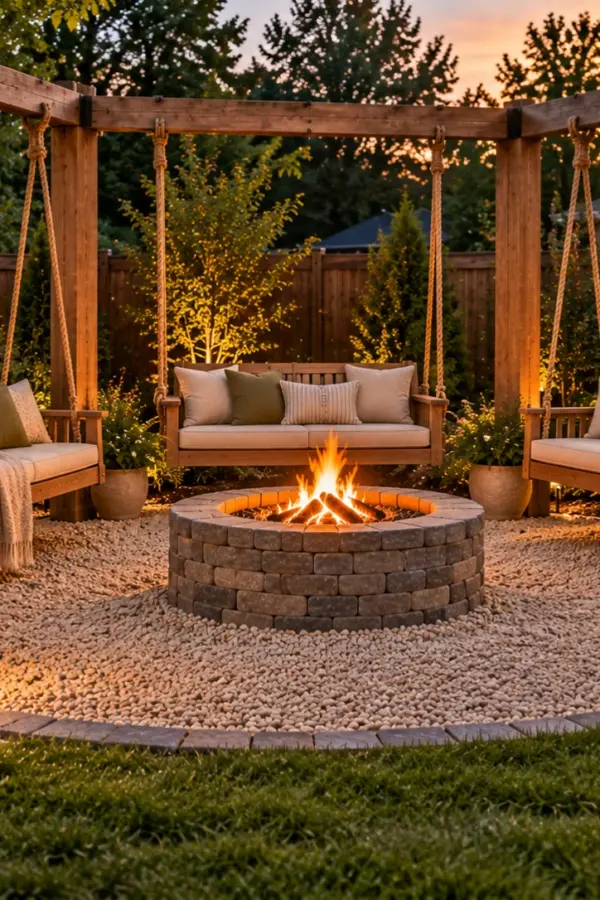
A flagstone pad with wide pea gravel joints is one of the most searched stone fire pit looks, and it drains well because water slips between the stones. Lay irregular flagstone on a compacted base around a round stone or steel pit, leaving 2- to 3-inch joints filled with pea gravel. Adirondack chairs sit on the flagstone, not the gravel, so they stay level. It pairs well with the ring in idea 1 if the pit itself is fieldstone.
6. Stacked Flagstone Fire Pit With a Flat Cap
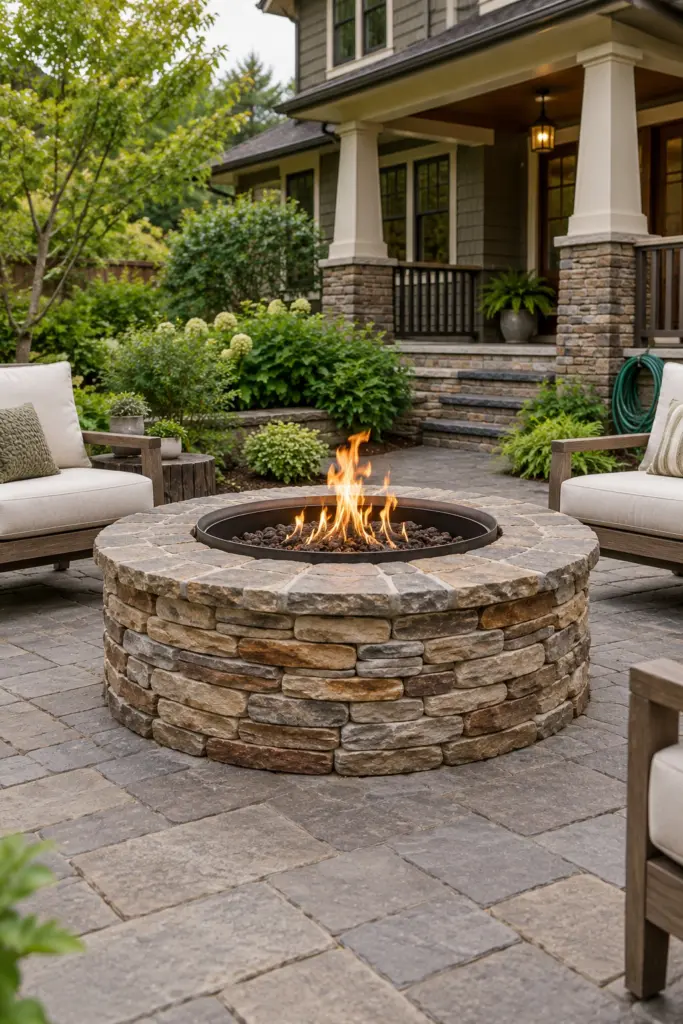
Thin flagstones stacked in tight horizontal layers give a neat, layered wall that reads more refined than fieldstone, without the cost of cut stone. Build a round ring of stacked flagstone around a steel fire ring insert, tapering each layer slightly, and finish with one row of larger flat caps. The stacked look suits a modern or craftsman house. Stone yards often sell stacking flagstone by the pallet, which is cheaper than buying by the piece.
7. Flagstone Patio Circle Around a Round Stone Fire Pit
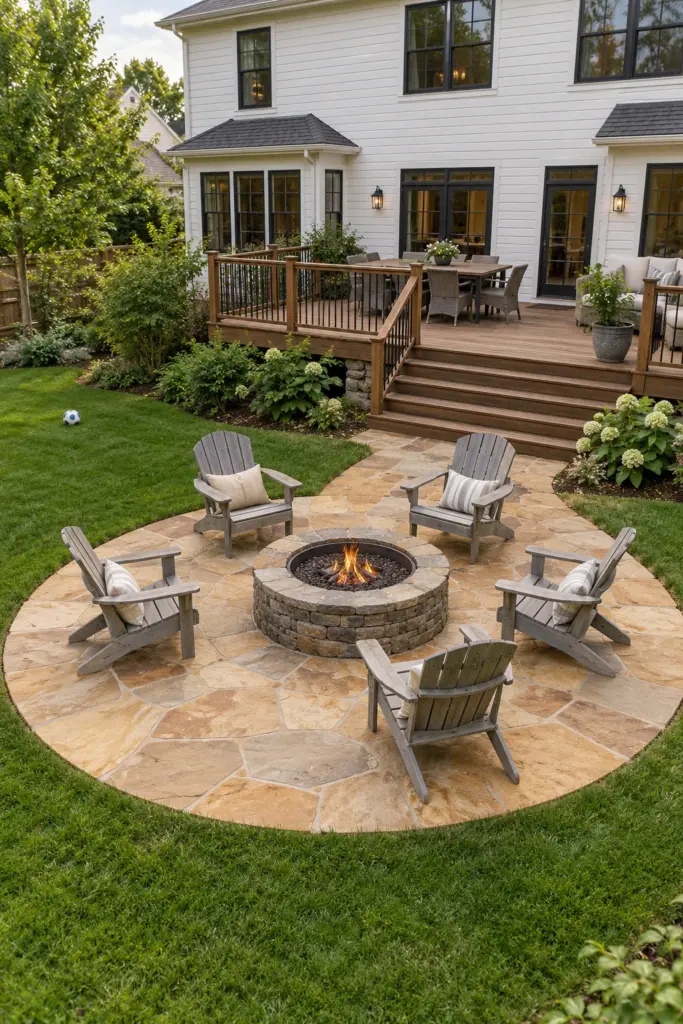
A full flagstone circle centered on the fire pit gives the whole area a defined edge, and a circle is easier to lay out than it looks. Drive a stake at the pit center, use a string as a compass to mark the outer edge, then lay flagstone outward from the pit so the cuts fall at the perimeter. A 16-foot circle seats six. Mortared flagstone on a concrete slab is cleaner; flagstone on a sand and gravel base is cheaper and drains better.
8. Flagstone Path Leading to a Stone Fire Pit Circle
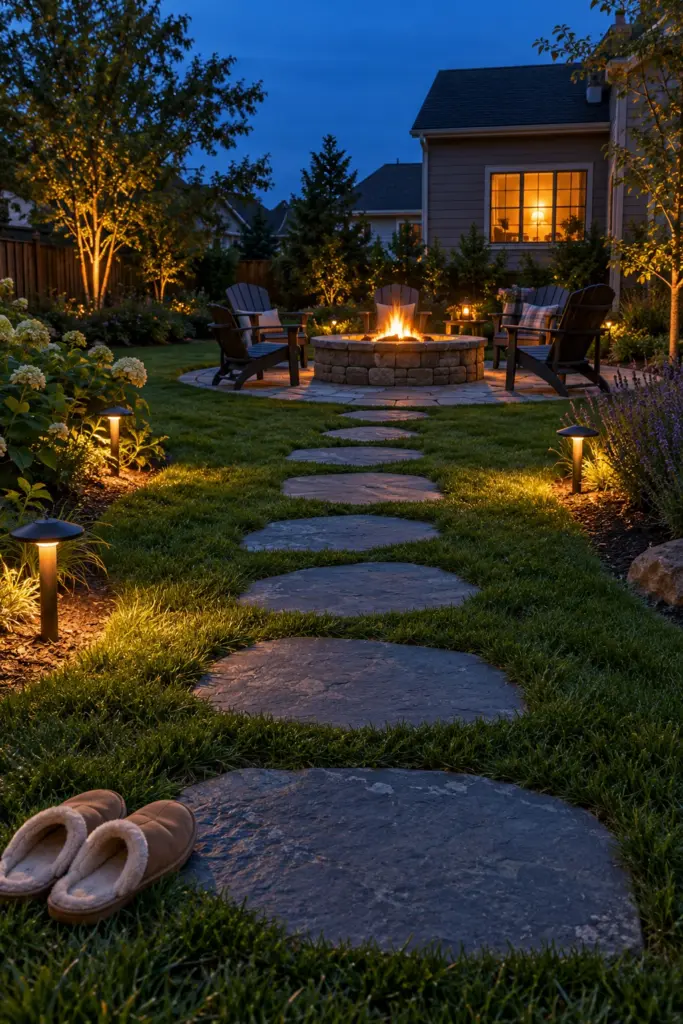
Stepping stones running from the back door to the fire pit make the pit feel planned and keep people off wet grass at night. Use stepping stones of the same flagstone as the pit area, spaced at a comfortable stride, and end the path at a small flagstone landing instead of straight into the seating. Thin flagstone laid directly on soil is the most common failure here. It rocks, cracks and sinks within a season.
9. Flagstone Seat Wall Wrapping Half the Fire Pit
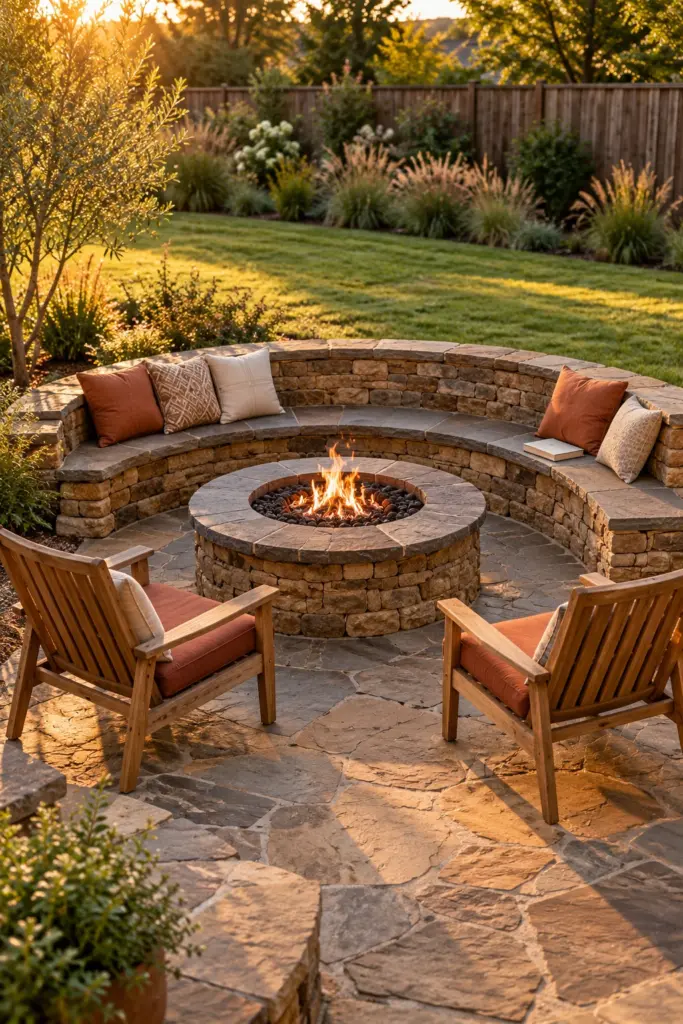
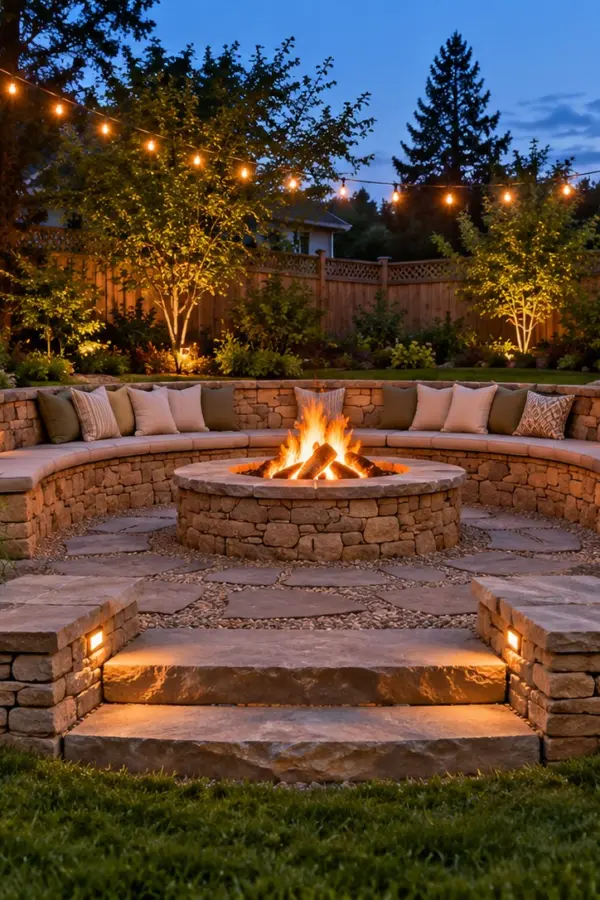
Wrapping only half the pit with a flagstone seat wall gives built-in seating on one side and leaves the other side open for chairs and the view. Build a curved wall about 18 inches high, 6 to 8 feet from the pit center, faced in stacked flagstone with wide caps for seating. Set it on the side facing the house, so the open side faces the yard. Loose chairs on the open side make the layout flexible for larger groups.
10. Ring of Boulders as Fire Pit Seating
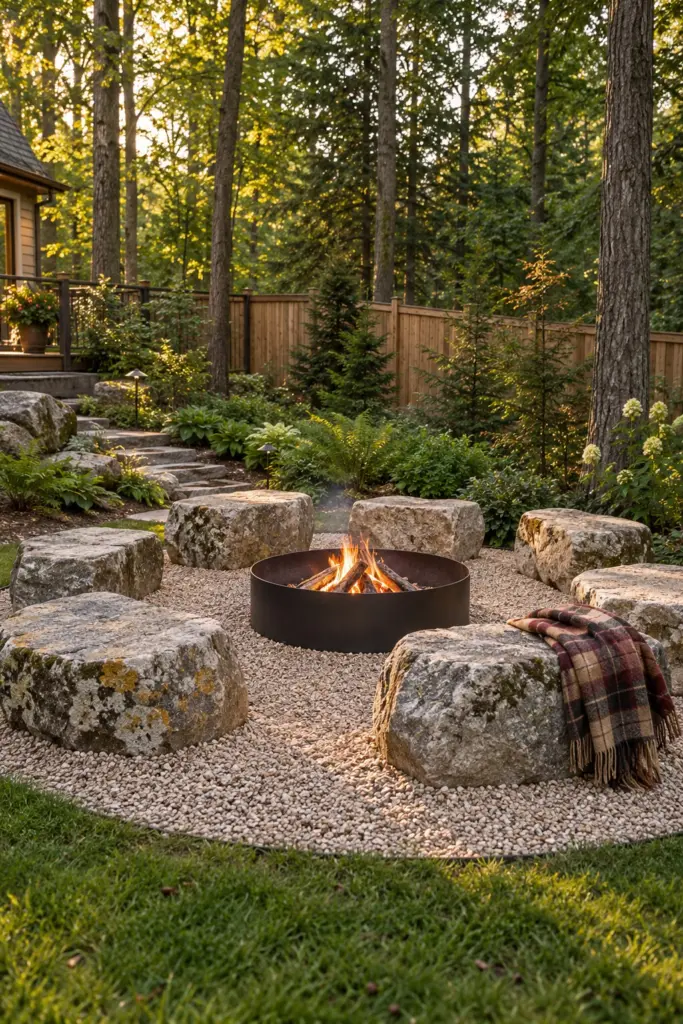
Flat-topped boulders set around a fire pit are seats that never blow over, fade or need storing. Choose boulders with a flat or slightly dished top about 16 to 20 inches above grade once set, and bury about a third of each one so it does not roll. Space them 6 to 7 feet from the pit center around a simple steel ring. A boulder supplier can deliver and place them with a machine, which is worth paying for.
11. Boulder Retaining Wall With a Built-In Fire Pit on a Slope
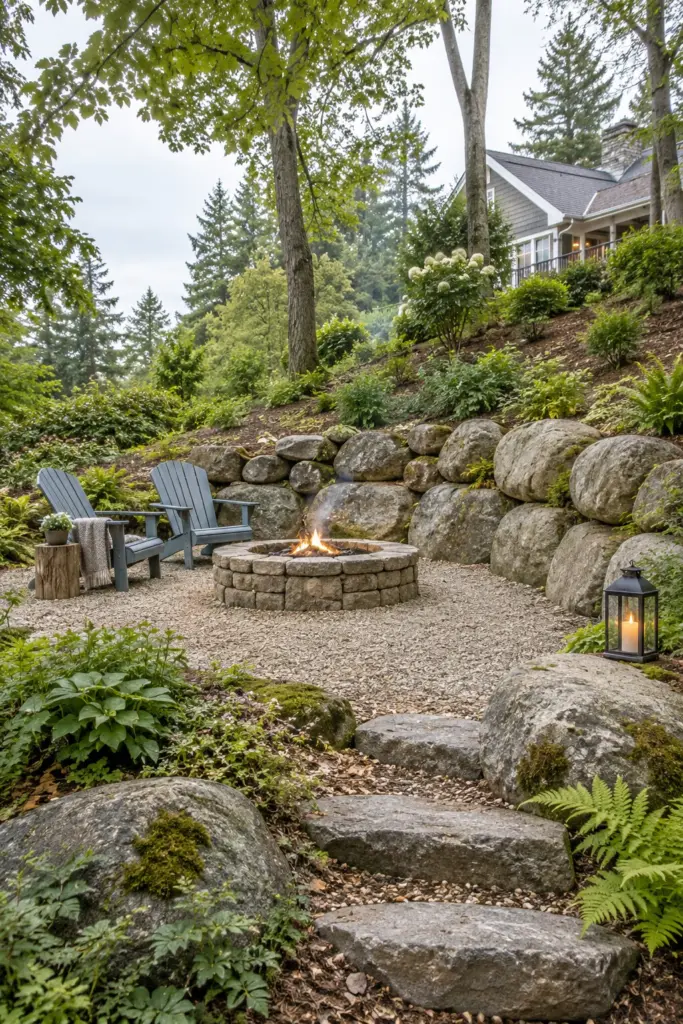
On a sloped yard, a boulder retaining wall can hold back the hill and become the backrest of a fire pit area at the same time. Set large boulders in a curve on the uphill side, level a gravel pad in front of them, and center a stone or steel fire pit on the pad. The boulders do the retaining and the seating; add a couple of loose chairs on the downhill side. Boulder walls this size usually need a machine and an experienced crew.
12. Armour Stone Block Fire Pit Seating
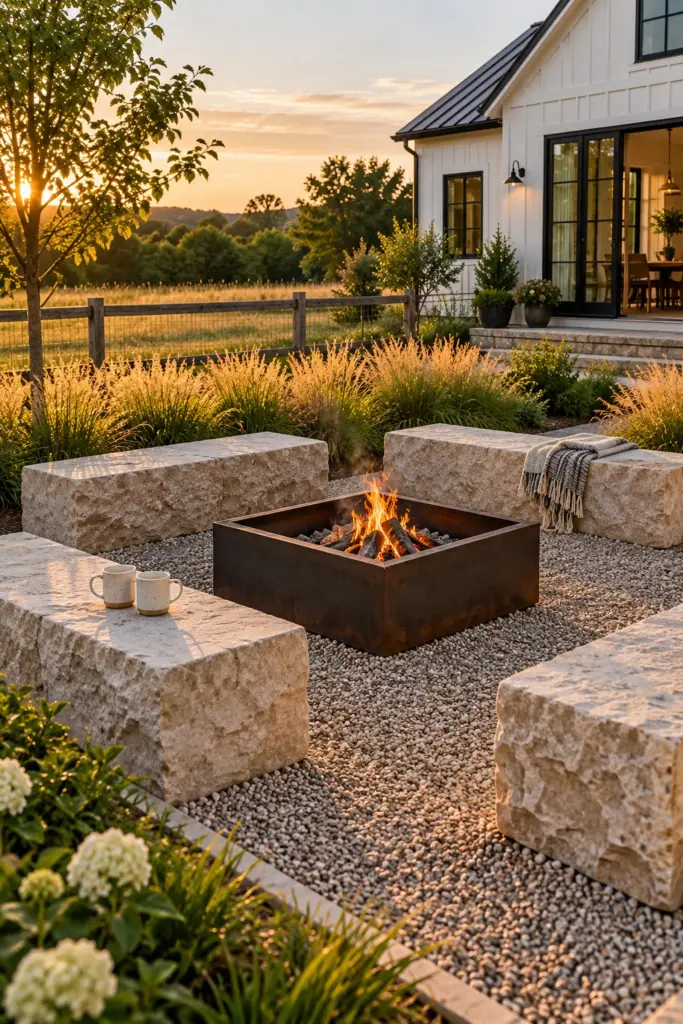
Armour stone, the large rectangular quarried blocks used for retaining walls, makes long flat benches that look architectural rather than rustic. Arrange four or five blocks in a square or broken circle around a steel fire pit, setting each on compacted gravel so the tops sit level at seat height. It is a more architectural take on the boulder ring in idea 10, and each block seats two. They are heavy and are always delivered and placed by machine, so plan access for a truck before you order.
13. One Large Boulder Backdrop Behind a Small Fire Pit
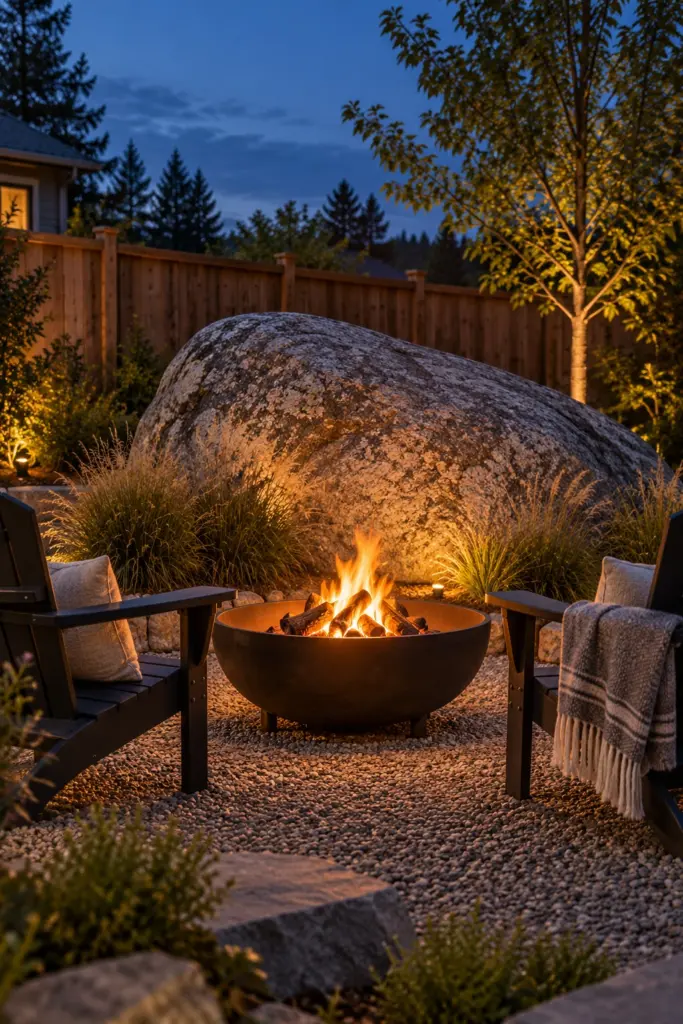
A single large boulder placed behind a small fire pit gives the area a focal point and blocks wind from one side. Set the boulder a few feet back from the pit, bury about a third of it, and build the pit itself as a modest steel or stone ring in front. Low grasses around the base settle it into the yard. The mistake is pushing the boulder right up against the flame, where heat can stain or flake its face.
14. Cut Limestone Fire Pit With Tight Mortar Joints
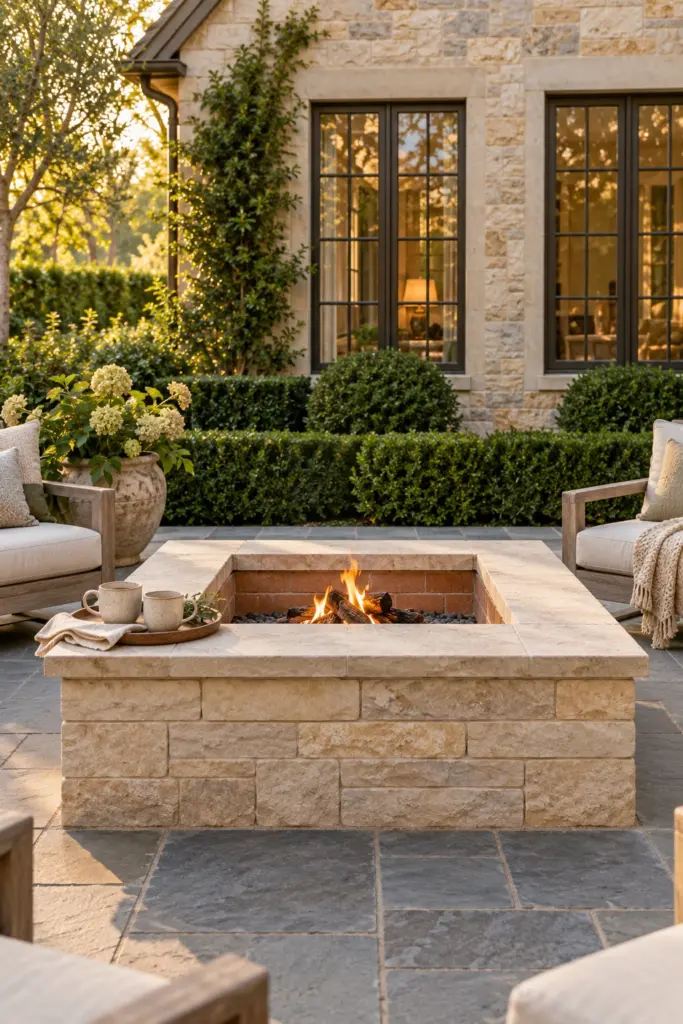
Cut limestone laid in neat courses gives a fire pit the clean, formal look of a stone wall around an old estate. Build the outer wall from sawn limestone blocks with thin mortar joints over a concrete footing, line the inside with fire brick in refractory mortar, and cap it with matching limestone. A square or round shape both work. Limestone is softer than granite, which is exactly why it needs that fire brick lining.
15. Square Natural Stone Fire Pit With Thick Caps
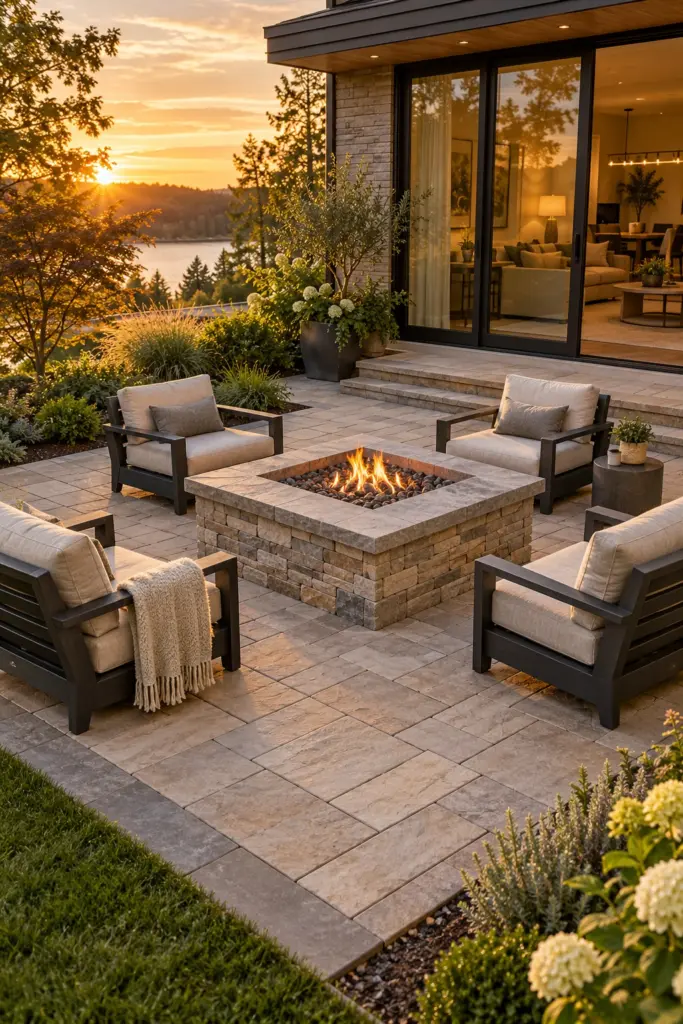
A square stone fire pit fits a rectangular patio better than a round one, and thick caps give it a solid, built-in look. Build a block core, face it with natural stone veneer, and finish with 2-inch-thick stone caps that overhang the wall by about an inch. Four matching lounge chairs, one per side, keep the geometry tidy. The caps take the most weather and heat of any part of the pit.
16. Stone Veneer Fire Pit Over a Concrete Block Core
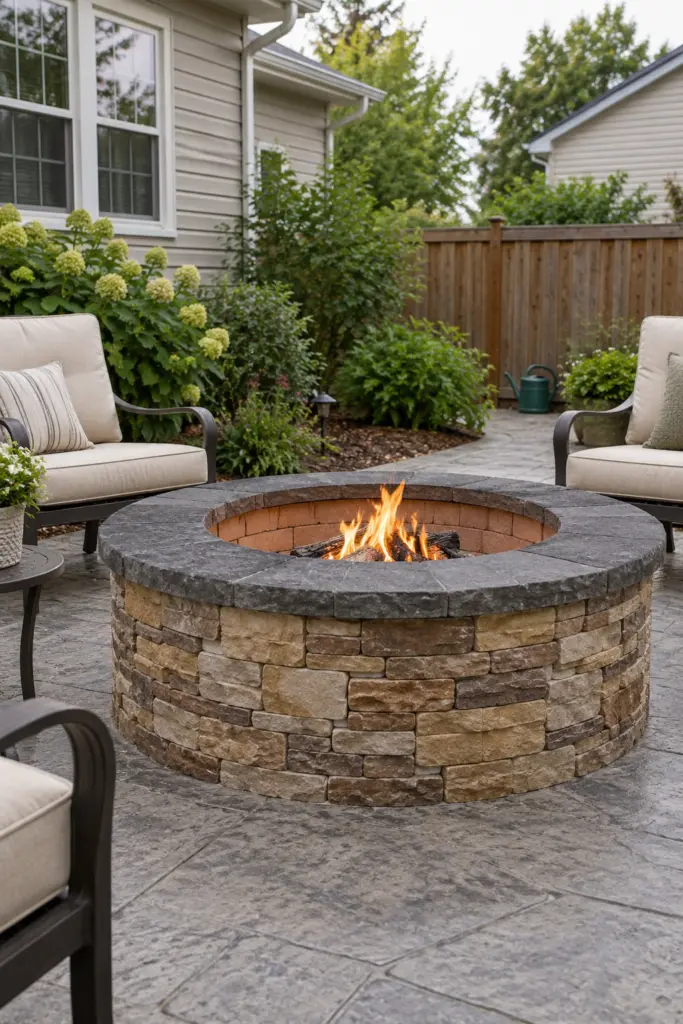
Most built stone fire pits are not solid stone at all but natural or manufactured stone veneer over a concrete block core, which is faster and cheaper to build. Stack concrete blocks into a ring on a footing, line the inside with fire brick as in idea 4, and apply the veneer to the outside with mortar. The finished pit looks like full stone. Manufactured veneer is lighter and more uniform; natural thin veneer looks more varied.
17. Stacked Stone Gas Fire Pit With a Burner Ring
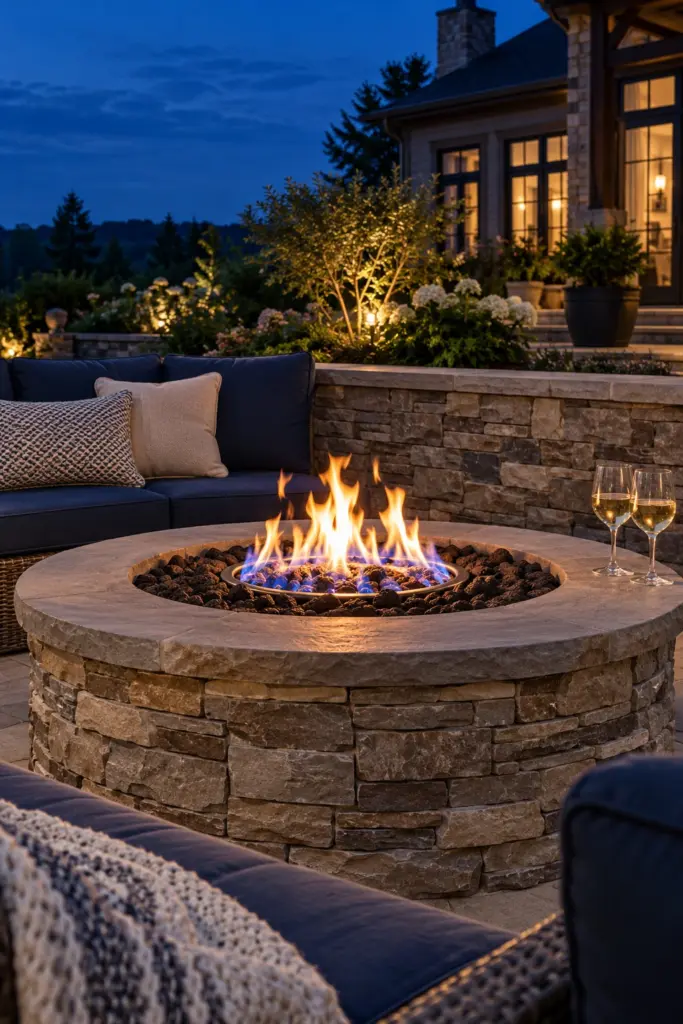
A gas burner inside a stacked stone pit gives the stone look with no smoke, no ash and a flame that starts with a key or switch. The stone wall is built the same way as a wood pit, with a burner pan and ring set inside and fire glass or lava rock covering it. The gas line and the burner hookup are a job for a licensed pro. Lava rock is the usual cheaper fill; fire glass costs more.
18. River Rock Border Kept Outside the Flame Zone
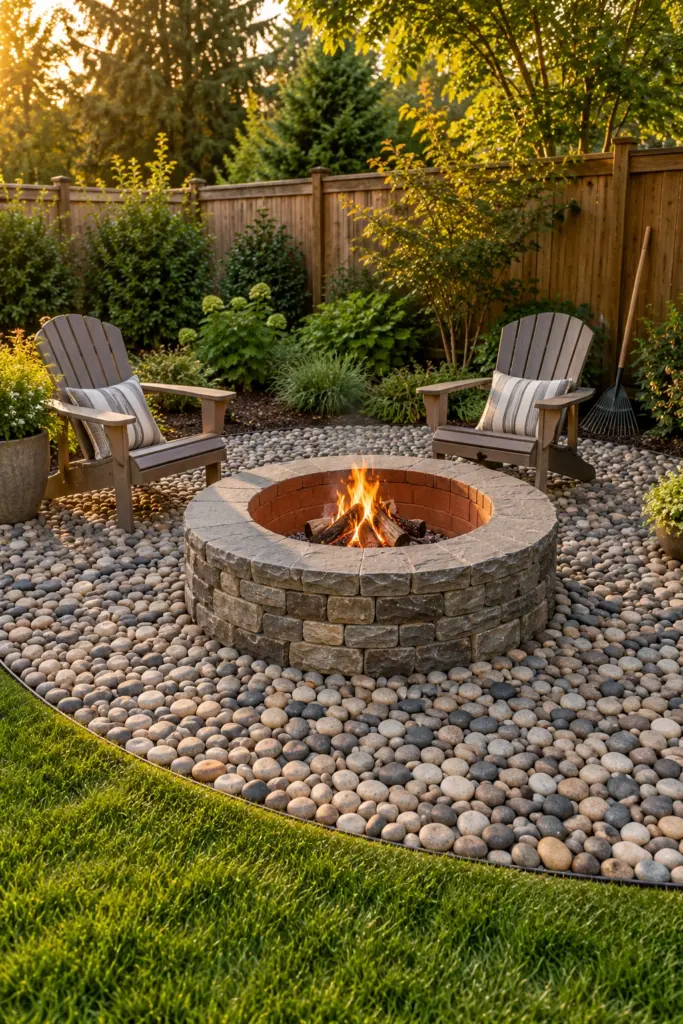
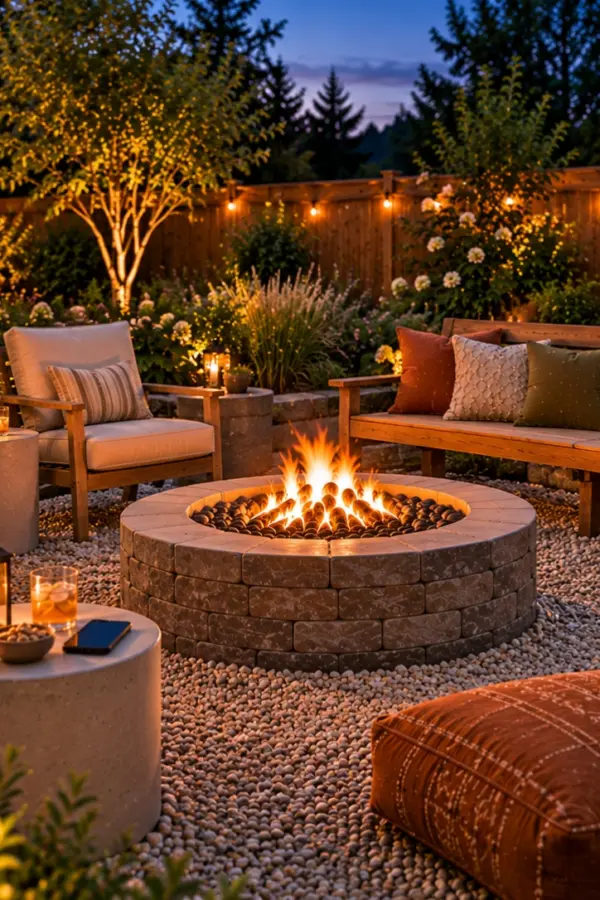
Smooth river rock is beautiful around a fire pit, and the safe way to use it is as a border bed outside the heat, never inside the fire. Build the pit itself like idea 16, with fire brick and a stone wall, then spread a 2- to 3-foot band of river rock around it over landscape fabric. The rounded stones frame the pit and handle foot traffic. Inside the pit, river rock is the one stone this post would never use.
Final Thoughts
Pick the stone for the look you want, then protect it: a steel fire ring or fire brick inside, natural stone outside, and river rock only as a border. Fieldstone and flagstone are the friendliest for DIY, boulders and armour stone need a machine, and cut stone is mason work. Keep the pit about 10 feet from the house, and think about where people will sit; fire pit seating layouts are the next step. Save this to Pinterest so the stone notes are there when you visit the stone yard.
Frequently Asked Questions
Fire brick and a steel fire ring are the safest materials for the inside of a fire pit. Dry, dense natural stone like granite, fieldstone or flagstone works well for the outer wall and caps. Avoid river rock and any stone that has sat in water inside the pit, since trapped moisture can crack it when heated.
Yes, some rocks can crack or burst in a fire, usually smooth river rock or stones that were wet or waterlogged. Water trapped inside turns to steam and can split the stone. Line the fire area with a steel ring or fire brick and keep decorative stone outside the heat.
A DIY dry-stacked fieldstone ring with a steel insert can cost a few hundred dollars in materials, while a mortared natural stone pit often runs $1,500 to $5,000 or more when built by a pro. Boulders and cut stone cost more because of weight and labor. These are rough estimates.
Most stone fire pits should have fire brick or a steel fire ring inside. Natural stone and ordinary mortar can crack under repeated high heat, while fire brick set in refractory mortar is made for it. A steel ring insert is the easier option for dry-stacked pits.
Loved this? Pin it so you can find it later.
Pin this post
Sana Ahmed
Hi! I’m Sana, and I’m always looking for fresh ideas to make outdoor spaces more beautiful and enjoyable. I love exploring everything from cozy patios and pergolas to backyard fire pits, privacy solutions, and charming garden sheds. I’ll be sharing the ideas that catch my eye and hopefully help you find a little inspiration for your own outdoor space.
All postsKeep reading