20 Sunken Fire Pit Ideas, From Shallow Dish to Full Conversation Pit
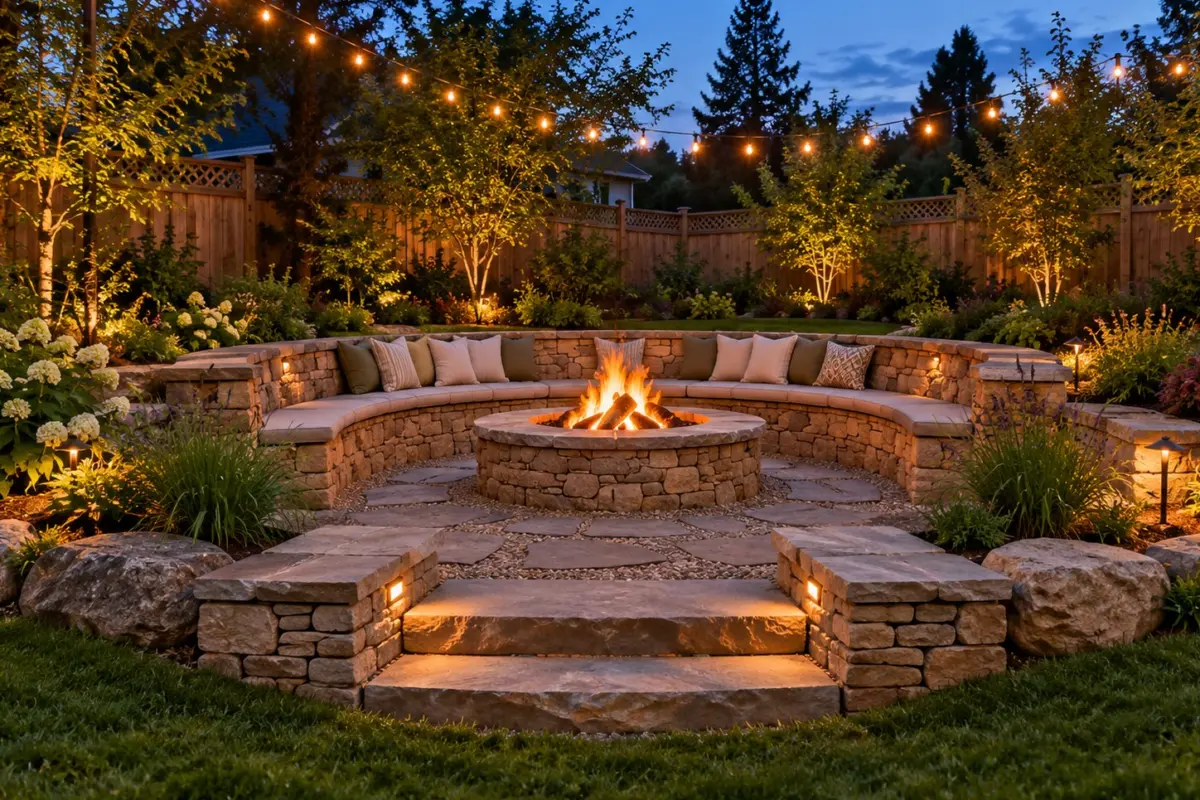 Save
Sunken fire pit ideas all look cozy in photos, but the part that decides whether one works is drainage: a hole in the yard collects water unless you plan where it goes. These 20 ideas are sorted by depth, from a shallow gravel dish a few inches down, to a seat-height surround where the wall becomes the bench, to a fully sunken conversation pit. Each one names the materials, a dig depth or clearance, and the mistake to avoid. Save this to Pinterest for when you start digging.
1. Shallow Gravel Dish Fire Pit Dug Six Inches Into the Lawn
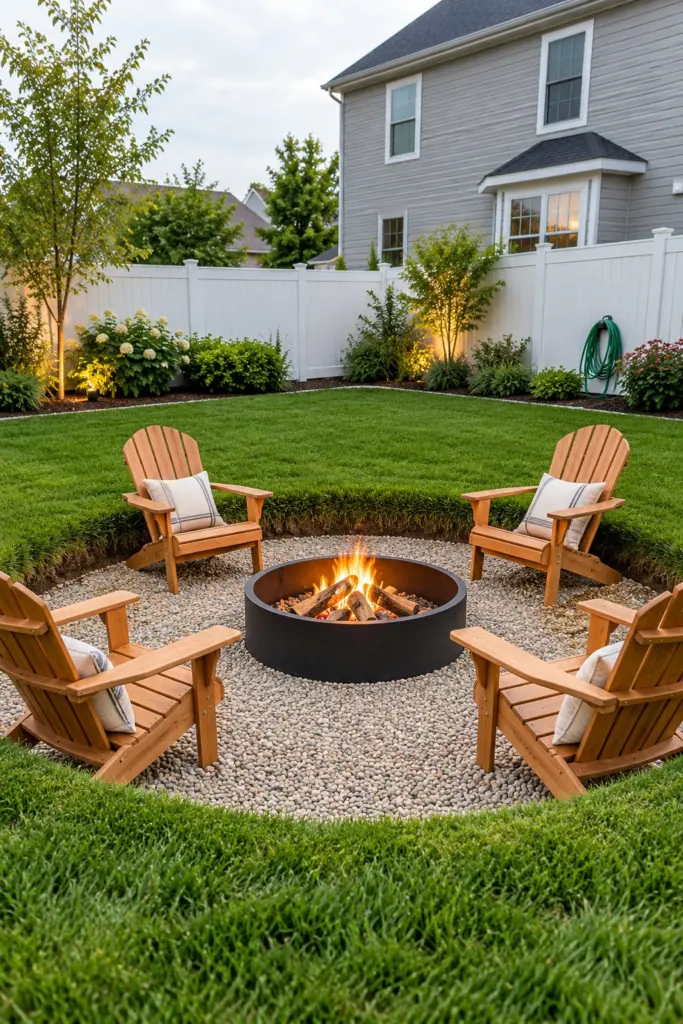
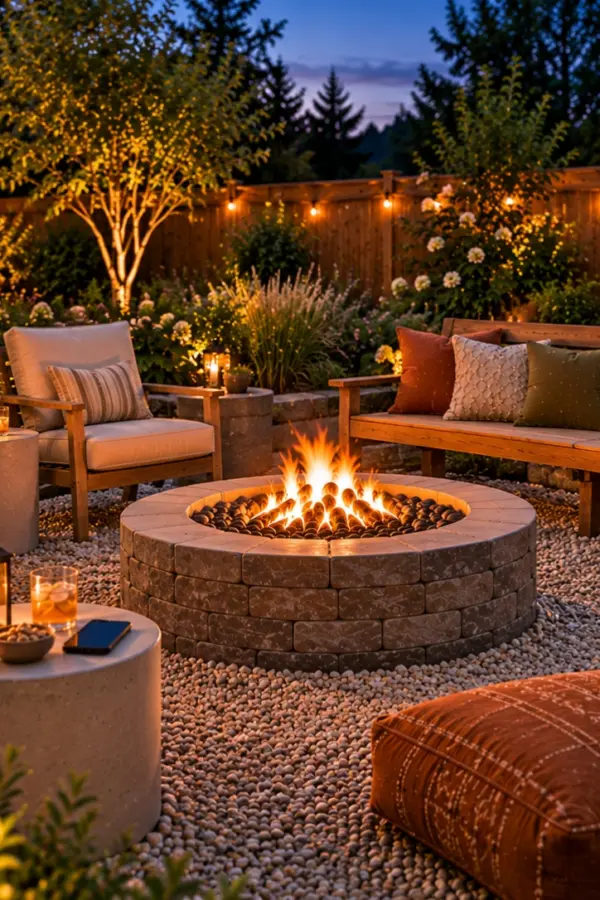
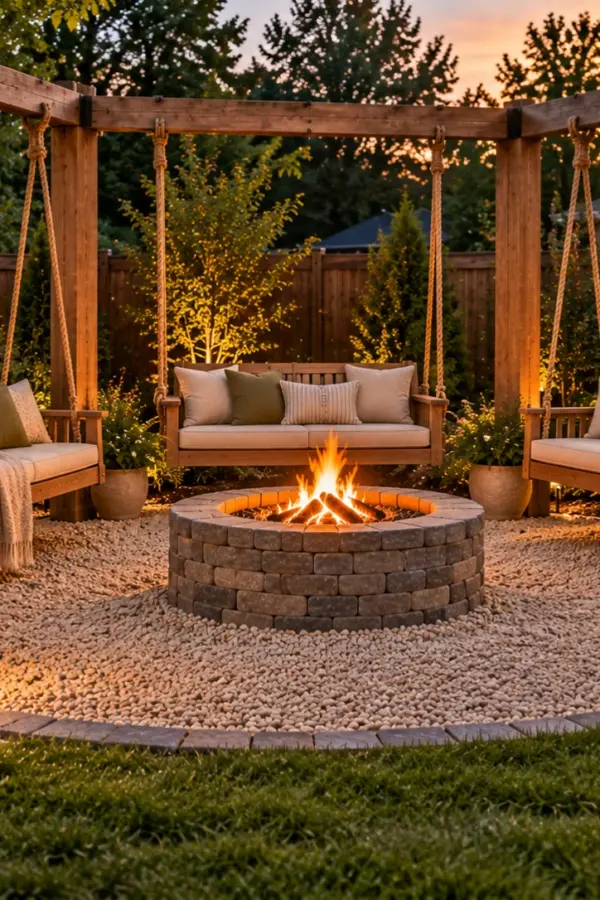
A dish only six inches deep already reads as sunken, because the flame sits below the grass line and the chairs feel gathered around it. Cut a circle about 14 feet across, lift the turf, and fill the dish with compacted crushed stone topped with pea gravel. A 36-inch steel fire ring goes in the middle and Adirondack chairs sit on the gravel. Keep the dish no lower than the lawn around it on every side, or it fills with water after the first storm.
2. Steel Fire Ring Set Into a Pea Gravel Bowl
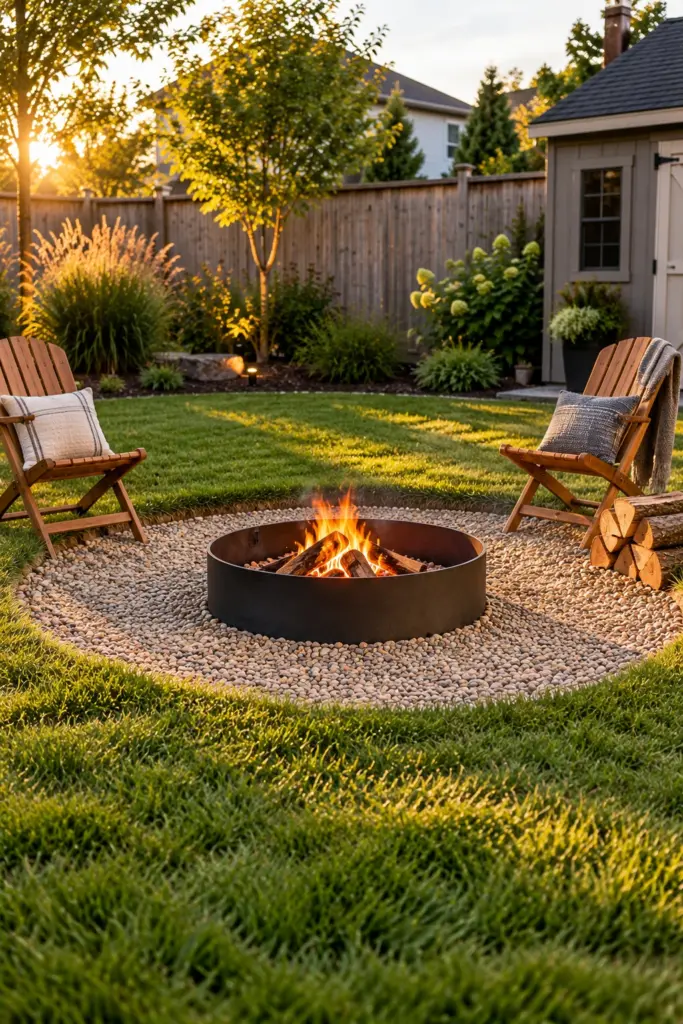
The cheapest sunken look is a plain steel fire ring dropped into a shallow bowl of pea gravel, since the ring does the fire work and the gravel does the drainage. Dig the bowl eight inches down at the center and feather it out to the lawn, then set a heavy-gauge fire ring insert on a few inches of compacted base. Pea gravel moves underfoot, so add a steel or stone edge to stop it walking into the grass. A weekend and a borrowed tamper usually covers it.
3. Flagstone-Edged Shallow Fire Pit on a Flat Patio
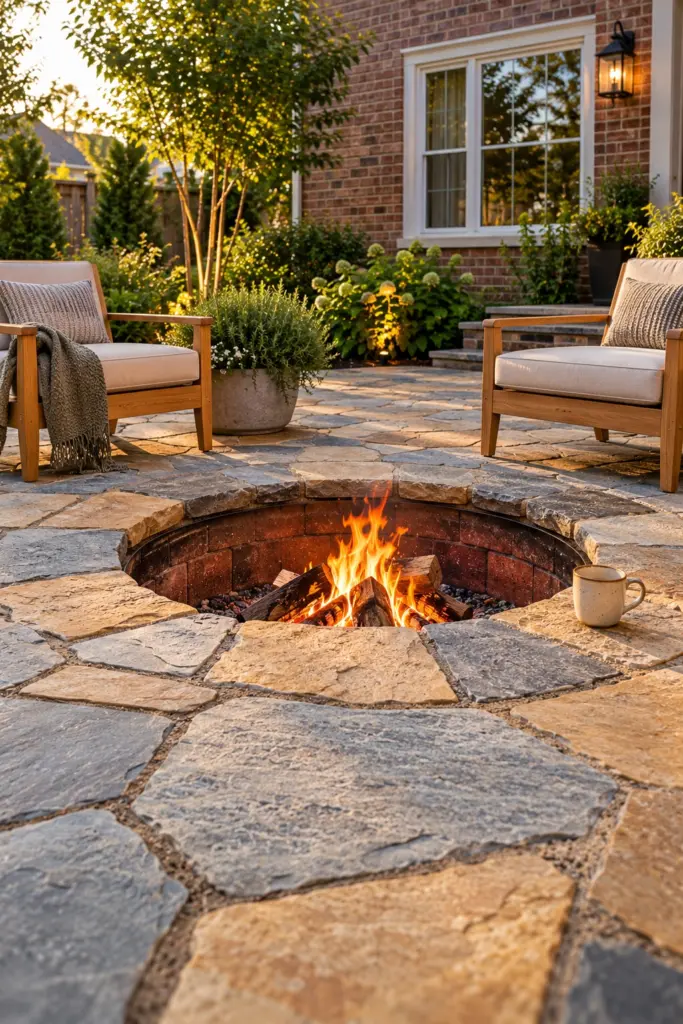
Sinking the pit a foot into an existing patio area keeps the fire low and the flagstone rim at floor level, so nobody trips over a raised wall. Lay irregular flagstone around a 40-inch fire ring, set it on a compacted base, and fill the gaps with polymeric sand or creeping thyme between the outer stones. Line the inside with fire brick or the steel ring itself. Never pack the pit with river rock: smooth stones can hold water and crack or burst when they heat up.
4. Sunken Fire Pit Dish With a Crushed Stone Drainage Base
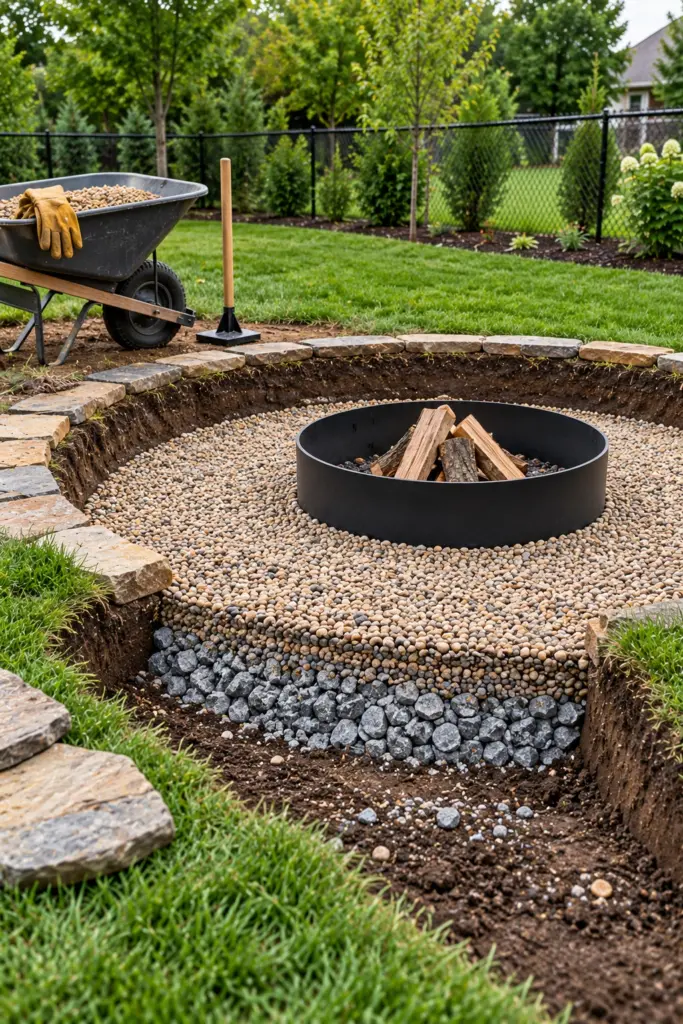
Drainage is the part people skip, and it decides whether a sunken pit lasts a season or ten years. Dig 6 to 8 inches deeper than the finished floor, lay landscape fabric, then fill with 3/4-inch clean crushed stone and compact it in layers. Pea gravel or pavers go on top, and the water that lands in the dish sinks through the stone instead of sitting there. This is the same base the shallow dish in idea 1 needs, done properly.
5. Corten Steel Edged Shallow Sunken Fire Pit
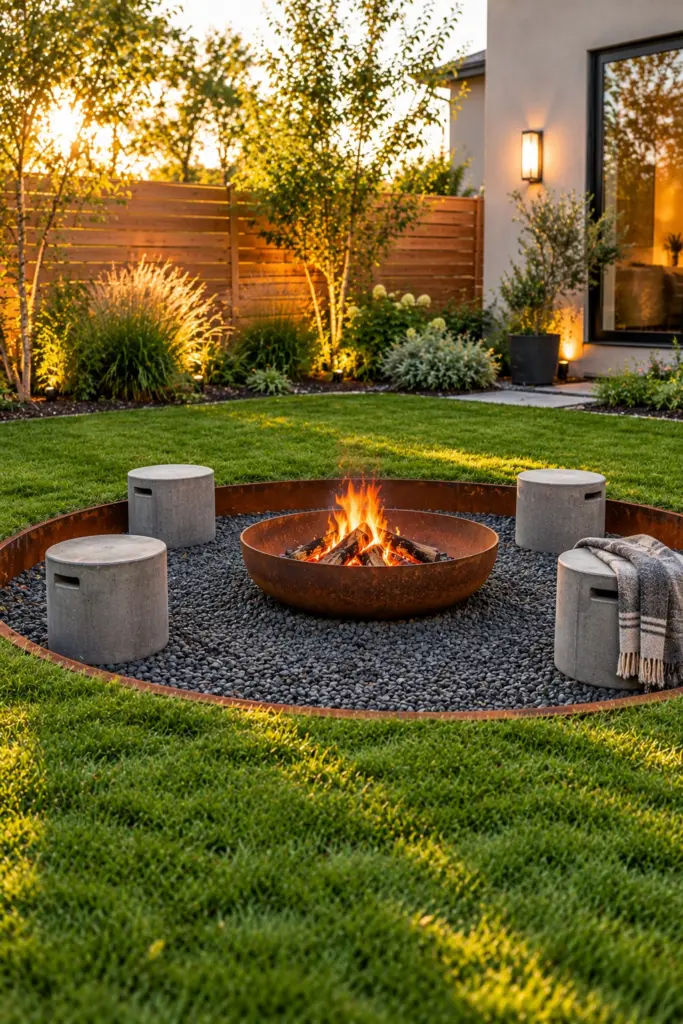
A rusted steel edge gives a shallow dish a crisp outline that holds gravel in and looks deliberate, especially in a modern yard. Sink a ring of corten steel landscape edging around a 12-foot gravel circle so the top sits flush with the lawn, then place a corten fire bowl at the center. Low concrete stools or simple metal chairs keep the look clean. The orange patina deepens over the first months, so let it weather before you put pale pavers next to it.
6. Low Brick Rim Sunken Fire Pit on a Budget
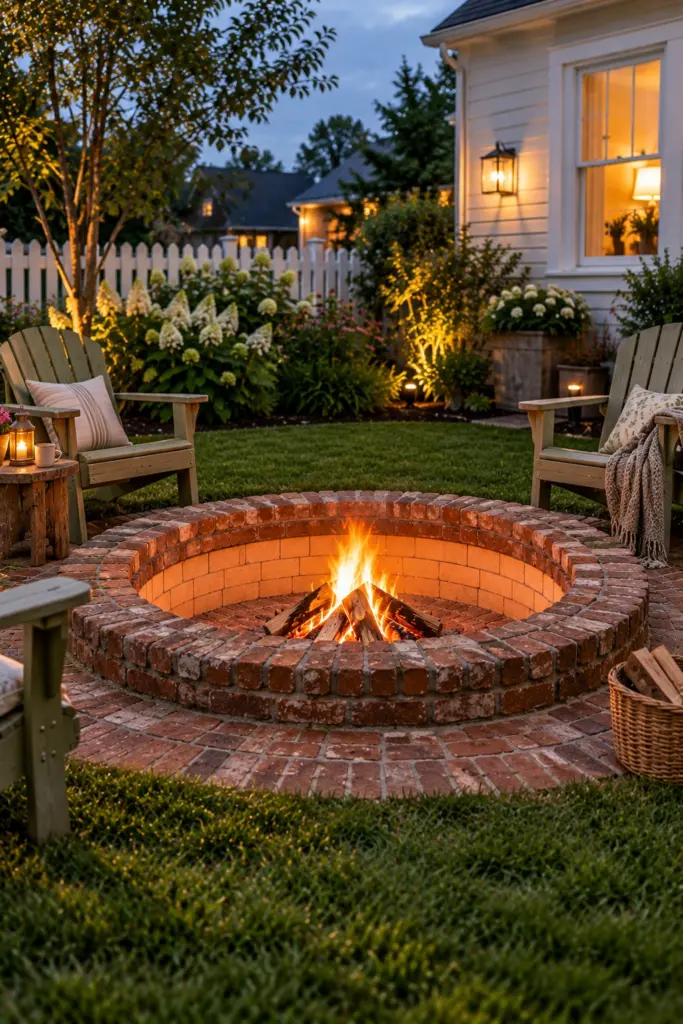
Reclaimed brick laid in a low ring around a shallow dish costs little and looks like it has been there for years. Dig the dish 10 inches down, build the inner pit from two courses of fire brick, the same lining as idea 3, and set a ring of salvaged red brick flat around the outside as a rim and floor. Bricks with old mortar on them are fine for the rim but not for the fire wall. Stop the rim one brick high so it reads as an edge, not a step.
7. Sunken Seating Circle With a Retaining Block Wall at Seat Height
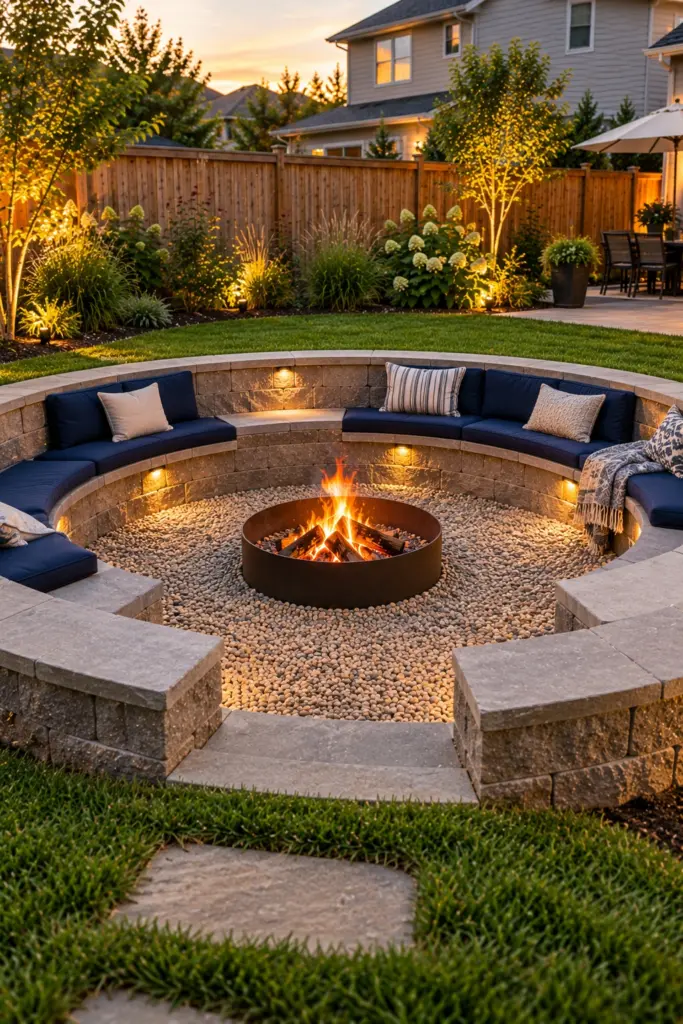
Drop the floor about 18 inches and the retaining wall around it becomes the bench, which is the moment a fire pit turns into a sunken seating area. Build the wall from segmental retaining blocks with a smooth cap, over a compacted gravel footing, and add a perforated drain pipe behind the bottom course. Keep the circle at least 12 feet across inside so knees are not toasted. Cushions on the cap make it a real seat rather than a ledge.
8. Sunken Fire Pit Cut Into a Gentle Slope
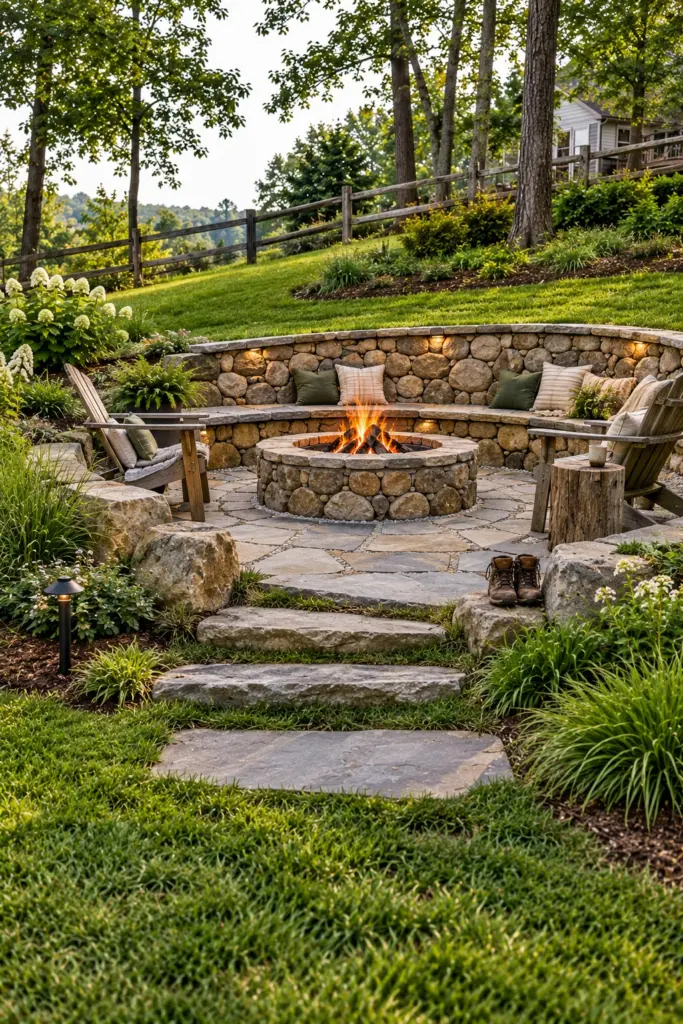
A sloped yard is the easiest place to build a sunken fire pit, because the downhill side can stay open and the water has somewhere to go. Cut into the slope, hold back the uphill side with a curved stone or block wall at seat height, and let the low side open onto the lawn with a step. Run a drain pipe from behind the wall out to daylight on the downhill side. The worst spot for any sunken pit is the lowest point in a flat yard.
9. Timber Sleeper Benches Around a Sunken Fire Pit
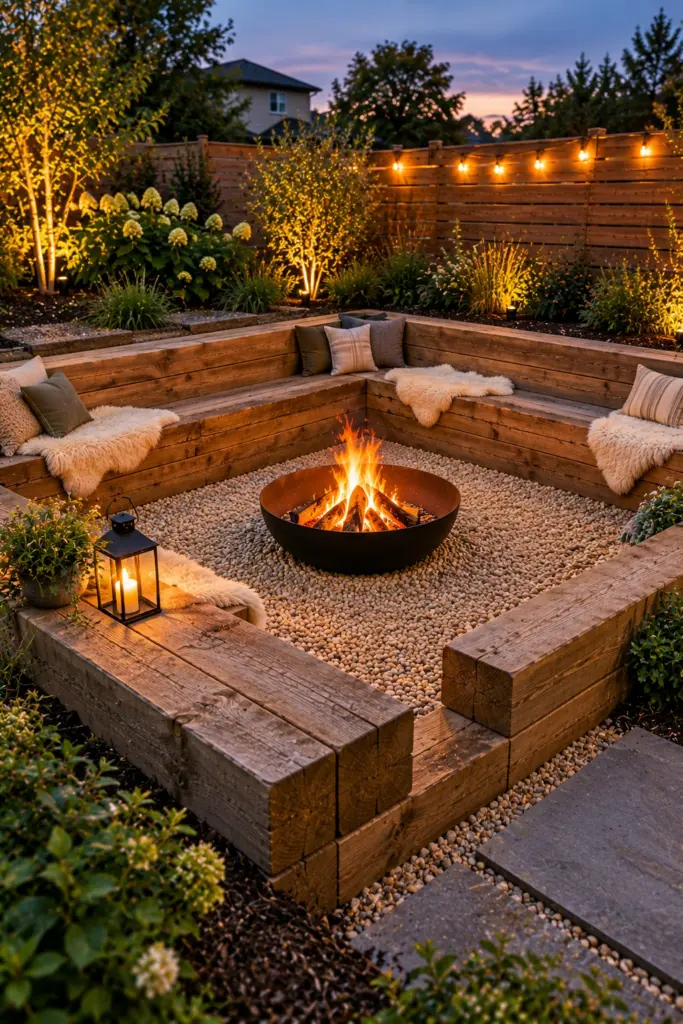
Stacked timber sleepers make a warm, softer retaining wall than block, and the top sleeper doubles as a long bench. Build a square or octagonal surround three sleepers high on a gravel footing, pin them together with long timber screws, and keep the sleepers well back from the flame with a gravel floor between. Pressure-treated pine is cheapest, hardwood lasts longer. Put a steel fire bowl or ring at the center, never a wood-edged pit.
10. Curved Poured Concrete Bench Lining a Sunken Pit
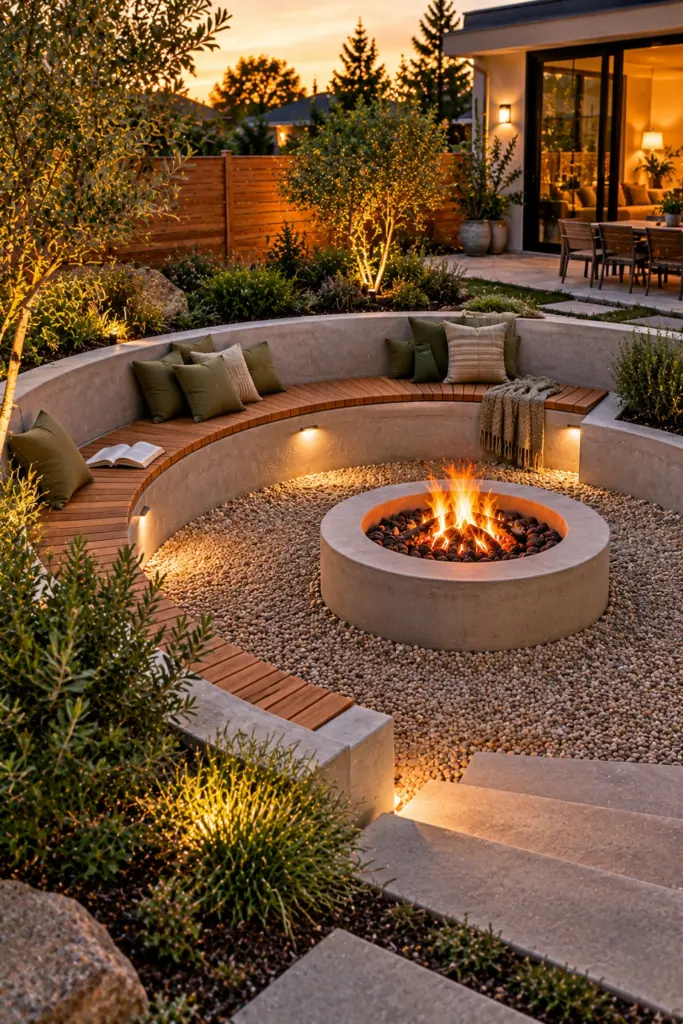
A single poured concrete bench that follows the curve of the pit looks sculptural and gives every seat the same distance to the fire. The pit floor drops about 18 inches, and the curved bench wall doubles as the retaining wall, finished smooth in a light grey. Teak slat seat toppers and a few olive cushions keep it from feeling cold. Concrete in this shape is usually a contractor job, since the curved forms and steel reinforcement take skill.
11. Sunken Fire Pit With Steps Down From the Patio
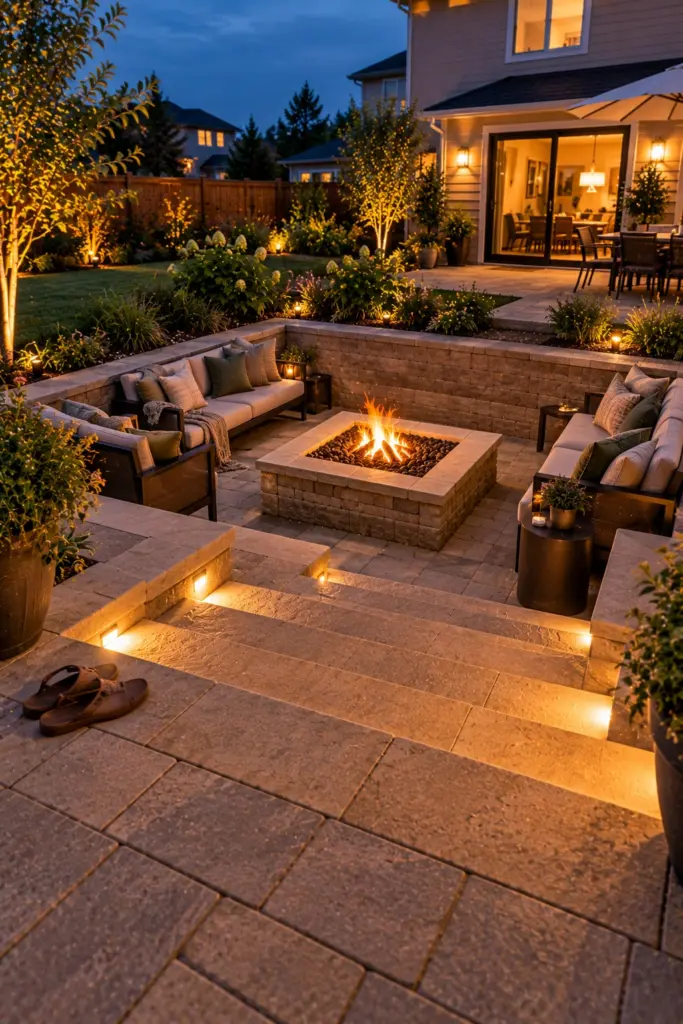
Linking the sunken pit to the patio with two or three wide steps makes it feel like part of the house rather than a hole in the yard. Use the same paver or stone as the patio for the treads so the levels connect visually, and make the steps wider than the path that reaches them. Two steps of about 7 inches each give a 14-inch drop, enough to feel enclosed. Light the step edges, because people walk down here in the dark.
12. Sunken Fire Pit Beside a Pergola Seating Area
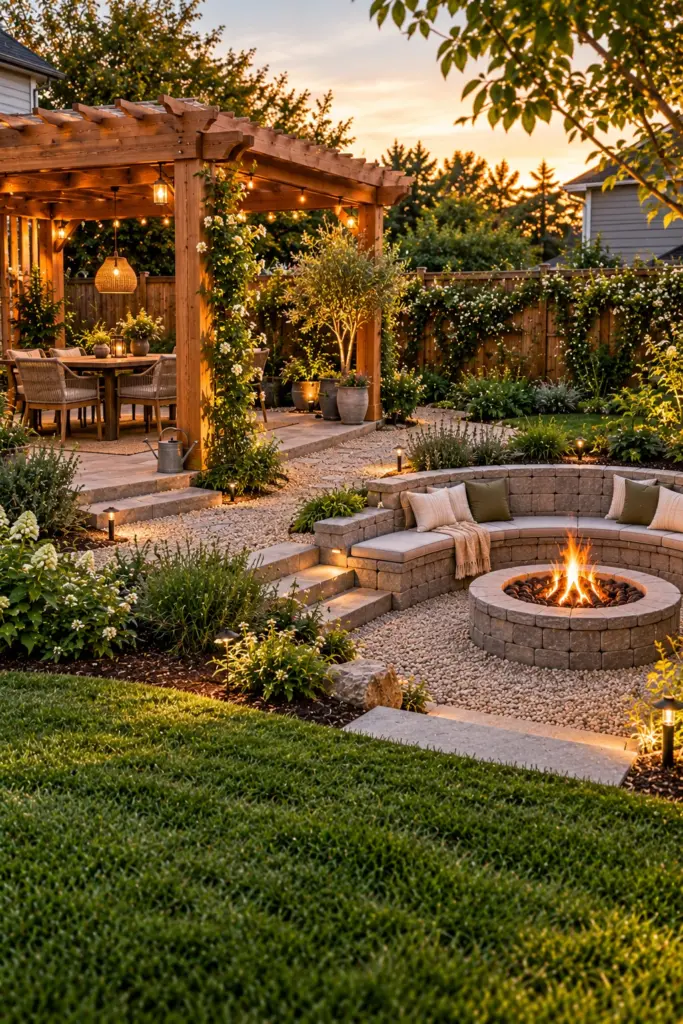
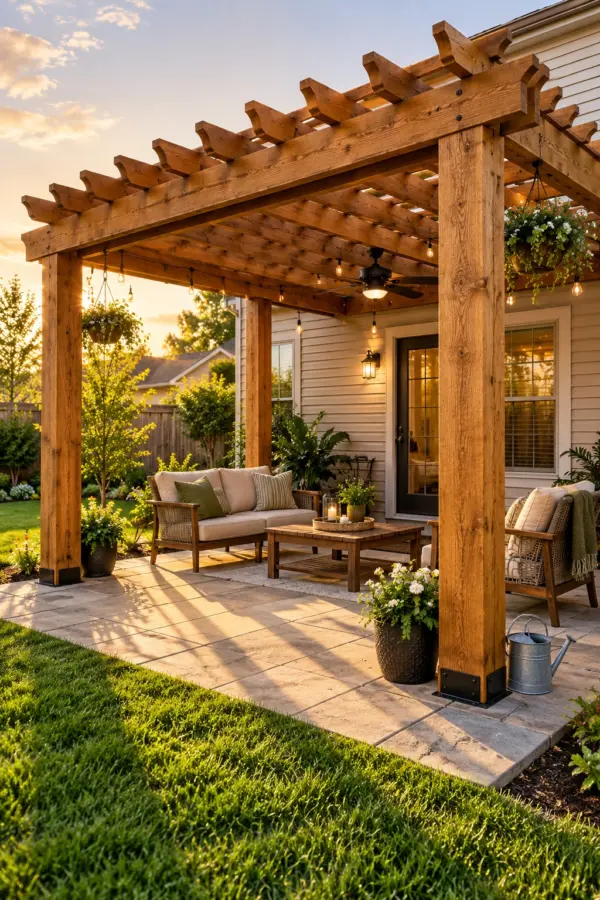
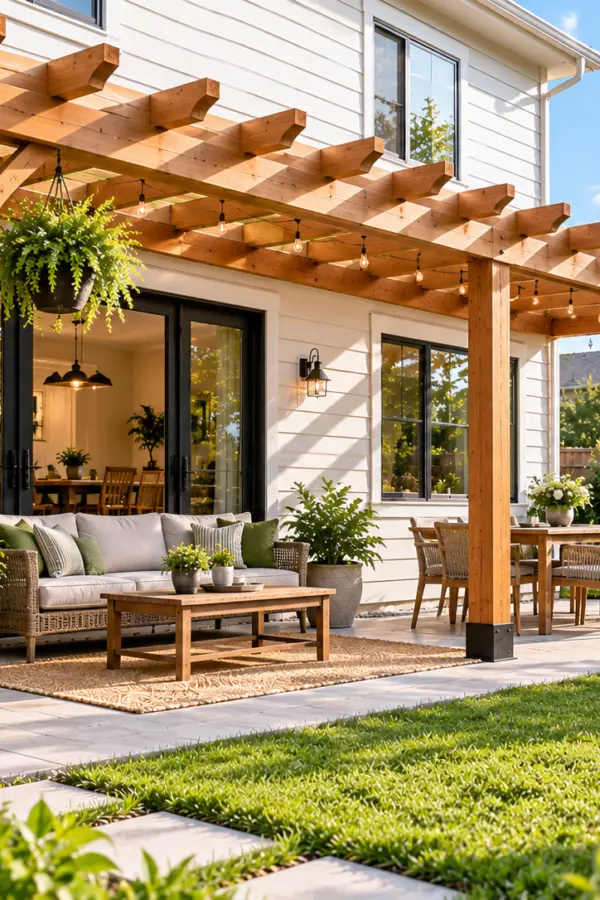
A pergola and a sunken fire pit work best side by side, with the pergola shading the dining or lounging zone and the fire sitting out in the open a few steps away. Drop the fire pit circle 18 inches next to a freestanding cedar pergola, and connect the two with a short gravel path. Keep wood-burning fires out from under any pergola. The open sky above the fire lets smoke and sparks rise without anything to catch.
13. Sunken Fire Pit With a Hidden Dry Well Drain
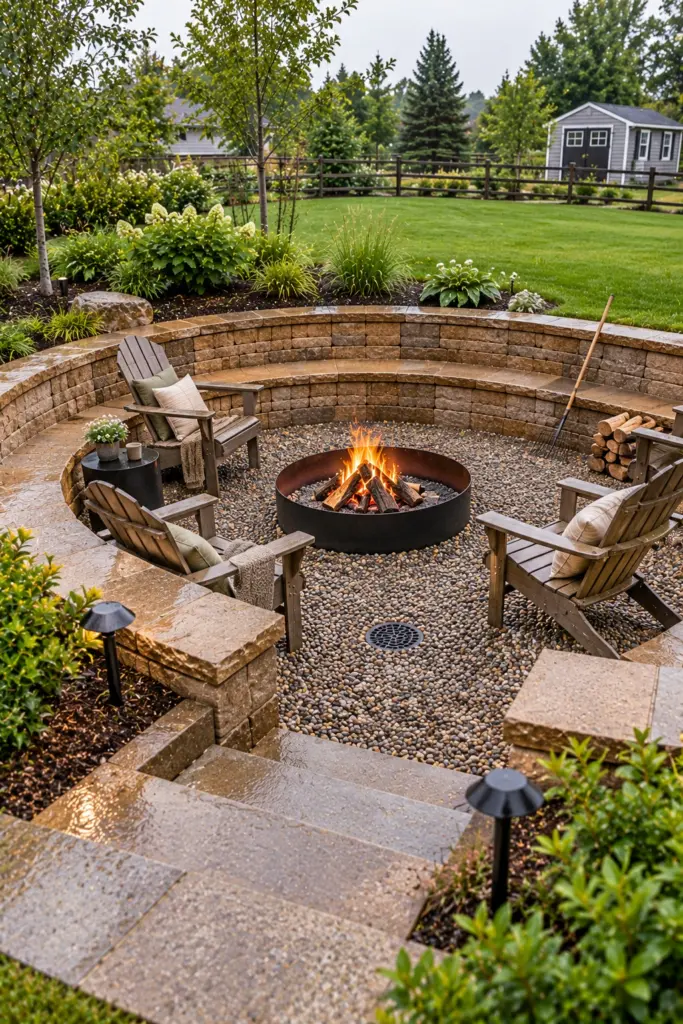
On heavy clay soil a gravel base alone is not enough, and a dry well is what keeps a seat-wall pit from holding water. A perforated pipe runs from the lowest point of the pit floor, sloping away to a gravel-filled pit or a plastic dry well chamber buried a few yards out in the lawn. Nothing shows on the surface but a small grate or a patch of gravel. Do this before the walls go up, not after the first flood, since retrofitting means lifting the floor.
14. Fully Sunken Conversation Pit With a Wraparound Bench
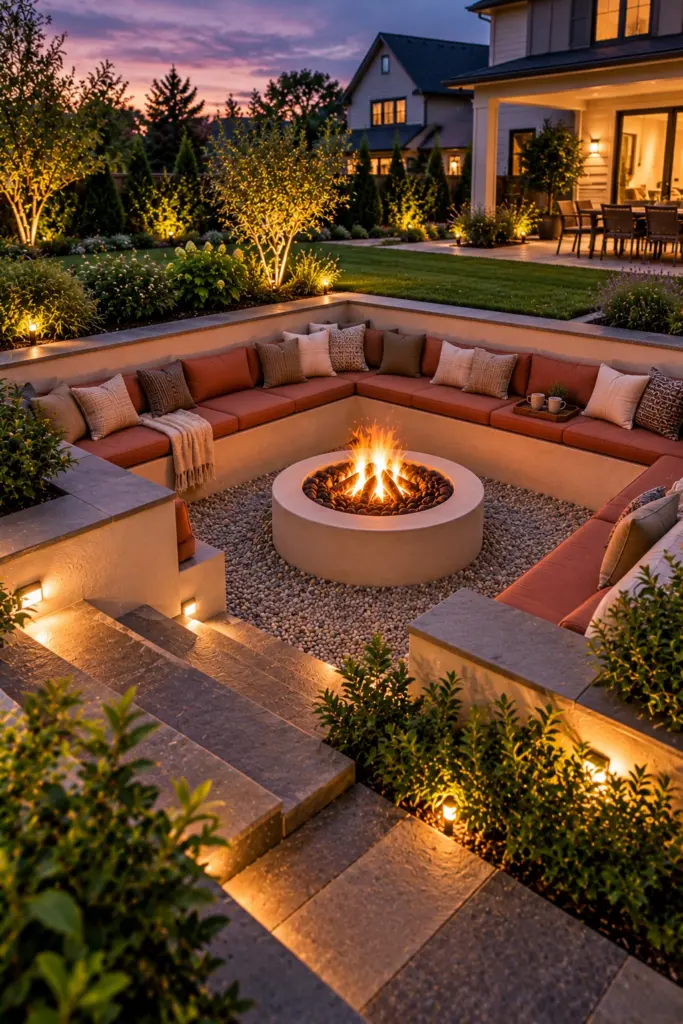
A full conversation pit sits two feet or more below grade with a bench running all the way around, so the walls block wind and the space feels like an outdoor room. Plan roughly 12 to 14 feet across inside for six to eight people, with built-in seating at 18 inches and a backrest formed by the upper wall. This depth needs serious drainage and usually a contractor. If it will burn gas, the fuel choice matters more than anything else down here.
15. Sunken Conversation Pit Beside the Pool
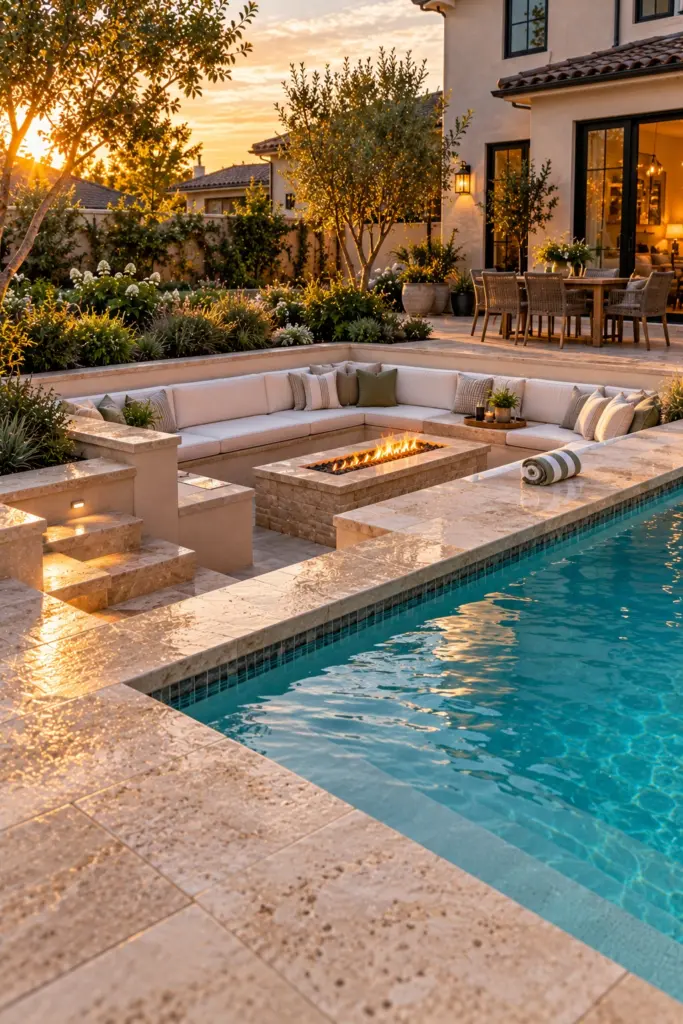
Setting a sunken fire pit next to a pool puts the warm spot exactly where wet swimmers want it, and the dropped level keeps it visually separate from the deck. Use the same coping stone or pool deck paver on the bench caps so it ties in, and pick textured, slip-resistant pavers for the steps down. Leave a generous deck walkway between the pool edge and the pit wall. A wraparound bench like the one in idea 14 works here too. Quick-dry foam cushions earn their price, since they take splashes all summer.
16. Square Sunken Lounge With Built-In Cushioned Benches
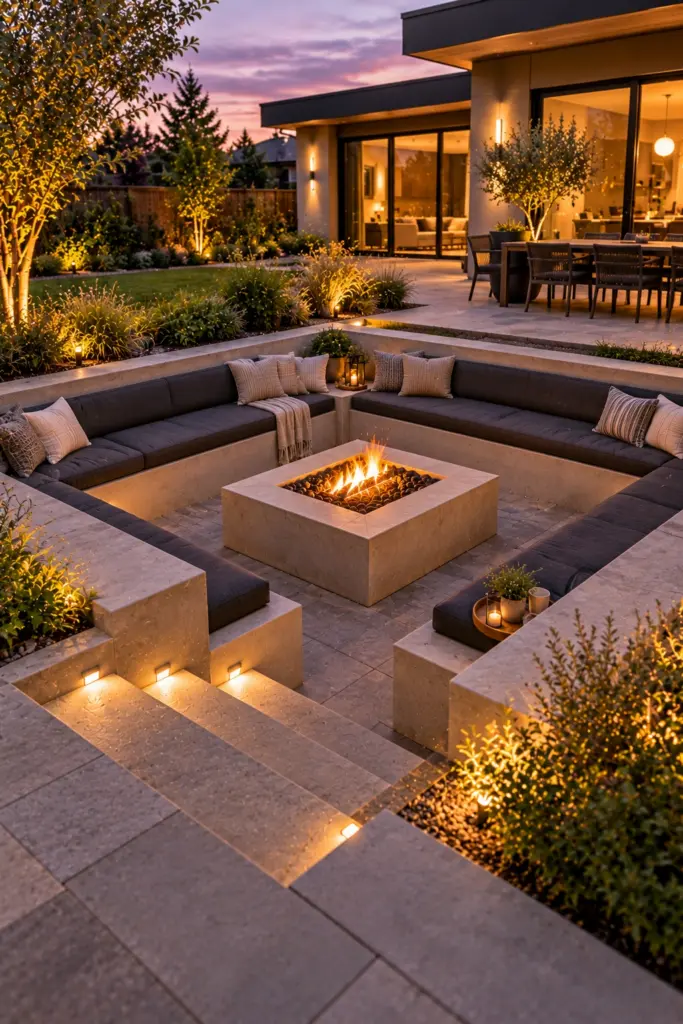
A square pit fits the straight lines of a modern house better than a circle, and four built-in benches give everyone a backrest. Drop the floor about 24 inches, build the benches from block with smooth concrete caps, and run long outdoor cushions along each side. A square gas or wood fire table sits centered, with at least 3 feet between it and the bench fronts so people can walk through. Corners are the best seats, so keep them uncluttered.
17. Sunken Fire Pit Lounge With a Gas Fire Table
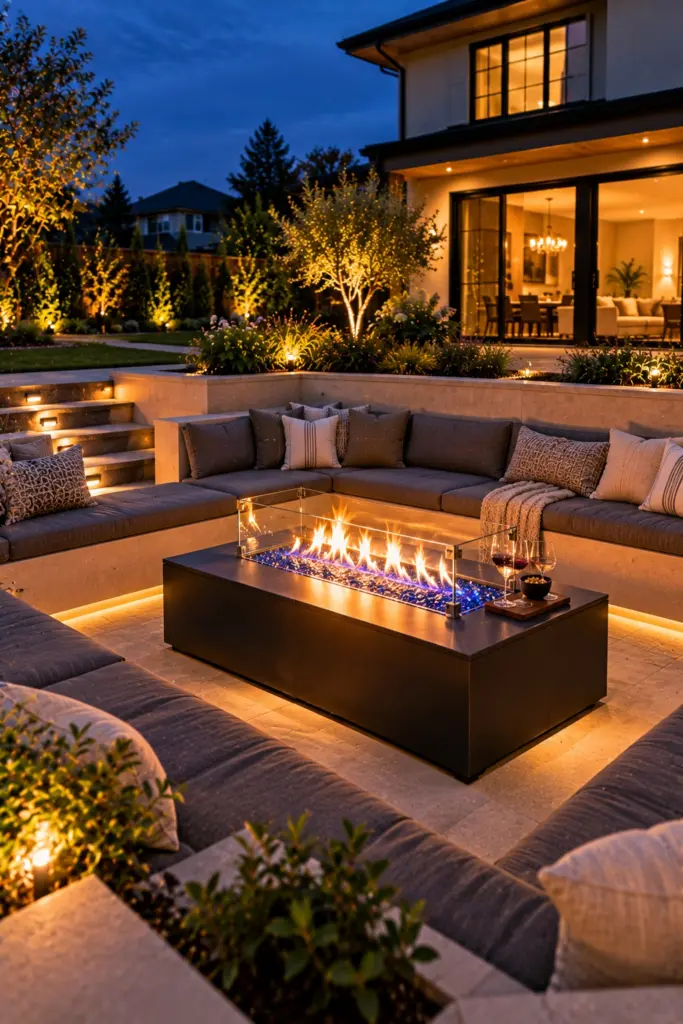
A gas fire table suits a deep sunken lounge because it lights with a switch, gives off no smoke to fill the pit, and keeps the floor free of ash. Set a rectangular fire table with a glass wind guard at the center and surround it with deep built-in benches. Natural gas is the better fuel down here, for the reason covered in idea 14. Budget for the gas line as a separate, licensed job.
18. Deep Sunken Fire Pit Area With a Railing on the High Side
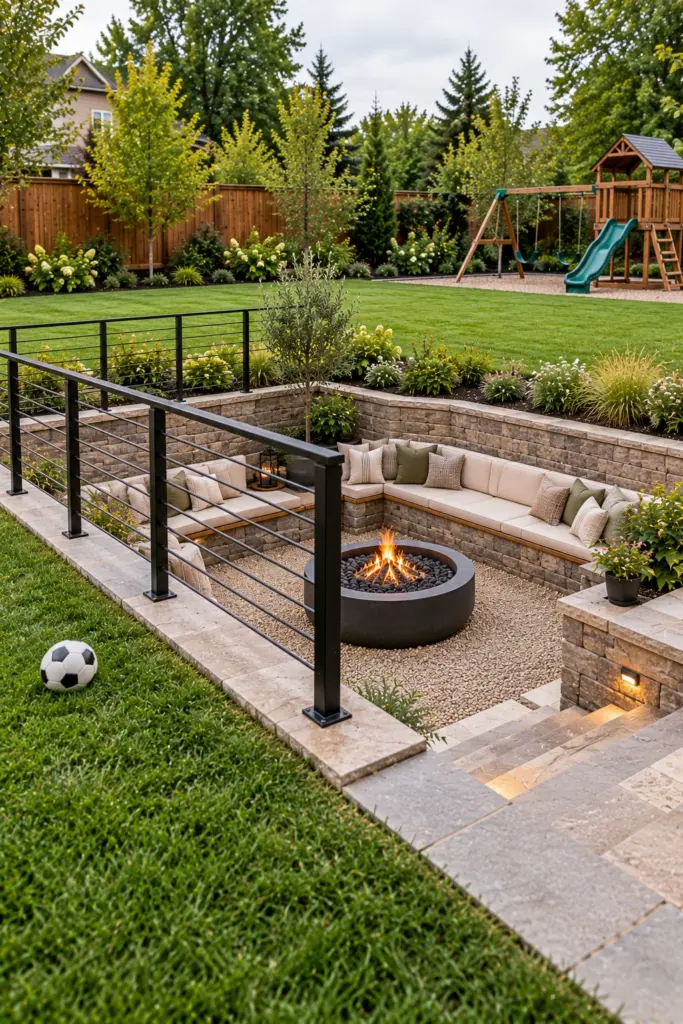
Once the drop at the top edge gets deep, the open rim becomes a fall risk, and a railing or planted barrier on the high side fixes it without spoiling the view. A simple black steel railing works on a lawn edge; a planter bed with tall grasses set back from the rim works too. The common threshold where codes start asking for a guard is around a 30-inch drop. Check yours, and treat a deep pit near a kids' play area with extra care.
19. Sunken Fire Pit With Lights in the Steps and Bench
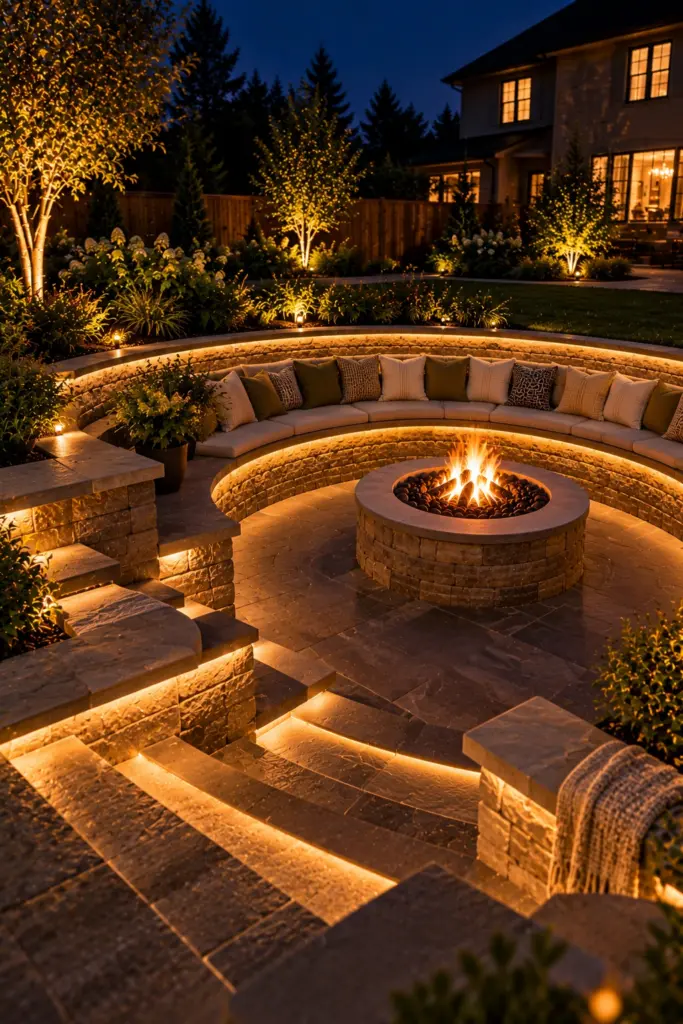
Low-voltage lights tucked under the bench cap and into the step risers make a sunken pit safe after dark and show off the curve of the walls. Use 12-volt LED hardscape lights under the caps and step lights in the risers, all running off one transformer. Warm white looks right next to firelight; cool white fights it. Plan the cable runs before the walls are built, as in idea 13 with the drain pipe, so nothing has to be chased in later.
20. Sunken Fire Pit Garden Room With Grasses Around the Rim
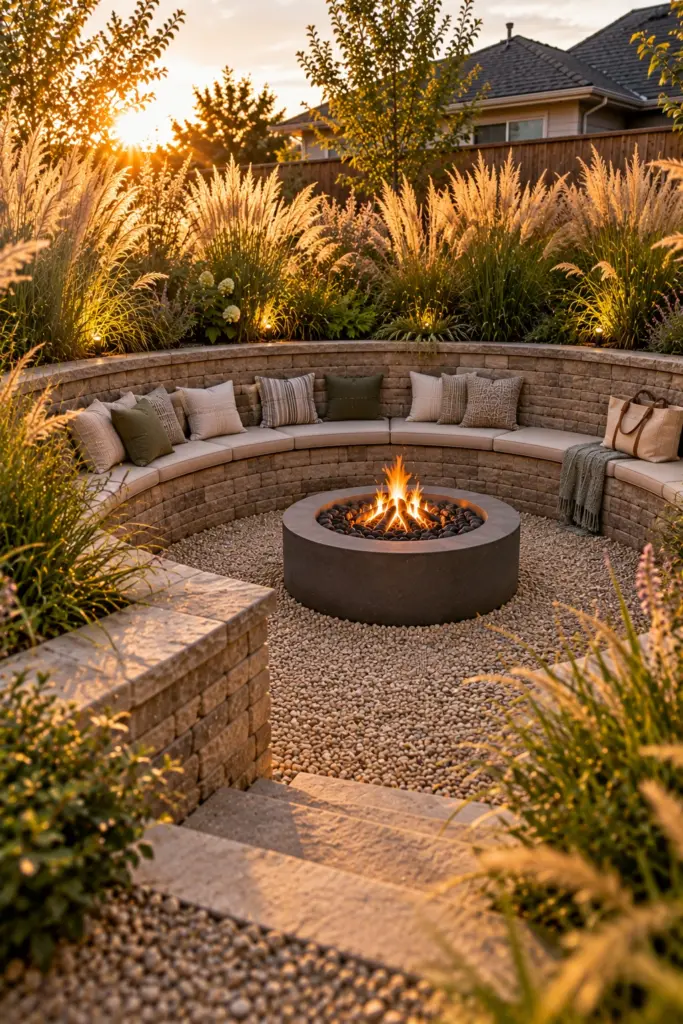
Ornamental grasses planted around the top of a sunken pit turn it into a garden room, swaying at head height for anyone seated below. Feather reed grass grows about 3 to 5 feet tall and stays upright, which suits a rim planting in zones 4 to 9. Set the planting bed back from the edge and keep plants well away from the flame. Pair it with a simple block or stone seat wall and gravel floor, like the circle in idea 7.
Final Thoughts
Start with the depth that fits your yard and your budget: a shallow dish is a weekend job, a seat-height surround is a serious build, and a full conversation pit is usually a contractor project. Whatever the depth, sort out drainage before anything else, keep about 10 feet between the fire and the house, and check local burn rules. If you want seating ideas that work at any level, fire pit seating layouts are the next step. Save this to Pinterest so the numbers are there when you plan.
Frequently Asked Questions
Yes, a sunken fire pit fills with water if it has no drainage plan. Dig 6 to 8 inches below the finished floor and fill with compacted clean crushed stone, avoid the lowest spot in the yard, and on clay soil add a perforated pipe to a dry well or to daylight on a slope.
Most sunken fire pit areas are 6 to 12 inches deep for a shallow dish, about 18 inches for a seat-height surround, and 24 inches or more for a full conversation pit. Deeper pits need more drainage, steps, and often a guard at the edge, so check local codes.
A shallow gravel dish with a steel fire ring can come in around $300 to $800 as a DIY job, while a block seat-wall pit often runs about $1,500 to $5,000 in materials. A professionally built conversation pit with gas can cost well into five figures. These are rough estimates.
Yes, but the fuel matters: propane is heavier than air and can collect in low spots, while natural gas rises. Use a licensed installer, follow the maker's ventilation guidance, and keep the sunken area open to the sky rather than enclosed.
Loved this? Pin it so you can find it later.
Pin this post
Sana Ahmed
Hi! I’m Sana, and I’m always looking for fresh ideas to make outdoor spaces more beautiful and enjoyable. I love exploring everything from cozy patios and pergolas to backyard fire pits, privacy solutions, and charming garden sheds. I’ll be sharing the ideas that catch my eye and hopefully help you find a little inspiration for your own outdoor space.
All posts