12 Fast-Growing Privacy Tree and Shrub Ideas for Fence Lines
 Save
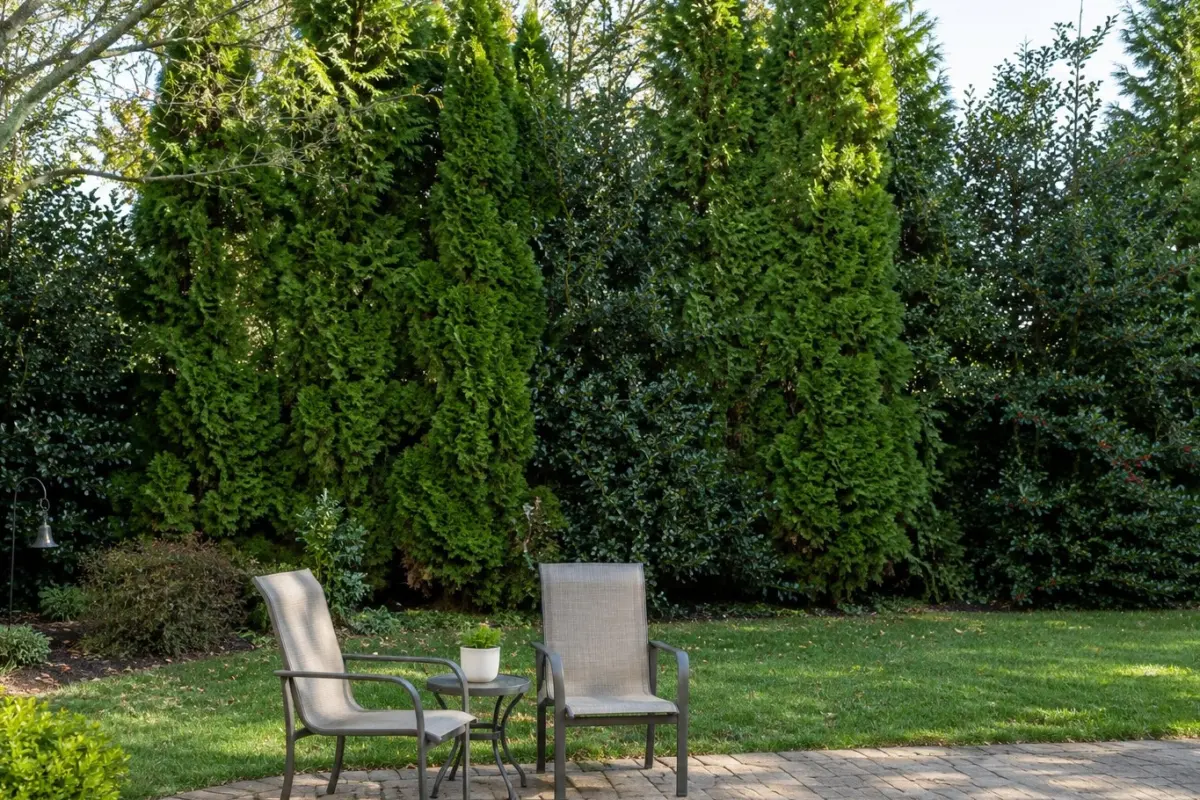
Fast growing privacy trees are rarely as fast as the label promises, but the right ones still turn a bare fence line into a green wall within a few seasons. The best trees for privacy are the ones that fit your zone, your sun and, most of all, the width you can give them; a USDA zone only tells you winter cold, so drainage and summer heat matter too. Below: planning first, then the plants, with sizes and zones from NC State Extension, then planting.
1. Measure the View You Actually Need to Block
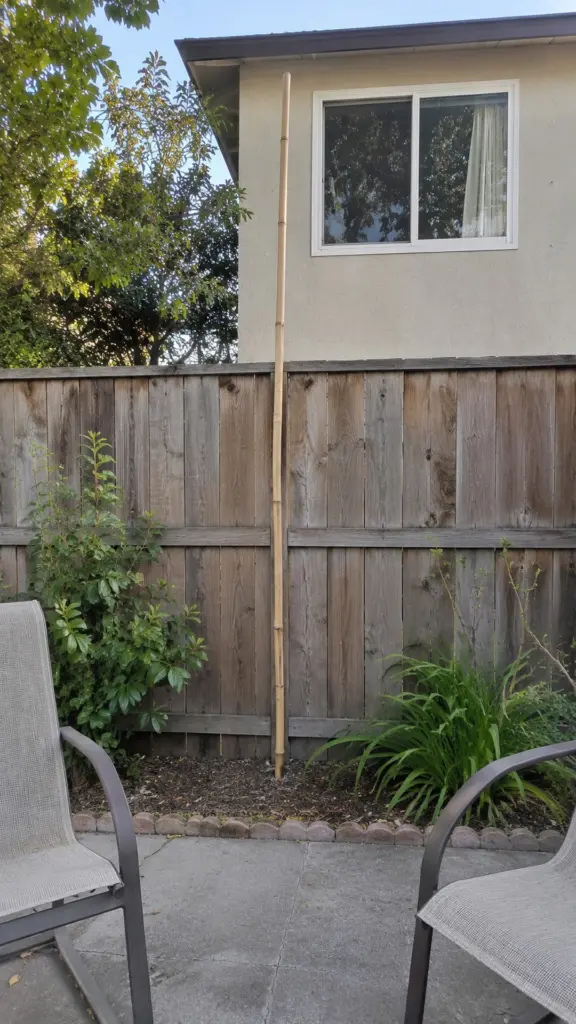
Before choosing fast growing privacy trees, stand where you sit and look at what bothers you: a neighbor's upstairs window, a deck, a street. Note roughly how high the screen needs to reach and how wide the gap is. A window ten feet up needs a different plant than a deck at fence height. That height and width, plus your sun and USDA zone, narrow the list below to two or three plants that actually fit.
2. Space for the Mature Width, Not the Nursery Pot
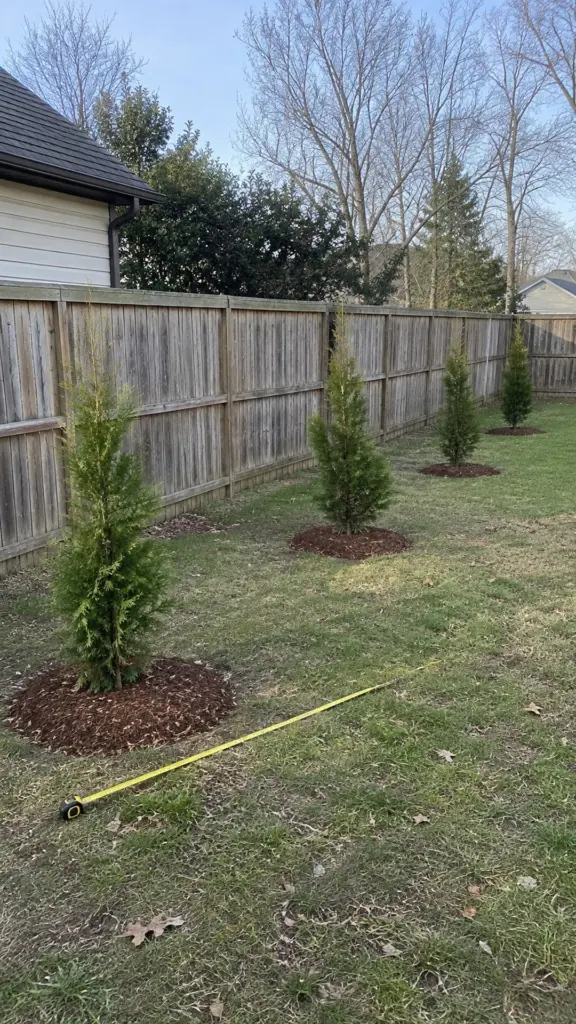
The most common mistake with privacy trees is planting for today's size. A small arborvitae in a pot looks lonely three feet from its neighbor, so people crowd them, and a few years later the row is a tangle that browns inside. Check the mature width on the tag or an extension site, set plants so they will meet without crushing each other, and keep the row far enough off the fence and property line (and any easement) that the full width stays on your side; there is no national setback, so local rules and easements decide.
3. Green Giant Arborvitae for Big Screens
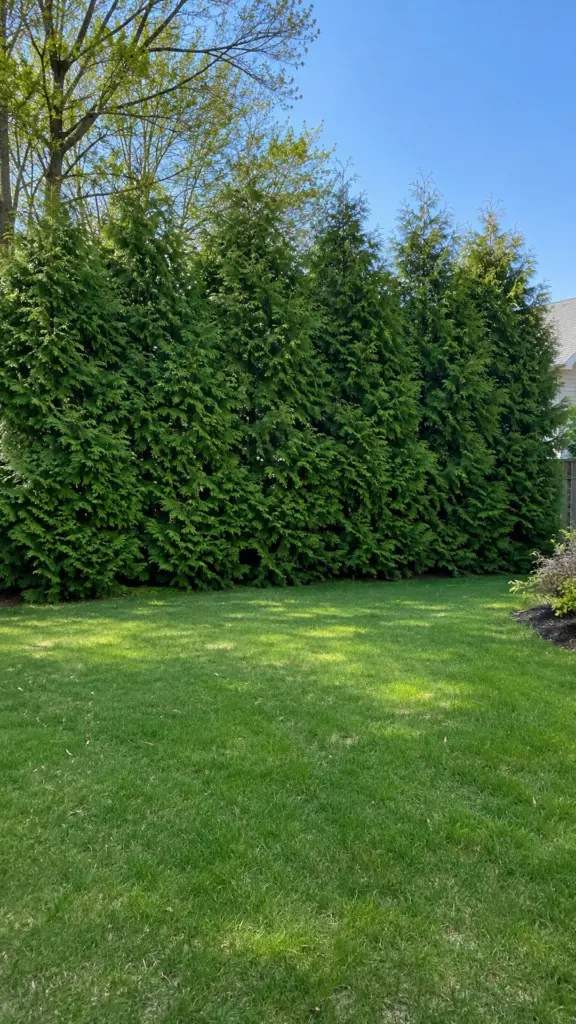
If you have room, 'Green Giant' arborvitae is one of the most common picks for fast privacy trees. NC State Extension rates its growth as rapid, up to 3 to 4 feet a year in ideal conditions, with a mature size of 40 to 60 feet tall and 12 to 18 feet wide, for USDA zones 5 to 8. It takes full sun or part shade, resists most pests and needs little pruning. It is less likely to be browsed by deer than many other arborvitae, but it is not deer-proof. It does not like salt or poorly drained soil.
4. Leyland Cypress Grows Fast, but Know the Risks
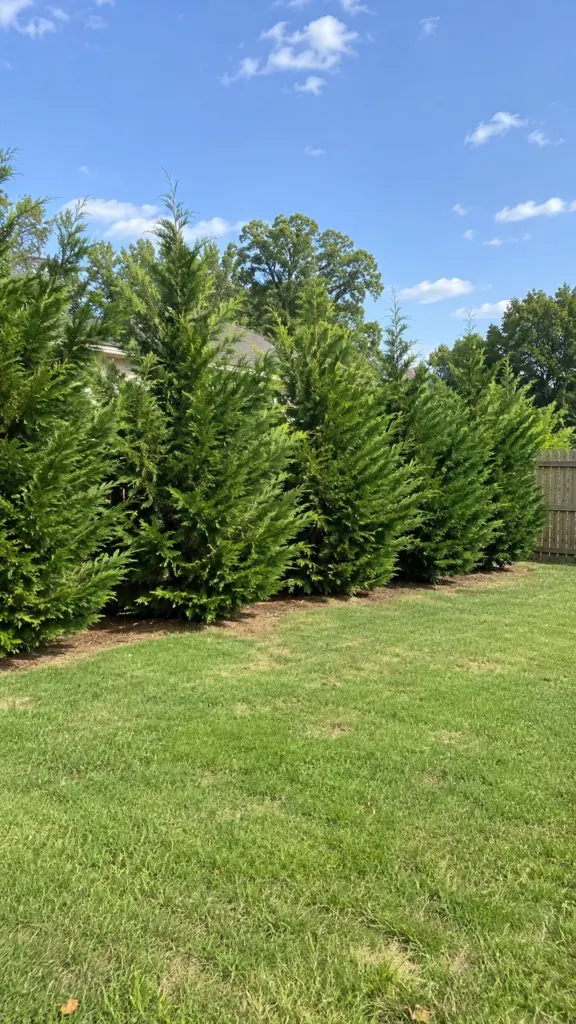
Leyland cypress is another rapid grower, rated by NC State Extension for zones 6 to 10 at 60 to 70 feet tall and 10 to 15 feet wide. That speed comes with real long-term risk: the same source warns it is prone to bagworms, root rots and cankers, that cankers often follow drought, and that both can't be cured. NC State also notes shallow roots that suit hot summers poorly and big trees that can topple, and lists natives like eastern redcedar as alternatives; 'Green Giant' from idea 3 is usually the safer fast choice.
5. Spartan Juniper for Narrow Side Yards
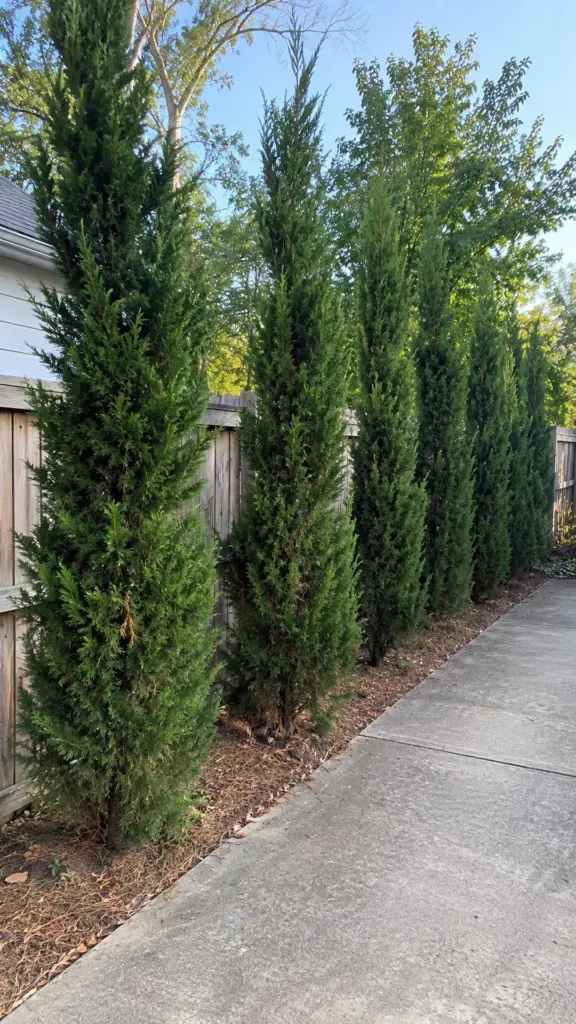
Not every yard can give up 15 feet of width to a hedge. 'Spartan' juniper, a cultivar of Chinese juniper, is described by NC State Extension as fast-growing, dense and columnar, reaching 15 to 20 feet tall. The species is listed for zones 4 to 9, so check the cultivar's own hardiness when you buy, and it wants full sun and good drainage. NC State gives no mature width for this cultivar, so confirm its spread with your nursery before you count on the slim shape, which suits a narrow strip between a driveway and a fence.
6. Nellie R. Stevens Holly for a Glossy Screen
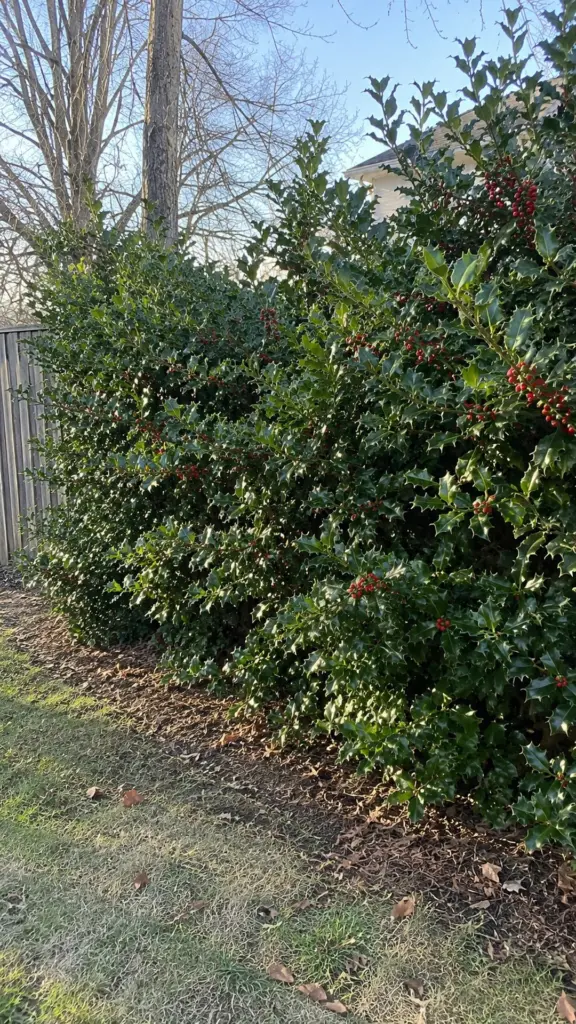
For privacy shrubs with leaves instead of needles, 'Nellie R. Stevens' holly grows at a rapid rate according to NC State Extension, reaching 15 to 30 feet tall and 8 to 25 feet wide in zones 6 to 9. It handles full sun or part shade and carries red berries in winter. The leaves are spiny, so keep it away from paths where people brush past, and give it room, because it gets wide with age.
7. Wax Myrtle in Warm Zones
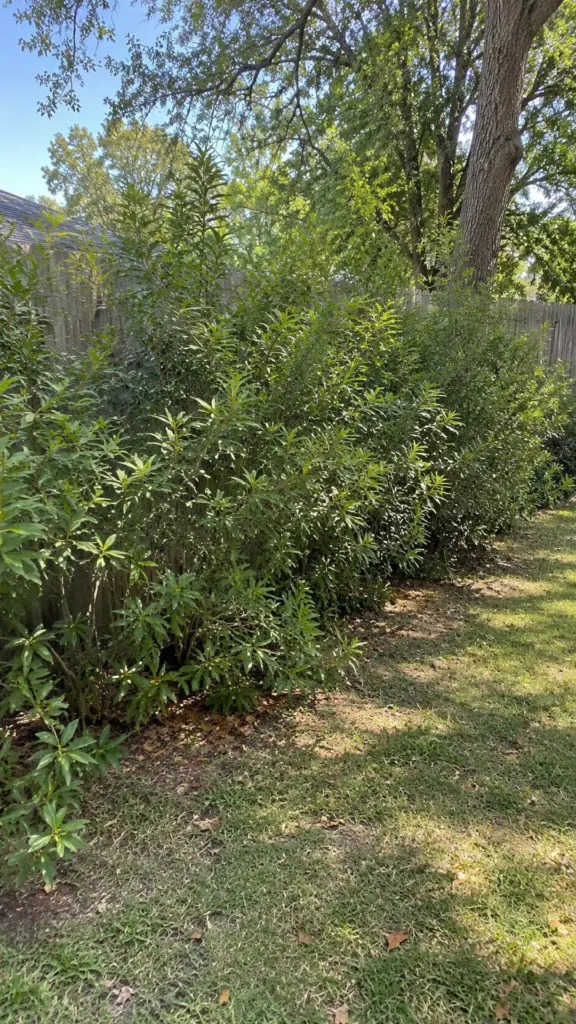
In the South, native wax myrtle is a fast and forgiving screen. NC State Extension rates its growth as rapid, with a size of 20 to 25 feet tall and 8 to 10 feet wide, and describes it as winter hardy in zones 7 to 10, though only semi-evergreen in the colder part of that range. It takes sun or dappled shade and has no serious pest or disease problems listed. NC State rates it high for flammability because of aromatic compounds in the leaves and stems, so keep it out of your home's defensible space in fire-prone areas.
8. Cherry Laurel for Shady Fence Lines
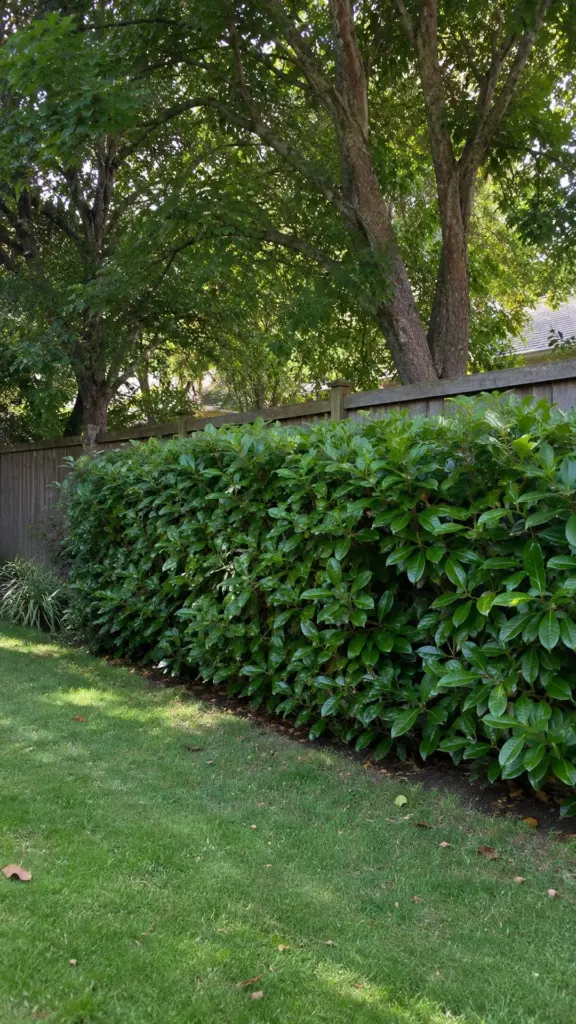
Shade is where most fast privacy plants struggle. Cherry laurel, also called English laurel, is rated rapid by NC State Extension and grows in full sun to deep shade, reaching 10 to 20 feet tall and 8 to 10 feet wide in zones 6 to 8. It handles heavy pruning, so it can be kept as a tidy hedge. Its roots are competitive, so give it space away from beds you care about.
9. Eastern Redcedar, the Native Pick for Cold Zones
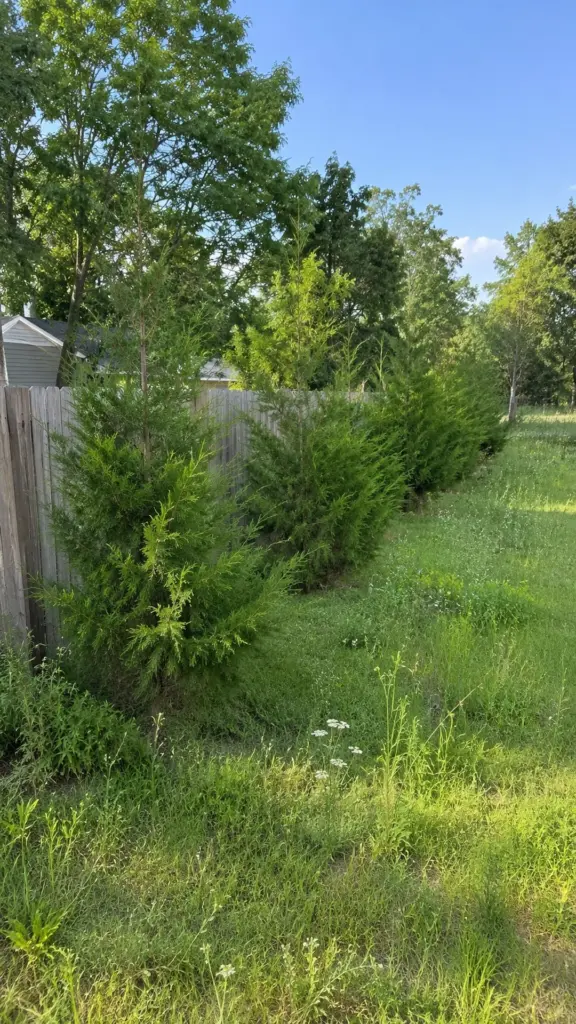
Among evergreen privacy trees, eastern redcedar is the native that grows in an unusually wide range, zones 2 to 9 according to NC State Extension, at a medium rate to 30 to 40 feet tall and 10 to 20 feet wide. It is tough, takes poor soil and gives birds cover, and female trees carry the berry-like cones birds eat. It grows slower than 'Green Giant' in idea 3, and NC State rates it high for flammability, so keep it back from the house in fire-prone areas.
10. Clumping Bamboo in Part Shade, Not Running Bamboo
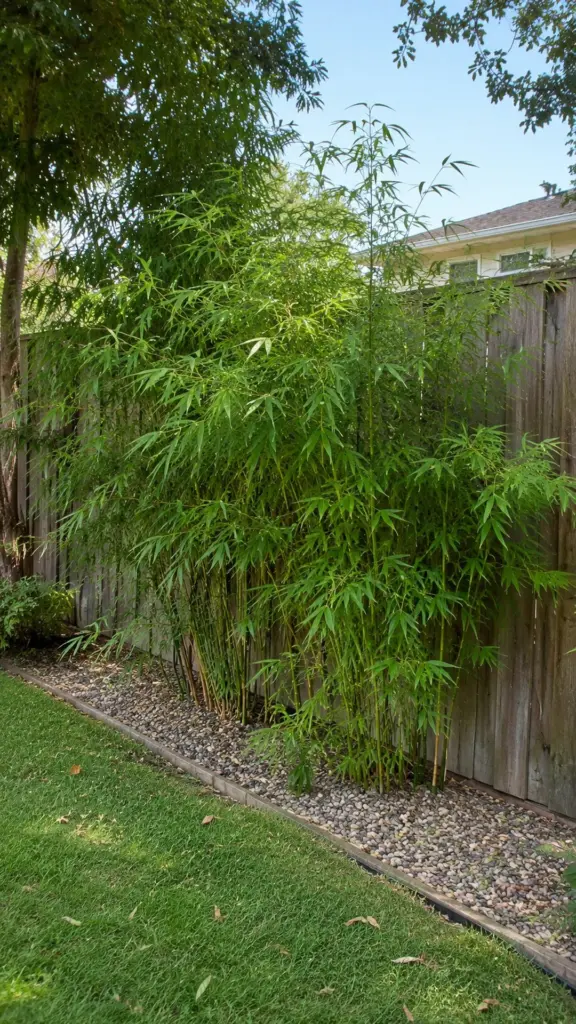
Bamboo screens are popular on Pinterest, but the type matters. Clumping bamboo such as Fargesia nitida stays in a tight clump instead of spreading, and grows 10 to 15 feet tall and 3 to 5 feet wide in zones 5b to 9a, preferring dappled or part shade; the clump still widens slowly over the years. Honest note: NC State Extension lists its growth rate as slow, so it is a tidy screen, not an instant one. Running bamboo is the kind to avoid.
11. Mix Two or Three Plants in a Staggered Row
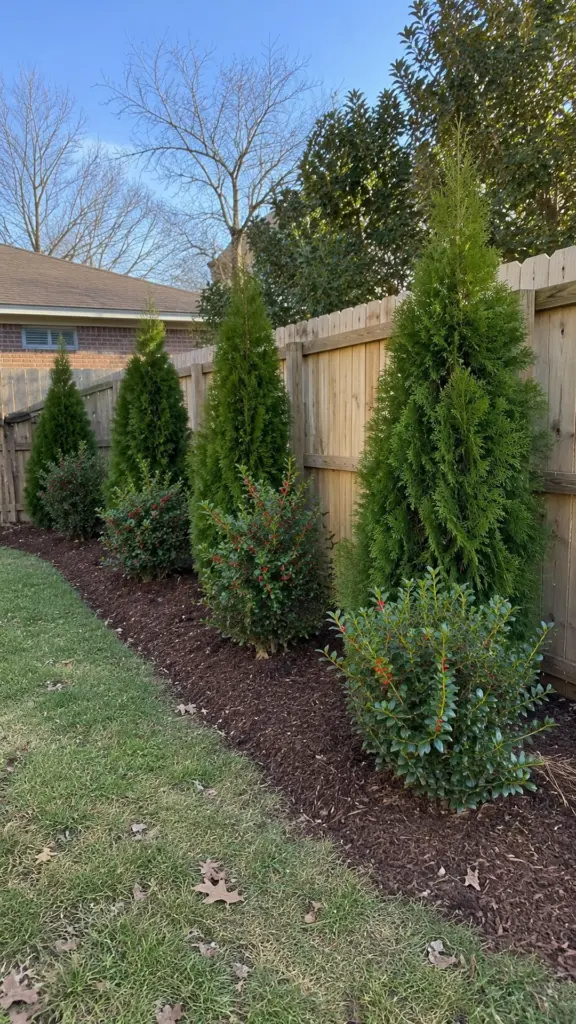
A long row of identical trees looks uniform at first, but one pest or disease can leave several empty sections, the risk idea 4 describes for Leyland cypress. A mixed screen of two or three plants that share the same sun, zone, drainage and watering needs, for example arborvitae with holly where both are hardy, set in a zigzag rather than a straight line, lowers the risk of losing the whole screen to one pest or disease. Check mature height and width too, so a fast tree doesn't swamp a slower shrub. Keep the taller plants at the back and repeat the pattern along the fence.
12. Buy Smaller Plants and Water Them Well
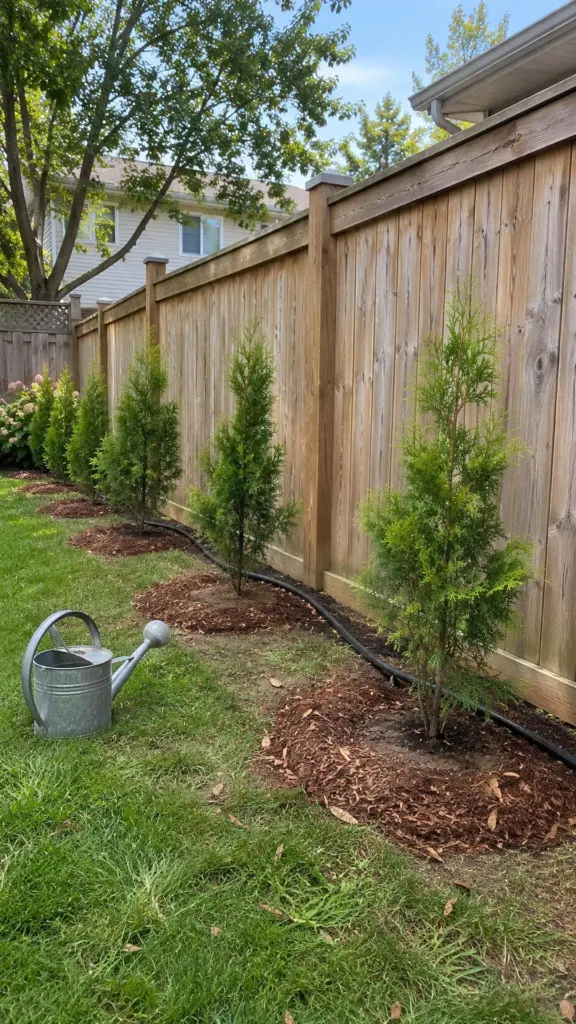
Big trees cost much more, and smaller ones often establish well with good care, so size is a trade between money now and height now. Plant in the cooler season your local extension office recommends, often fall or spring, mulch a wide ring without piling it against the trunks, and water deeply through the first growing seasons, especially in dry spells. A soaker hose along the row makes that easy. Check the soil around the root ball before watering and adjust for rain, drainage and heat; steady moisture while they establish gives young plants a much better chance of filling in.
Final Thoughts
Pick for the space first and the speed second. In a wide yard with sun, 'Green Giant' arborvitae or a mix with holly fills a big gap; in a narrow side yard, Spartan juniper fits where wide trees can't; in shade, cherry laurel or clumping bamboo are worth a look. Plant smaller, water well and stagger the row; on fence lines too narrow for big trees, the fast growing shrubs for privacy here make the better privacy plants for fence screening. For the bed in front of the screen, our small front yard landscaping ideas cover buying for mature size, and our small patio ideas show plants that screen a seating area without taking the floor.
Frequently Asked Questions
Among common choices, 'Green Giant' arborvitae and Leyland cypress are both rated rapid by NC State Extension. Green Giant has fewer serious disease problems; Leyland cypress needs full sun and is prone to cankers after drought.
Use the mature width on the plant tag or an extension site, and space them so they will meet without crowding. Wide trees need more space than the narrow ones; planting too close is the most common mistake.
Cherry laurel grows in full sun to deep shade, and clumping bamboo such as Fargesia nitida prefers part shade. Most arborvitae and junipers want sun.
Not all of it. NC State Extension notes deer browsing can be a serious problem on American arborvitae, while 'Green Giant' resists deer better than many.
Usually fall or spring, when temperatures are cooler, but the best window depends on your region, so check your local extension office. Water deeply through the first growing seasons.
Loved this? Pin it so you can find it later.
Pin this post
Sana Ahmed
Hi! I’m Sana, and I’m always looking for fresh ideas to make outdoor spaces more beautiful and enjoyable. I love exploring everything from cozy patios and pergolas to backyard fire pits, privacy solutions, and charming garden sheds. I’ll be sharing the ideas that catch my eye and hopefully help you find a little inspiration for your own outdoor space.
All postsKeep reading