14 Privacy Fence Ideas: Styles, Heights and Cheap Options
 Save
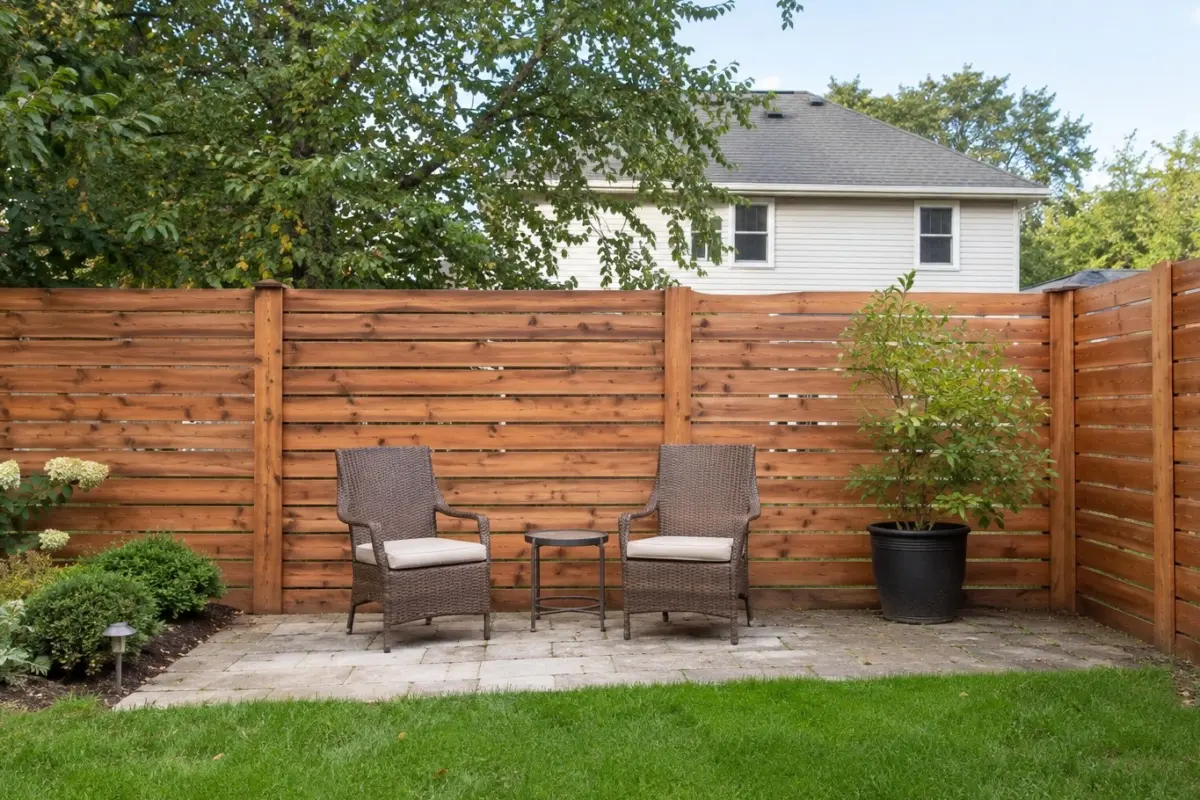
When an upstairs window looks straight onto your patio, a standard fence may not block the view, so good privacy fence ideas start with one decision: privacy around the whole yard, or only where you sit. Before choosing a style, it helps to know the rules, because height limits and the property line decide more than looks do. These ideas go from those rules to the main styles, then to cheaper ways to add height or privacy to a fence you already have.
1. Privacy Fence Height Rules and the Property Line Come First
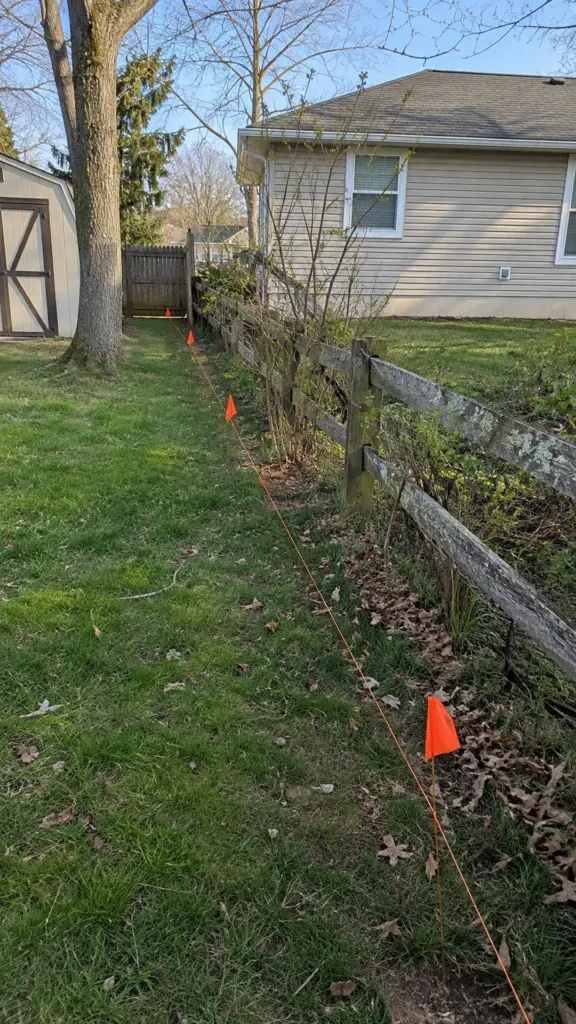
Every privacy fence idea starts with two questions: how tall can it be, and where exactly is the line? There is no national limit, but many towns allow around six feet in backyards and less in front yards, with separate rules for corner lots and street sight lines, and HOAs may add rules on materials and color. A permit exemption is not a height approval, and HOA approval doesn't replace the town's. Find your property pins or survey before you set a single post, because a fence a few inches over the line can become your neighbor's fence, or a legal problem.
2. Board-on-Board for Privacy That Stays Closed
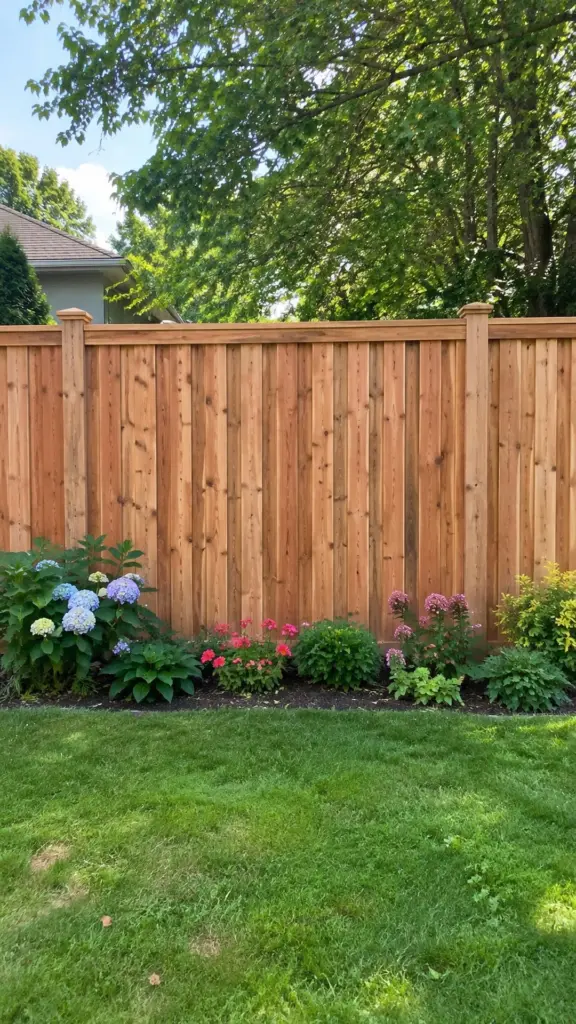
A board-on-board wood privacy fence overlaps its boards, so the screen stays solid from straight on. It is often confused with a shadow box fence (also written shadowbox), which alternates boards on opposite sides of the rails with gaps that open up when you look at an angle; shadowbox breathes more but hides less. On a plain side-by-side fence, wood shrinks as it dries and opens thin gaps. Enough overlap, planned for that movement, helps the board-on-board version stay private as it ages.
3. A Horizontal Slat Fence for a Modern Look
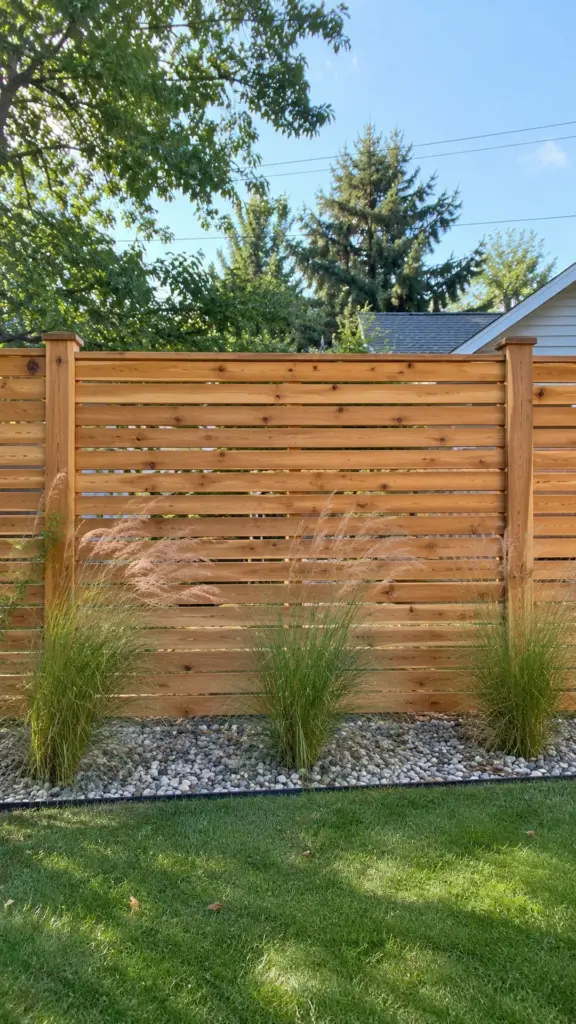
A horizontal fence is the usual pick for a modern privacy fence, giving a yard a wider look, whether you pair warm cedar boards with black steel posts for contrast or matching wood posts for a softer look. The narrower the gaps between boards, the more privacy you get; tight gaps read almost solid, while wider gaps trade privacy for light and breeze. Use straight, dry boards, keep the spacing even with a spacer block, and plan a post or a center support often enough that long boards don't bow.
4. A Stockade Fence When Budget Matters Most
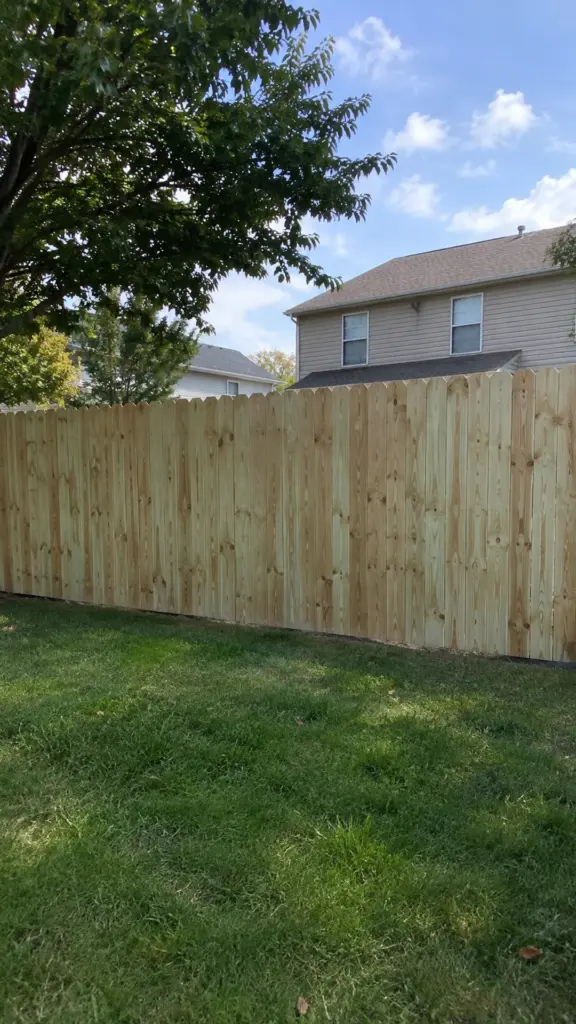
A basic stockade fence is often one of the more affordable ways to build a new solid wood screen. Pre-built panels of tight vertical boards go up quickly between posts, and dog-eared or flat tops keep it plain. Standard panels are widely sold, though a replacement may not match older sections exactly. Stockade panels show their rails on one side, so decide which side faces your patio before installing.
5. Vinyl Privacy Fence for Low Upkeep
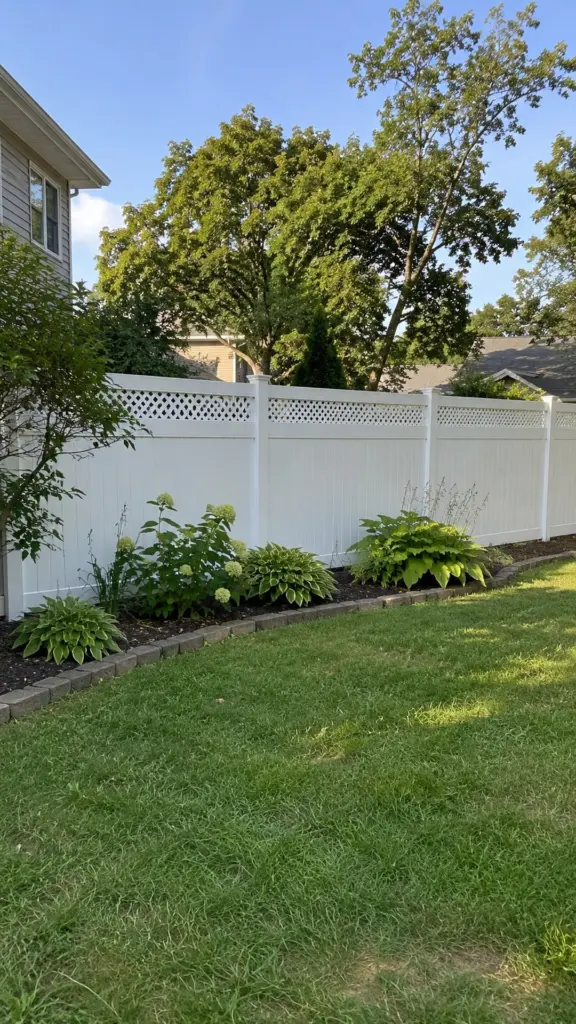
Vinyl is worth a look if you want privacy without the staining and sealing wood needs. It won't rot or splinter and doesn't need paint, though it can crack from hard impacts or discolor with age, and it still needs washing now and then. Solid panels give full privacy, and many styles mimic wood grain or add a lattice band on top. It usually costs more up front than basic wood, so it suits people who plan to stay put long enough for the lower upkeep to pay off.
6. Cedar Boards on Pressure-Treated Posts
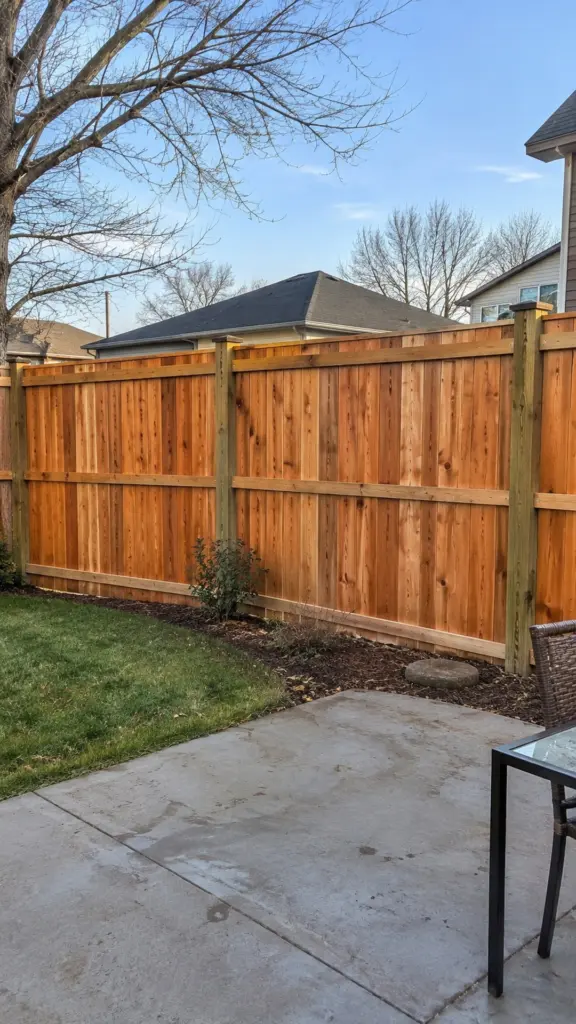
Natural cedar boards with visible grain give a privacy fence a warm finish against green planting, and many wood fences pair them with a second wood for a reason. Pressure-treated posts rated for ground contact handle the part that sits in soil and concrete (treat any cut ends as the lumber maker directs), while cedar boards above give the warm color; choose heartwood grades, since cedar sapwood doesn't resist decay the same way. This combination can cost less than an all-cedar fence while keeping the visible boards natural-looking. Leave the cedar to weather to silver-gray, or seal it in the first year if you want to keep the warm tone.
7. A Lattice Topper That Adds Height Softly
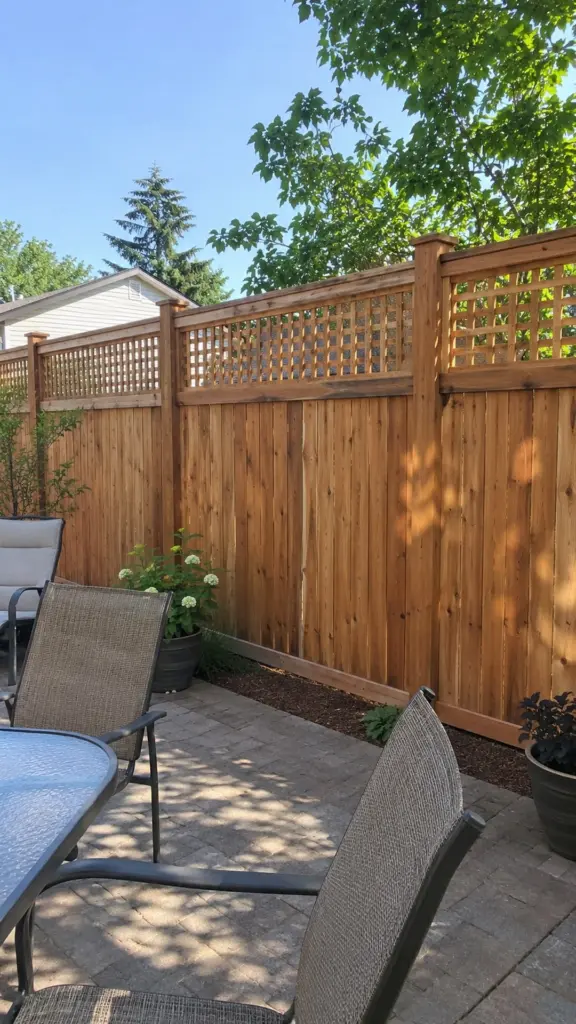
A lattice fence topper adds modest height above a solid fence and softens its look without making the yard feel boxed in. Its open pattern gives partial screening, not a solid wall, so a neighbor's raised deck may still see through. It lets sunlight in and supports climbers such as clematis. Match the topper's frame to the fence wood, and make sure the posts are long and solid enough to support it; check older posts first, as idea 8 warns.
8. Fence Extensions on an Existing Fence
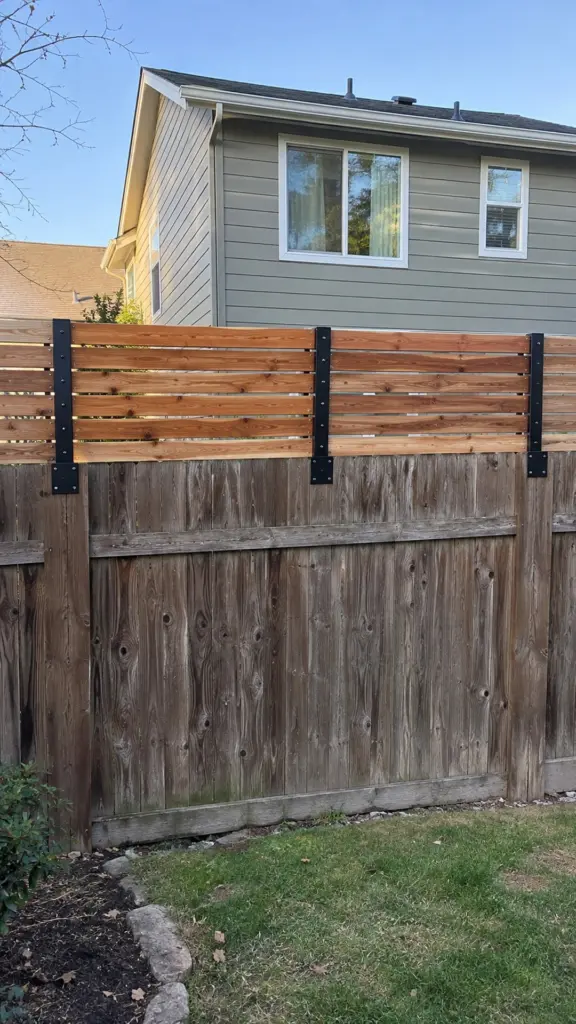
If your fence is sound but too short, a fence extension for privacy can add height without tearing it out. Extension brackets made for the purpose bolt to the existing posts and hold new rails or slats above the old top, a more solid screen than the light lattice in idea 7, but only if the brackets and posts suit the added height, weight and wind. It is a common fix when a neighbor's deck or a new two-story house suddenly looks into the yard. A taller fence catches more wind, and old posts were sized for the original height.
9. Privacy Slats or Screening on a Chain-Link Fence
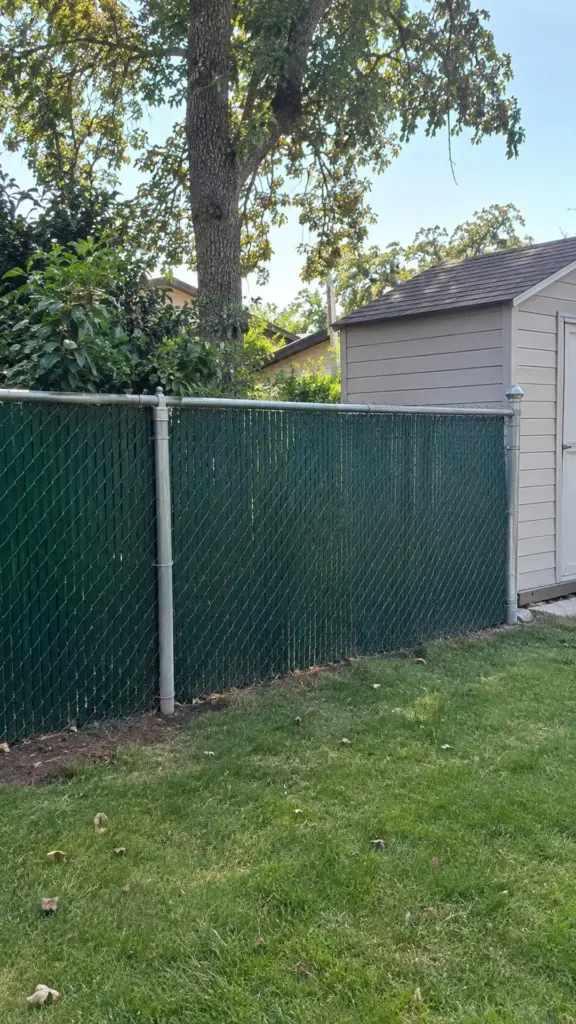
If you already have a chain-link fence in good condition, adding privacy slats or screening usually costs less than replacing it, though how much it hides depends on the product. Privacy slats slide vertically through the mesh, and fabric privacy screening ties to the fence with zip ties or clips. Either can cut visibility for less than a new fence, but how much depends on slat spacing, screen opacity and viewing angle. Pick dark green, brown or black. Slats and screens catch much more wind than open mesh, and some products need closer post spacing or extra bracing, so follow the maker's specs, especially on tall or exposed fences.
10. Black Metal Posts With Warm Wood Boards
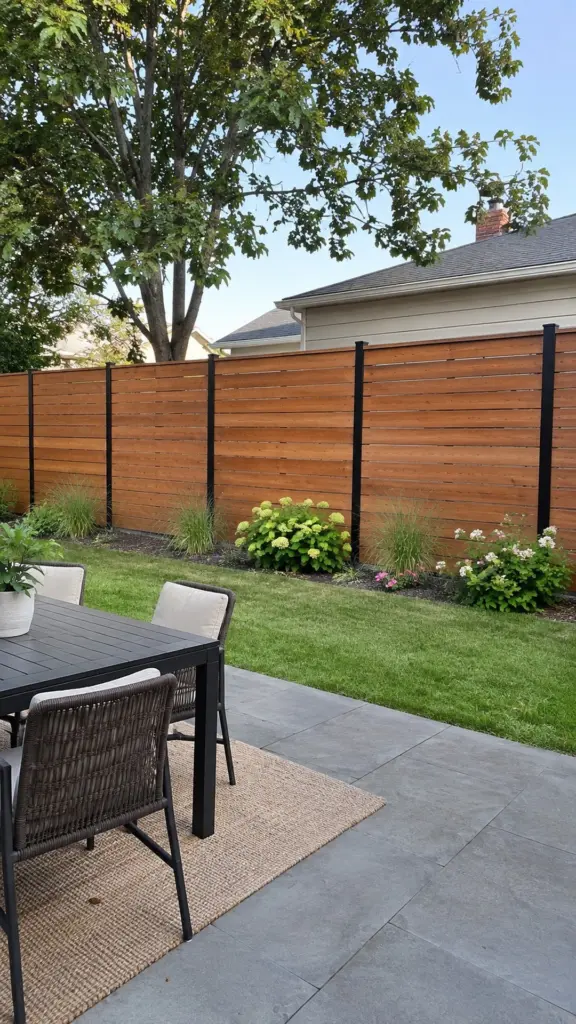
Wood posts can decay near the ground line, which is one reason steel posts paired with warm wood boards have caught on: galvanized or powder-coated posts with wood or composite between them. The metal posts resist rot at the ground line, and slim black posts look sharp with horizontal boards like those in idea 3. Use the brackets made for that post, with corrosion-resistant fasteners suited to both steel and treated wood.
11. Racked or Stepped on a Slope
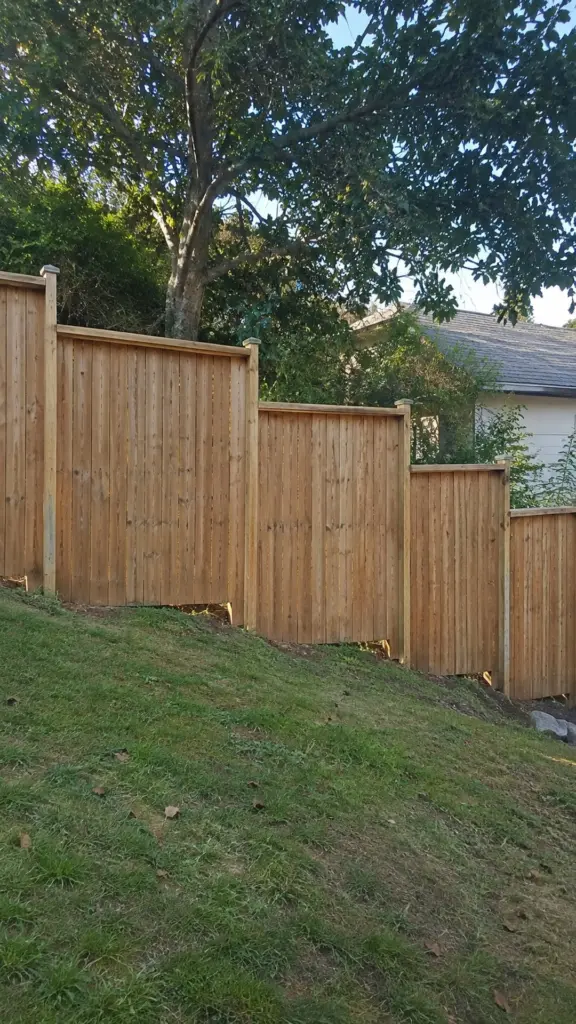
On a sloped yard, a privacy fence either steps down in level sections or is racked so the panels follow the ground. Stepped panels look tidy but leave triangle-shaped gaps under each section that pets and eyes can get through. Racked panels hug the grade with no gaps but need panels or boards that can angle. Pick the method before you buy, because not every pre-built panel can be racked.
12. The Finished Side Facing the Neighbor
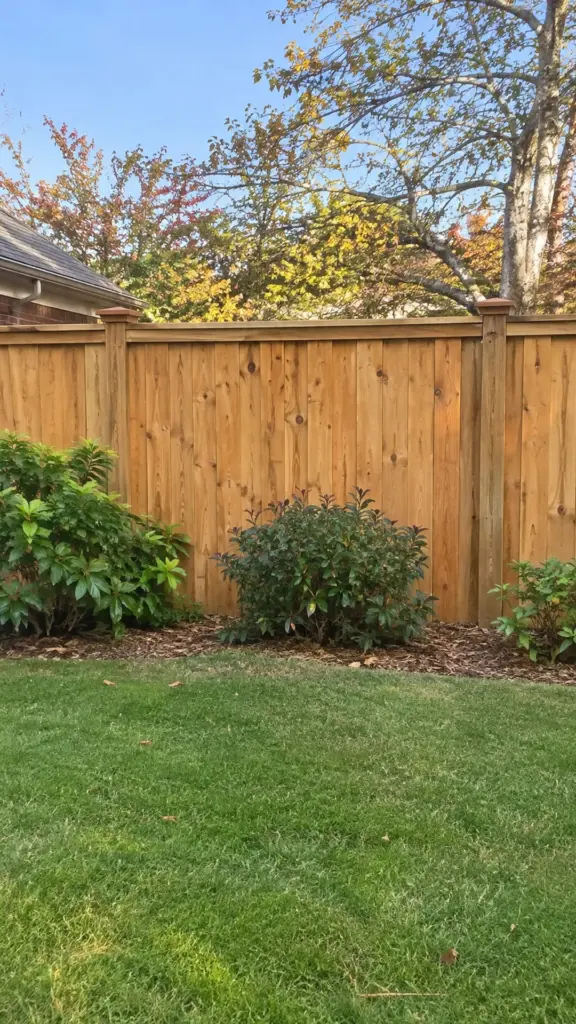
Some towns and HOAs require the finished side of a fence to face outward, toward the neighbor or the street. Even where it isn't required, it keeps the peace, and it is worth a conversation before the posts go in. A board-on-board style like idea 2 avoids the question, because both sides look finished. Talk to the neighbor early: some will share the cost of a fence that benefits them too.
13. A Gate That Matches and Doesn't Sag
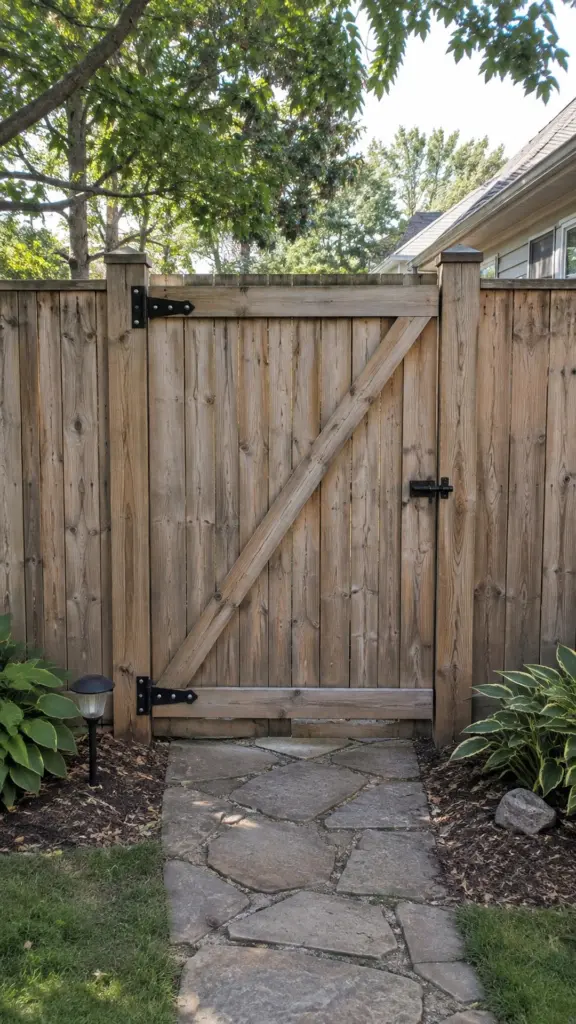
Gates take daily stress from opening and closing, so their frames, hinges and posts need the most care. A wide wooden gate pulls down on its hinges until the latch side drags. Add a diagonal brace from the bottom hinge corner up to the top latch corner; it holds up the latch side and carries its load down toward the lower hinge. Use heavy hinges and set the gate post extra solidly. Matching the boards to the style you chose, like idea 2 or idea 3, makes the gate disappear into the wall.
14. Composite Boards for a Fence That Won't Rot
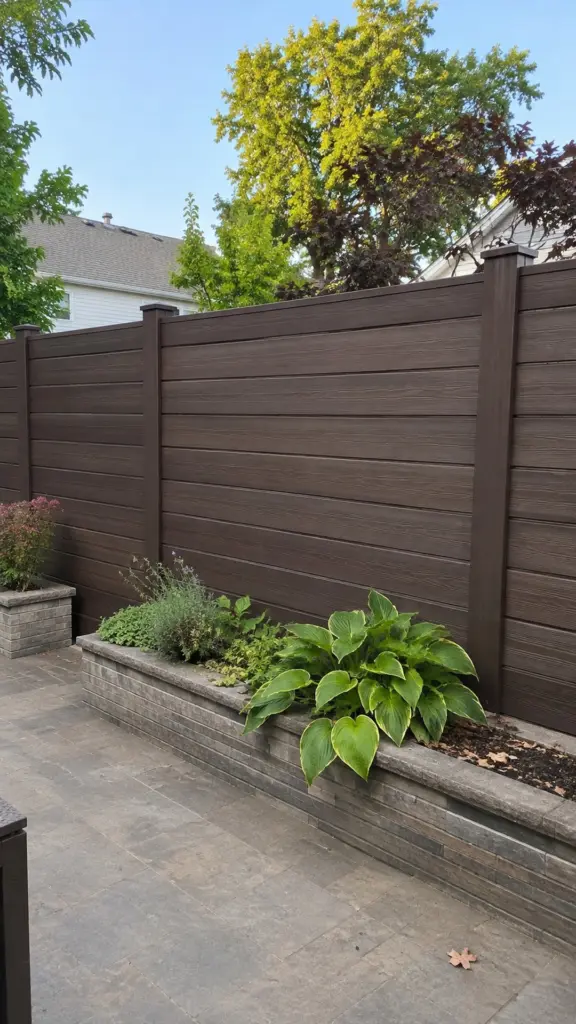
Composite fence boards, usually wood fibers and plastic, look like painted or stained wood, and many resist rot and splinters without sealing, though cleaning and fading vary by brand. They come in solid privacy panels and horizontal styles, often on metal or composite posts. Compared with vinyl, composite looks more like wood but is heavier and products vary in care needs, so read the maker's instructions. Both cost more than wood at the start. Light at the edges of the yard? Our backyard lighting ideas show how to light a fence without lighting up the neighbors.
Final Thoughts
If you want full privacy for the least money, choose a stockade fence or add slats to an existing chain-link fence. If the fence is the backdrop to your patio, board-on-board or horizontal slats look better from both sides. If you never want to stain again, look at vinyl or composite. And if the fence is fine but too short, an extension or a lattice topper is cheaper than starting over. For screening just the seating area rather than the whole yard, our small patio ideas and freestanding pergola ideas show smaller fixes.
Frequently Asked Questions
It depends on your town and HOA. Many places allow around six feet in the backyard and less in the front yard, and toppers or extensions usually count toward the limit. Local code also sets how height is measured on slopes and near retaining walls, so check before you buy.
Adding privacy slats or screening to an existing chain-link fence is usually cheapest. For a new fence, a wood stockade fence is often the lowest-cost solid option.
Many towns and HOAs require the finished side to face out. A board-on-board fence looks finished from both sides, so it avoids the question.
Often, with metal extension brackets or a lattice topper, as long as the posts are solid and the total height stays within local rules.
Loved this? Pin it so you can find it later.
Pin this post
Sana Ahmed
Hi! I’m Sana, and I’m always looking for fresh ideas to make outdoor spaces more beautiful and enjoyable. I love exploring everything from cozy patios and pergolas to backyard fire pits, privacy solutions, and charming garden sheds. I’ll be sharing the ideas that catch my eye and hopefully help you find a little inspiration for your own outdoor space.
All postsKeep reading