15 Small Patio Ideas, Planned by Size From 8×8 to 10×12
 Save
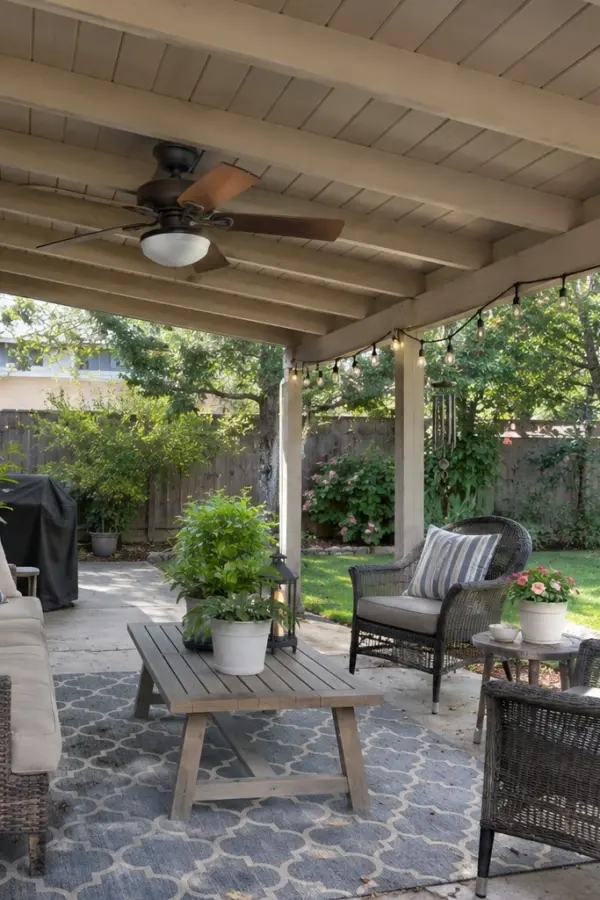
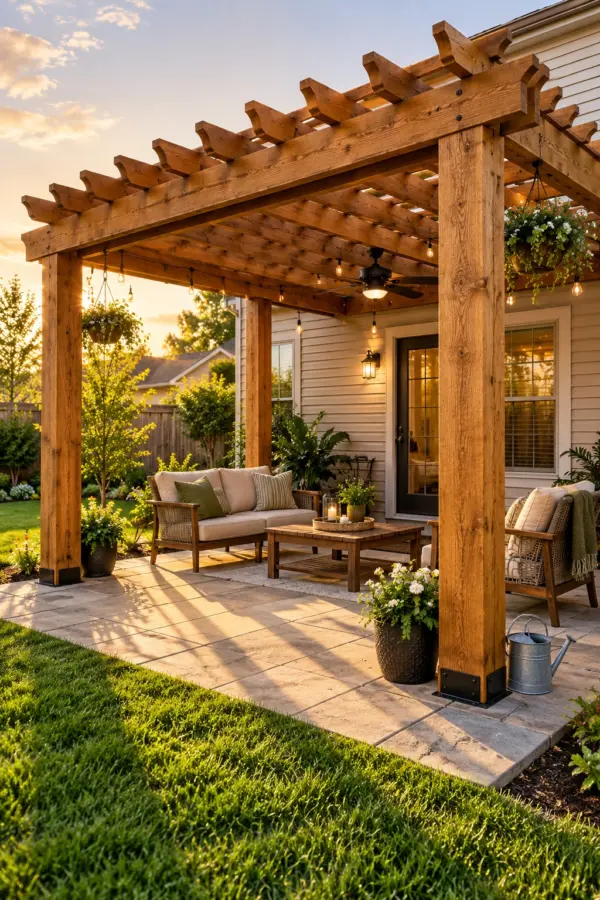
Most small patio ideas show a pretty corner and skip the part that matters: what fits. On a small patio, a few inches decide whether chairs pull out or the door still opens. These ideas start with the measurements, then go size by size from a tiny 8×8 slab to a 10×12, and finish with the things that make any small patio feel bigger.
1. Measure the Patio and Mark the Door Swing First
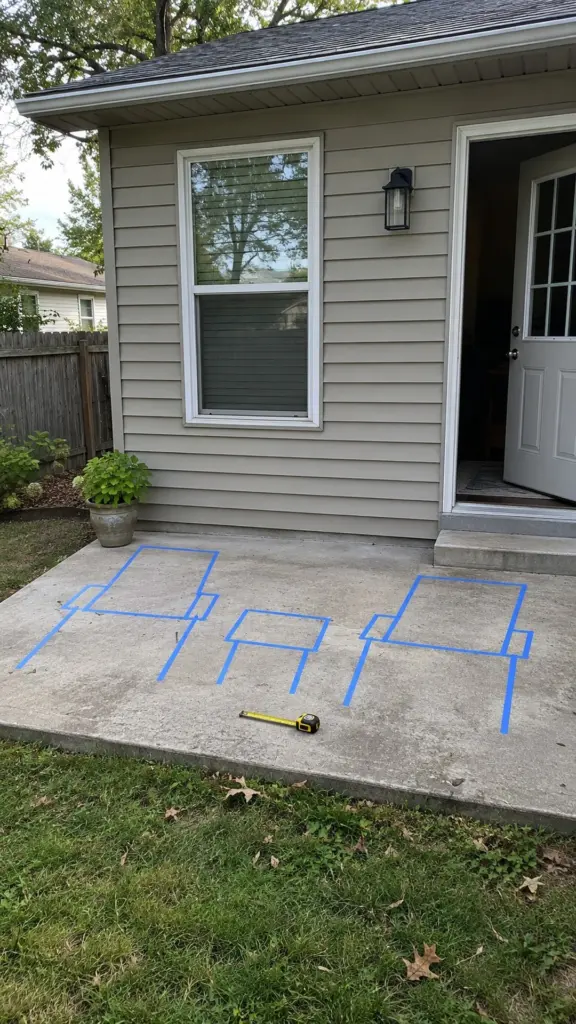
Before buying a single chair, measure the patio edge to edge and note anything that steals space: the back door swing, steps, a hose bib, the air conditioner unit, a downspout. Mark the path from the door to the yard, because that strip has to stay clear. Then tape out the furniture you are thinking about, at full size, with painter's tape or chalk. Sit in the taped chairs, walk around them carrying a tray, and open the door. Ten minutes of tape beats a return trip with a sofa that does not fit.
2. An 8×8 Patio: One Bistro Set and Two Big Pots
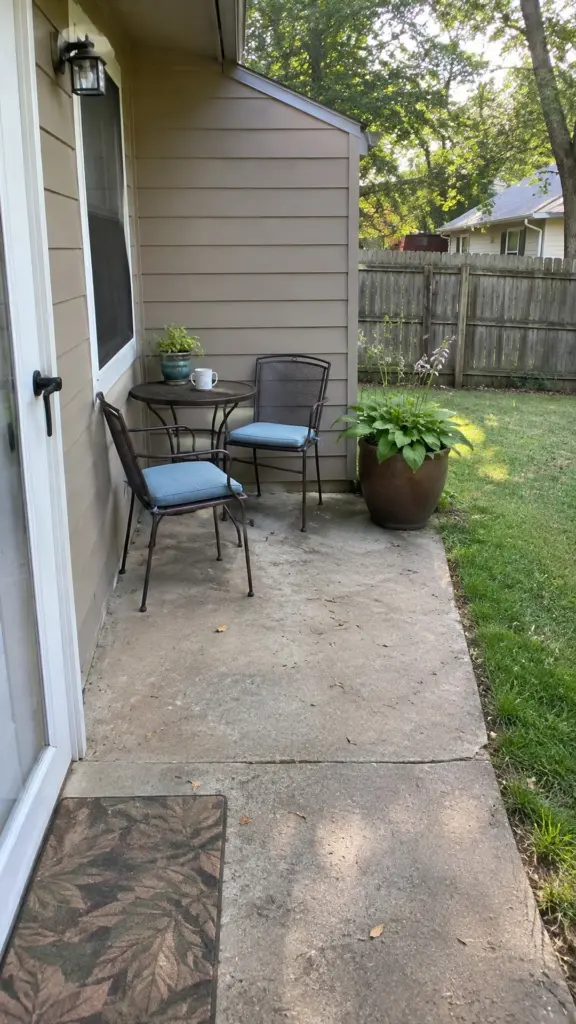
An 8×8 patio is 64 square feet, and the honest answer is that it holds one main thing well. A bistro set, a round table around 24 to 30 inches with two chairs, fits if you push it into the corner away from the door instead of centering it. Add two large pots in the corners rather than six small ones, so the floor stays clear. If you would rather lounge than eat, swap the bistro set for two low lounge chairs and a small side table. Trying to fit both is what makes a tiny patio feel crowded.
3. A 10×10 Patio: A Loveseat, Two Chairs and One Low Table
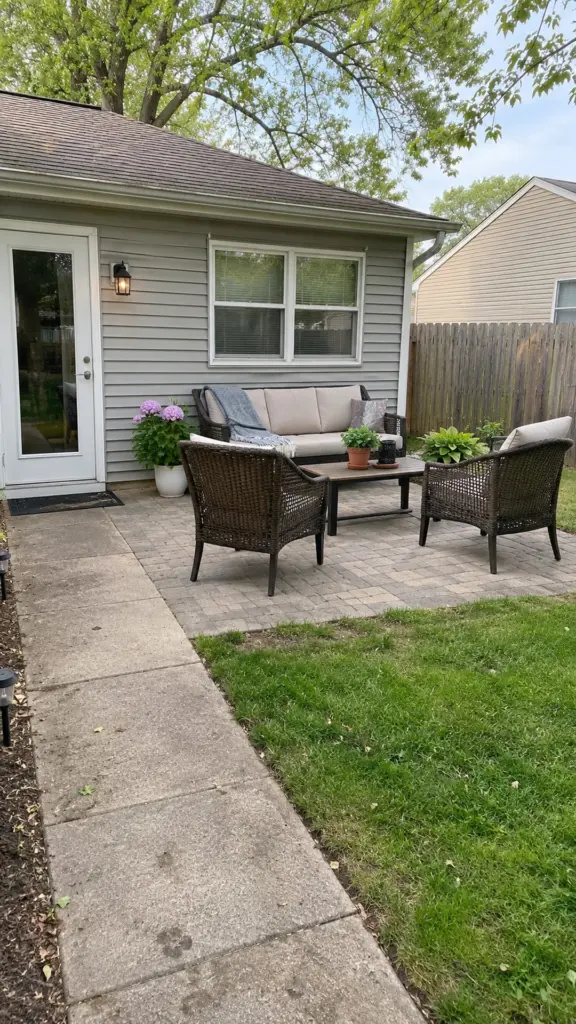
At 100 square feet, a 10×10 patio can hold a real conversation set with compact pieces: a loveseat about 55 inches wide facing two chairs about 28 inches wide each, with a small coffee table between them. Depending on how deep your pieces are, that group uses most of the 10-foot depth but only about 5 feet of the width. Push the loveseat against the house wall and check your own pieces' sizes first, since loveseats vary a lot. Slim arms save inches. If the back door opens onto the patio, put the group to one side so the door path from idea 1 runs along the other 5 feet.
4. A 10×12 Patio Can Dine or Lounge, Rarely Both
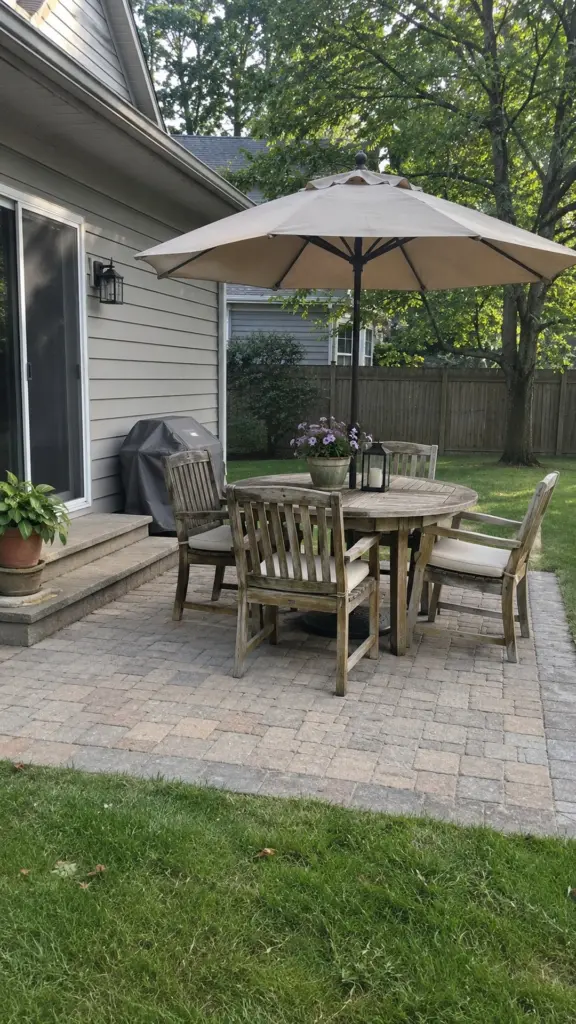
A 10×12 patio feels roomy until you try to fit a dining table and a sofa on it. A round table for four, around 36 to 42 inches, needs roughly a 9-foot circle once chairs pull out, which uses most of the width. So choose: a dining patio with a round table, or a lounge patio with a sofa and chairs. If you really want both, pick a small round table with two chairs on one end and a loveseat on the other, and accept that four people will not dine there comfortably.
5. A Bench Along the Wall Instead of Extra Chairs
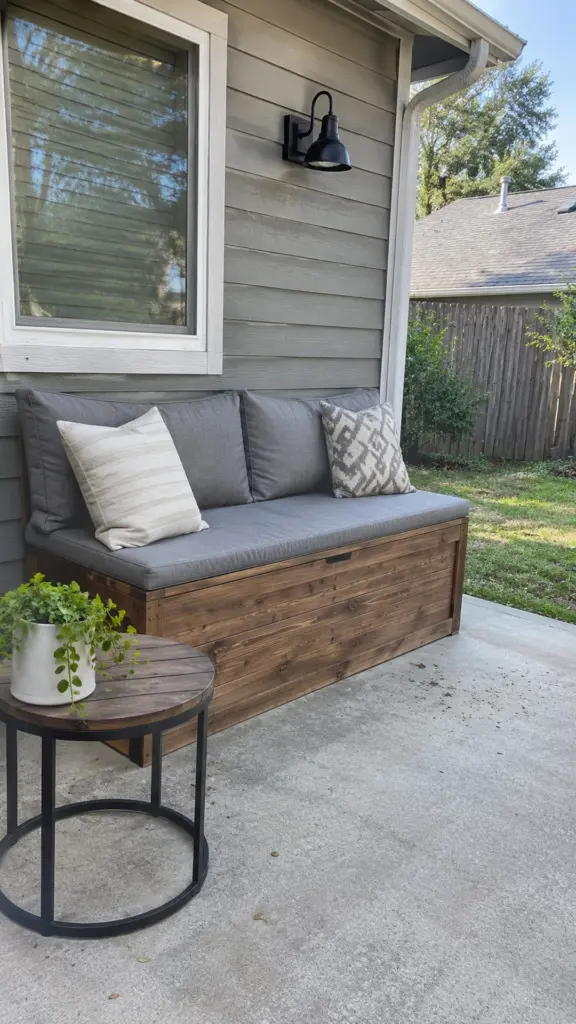
A bench pushed against the house wall or a fence seats two or three people in a shallow strip, so the middle of a small patio stays open. Add a few outdoor cushions and it becomes a sofa; slide it under a table and it becomes dining seating. Benches with a lift-up lid or open storage underneath also hide cushions and garden tools. A store-bought outdoor bench works; a built-in one along a low wall is a bigger project, often for a pro.
6. Folding and Stacking Furniture for Patios That Do Double Duty
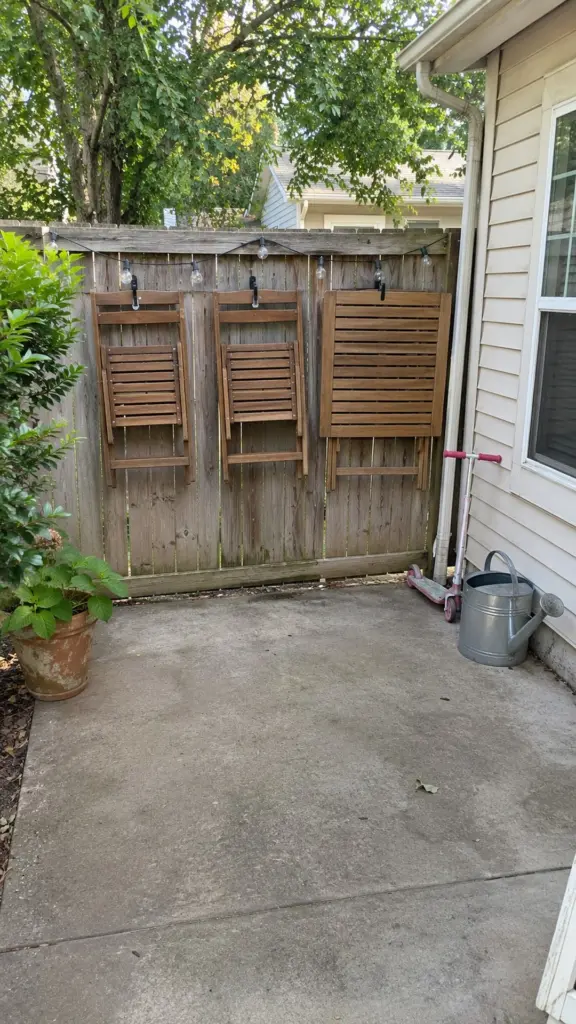
If the small patio is also where the grill, the bikes or the kids' toys live, furniture that folds or stacks lets it change jobs in a minute. Folding bistro chairs hang on a wall hook or slip behind a shed. A folding table can stand against the fence until dinner. Stacking chairs take one footprint instead of four. Look for frames sturdy enough to sit on every day, since cheap folding chairs wobble fast, and for outdoor-rated finishes and hardware, which hold up much better at the hinges.
7. Plants Up the Fence, Not Across the Floor
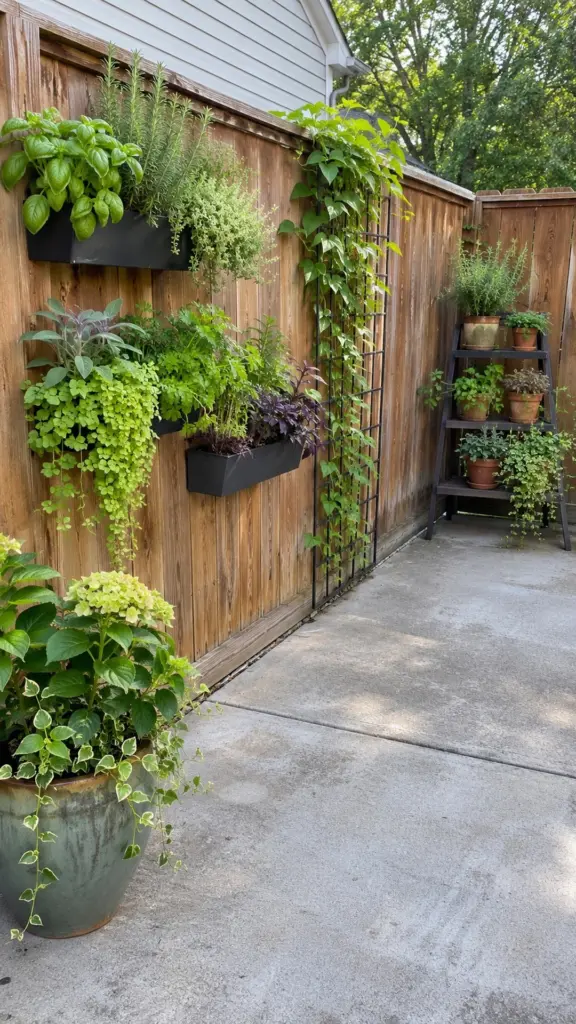
Pots scattered across a small patio eat floor space and get kicked. Move the green up instead. Wall planters or a slim trellis with a climber on the fence, a tiered plant stand in one corner and a few hanging baskets make the patio feel planted while using very little floor. Keep one or two large floor pots as anchors, because one big pot looks calmer than a row of small ones, as idea 2 suggests. Choose plants for the light the patio really gets, and remember hanging baskets dry out quickly in summer.
8. A Narrow Side-Yard Patio Laid Out Like a Hallway
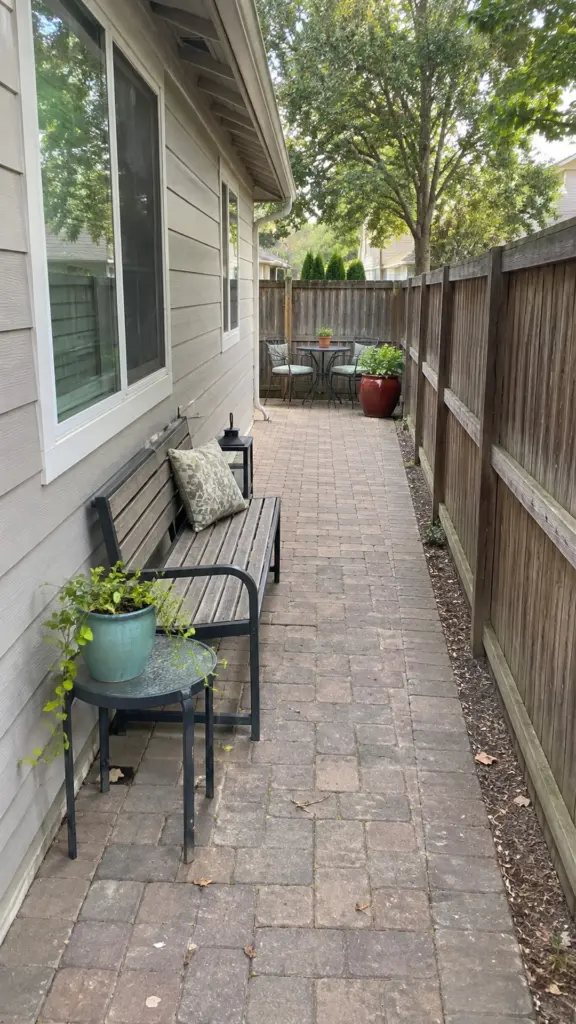
Many small patios are long and narrow, a strip along the side of the house or between the house and a fence. Treat it like a hallway: furniture along one long side, a clear path along the other. A narrow bench or two slim chairs facing the open side, with a small table between them, works better than a seating group that blocks the strip. Use the far end as a destination, with a bistro set, a big pot or a small water feature, so the eye has somewhere to go.
9. Stretch a Small Patio With a Gravel or Paver Border
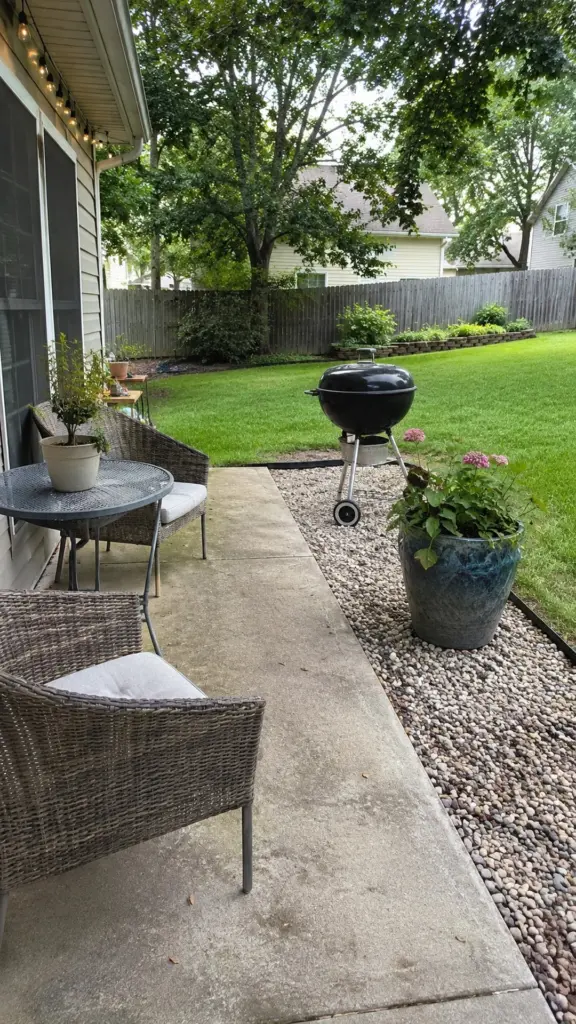
Sometimes the best small patio idea is a slightly bigger patio. A border of pea gravel or matching pavers along one edge adds a few feet for a grill, a pot or a chair without pouring new concrete. Dig out the sod, lay landscape fabric, set an edging strip to hold the gravel in, then spread it a couple of inches deep. Gravel is not great for chair legs or table feet, so put the walkway and the seating on the hard surface and the extras on the gravel.
10. An Outdoor Rug Sized to the Furniture, Not the Slab
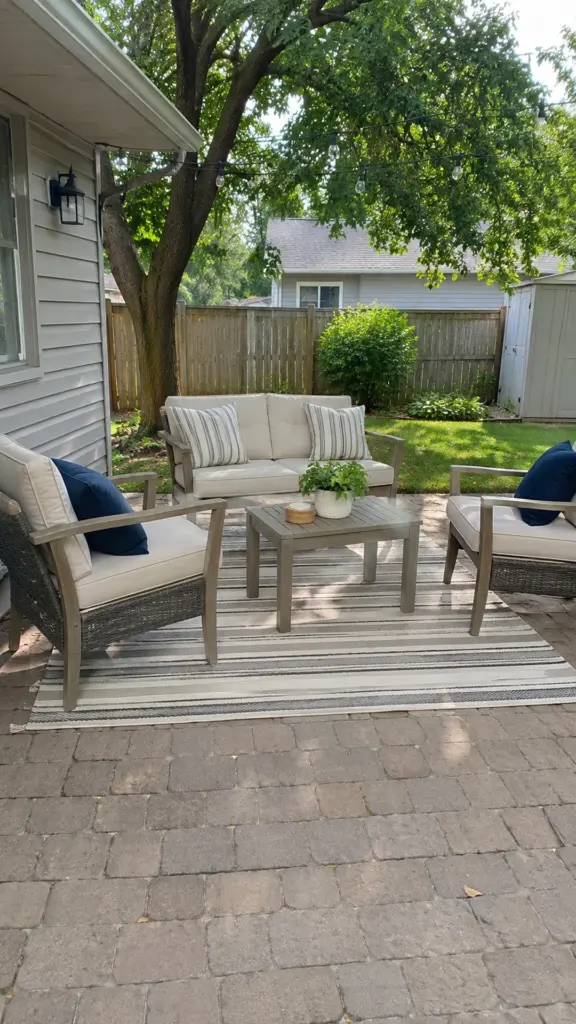
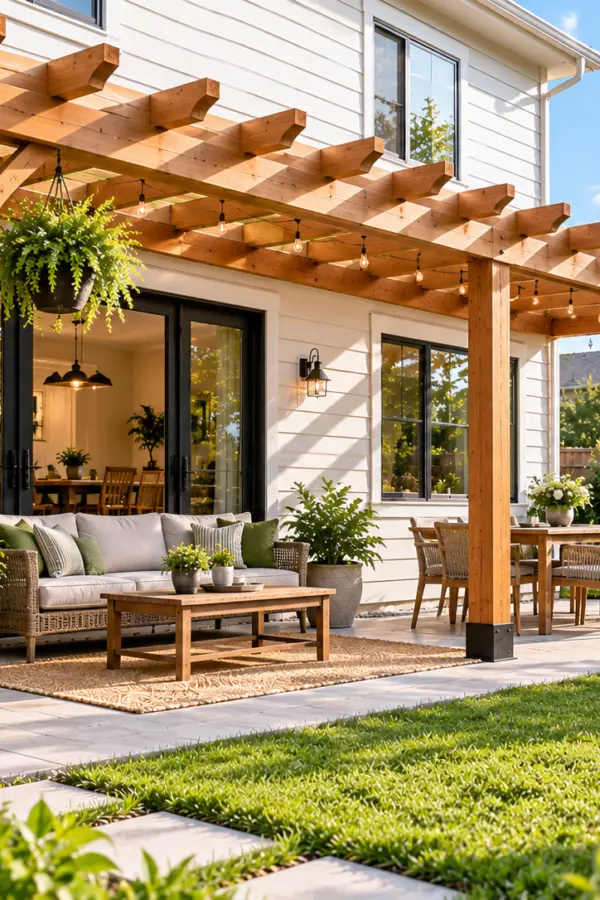
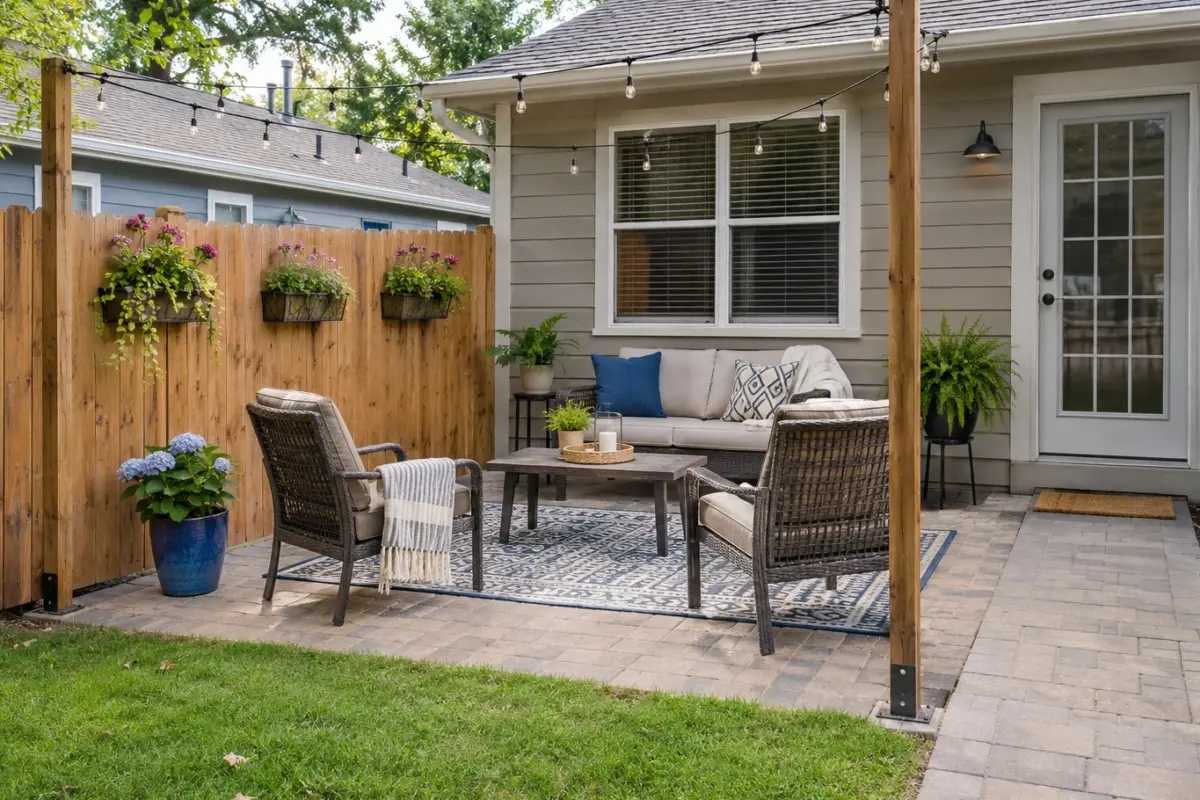
An outdoor rug turns a slab into a room, and on a small patio it does more than any accessory. Size it to the seating group, like the one in idea 3, not the whole patio, so the front legs of the chairs and loveseat sit on it and some patio shows around the edge. That border of bare floor is what makes the space feel larger. Choose a flat-weave polypropylene rug that dries quickly, and hose it off now and then. Lift it after long wet spells so the patio underneath can dry too.
11. String Lights on Posts Above a Small Patio
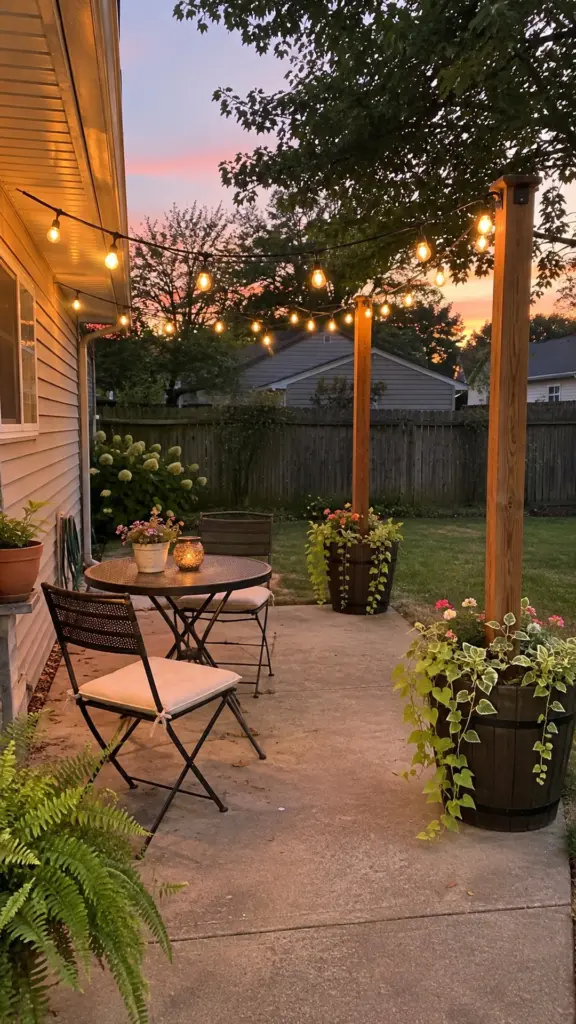
String lights overhead give a small patio a ceiling, which makes it feel like a room at night. If there is no pergola or tree, set two or three posts at the patio corners, in heavy planters filled with concrete or in post holders, and run the lights from the house to the posts. Use lights rated for outdoor use, plugged into a GFCI-protected outdoor outlet with an outdoor-rated cord if you need one. A guide wire, only gently tensioned, takes the weight off the light cord; for heavier lights, set the posts in the ground instead.
12. A Privacy Screen on the Neighbor Side Only
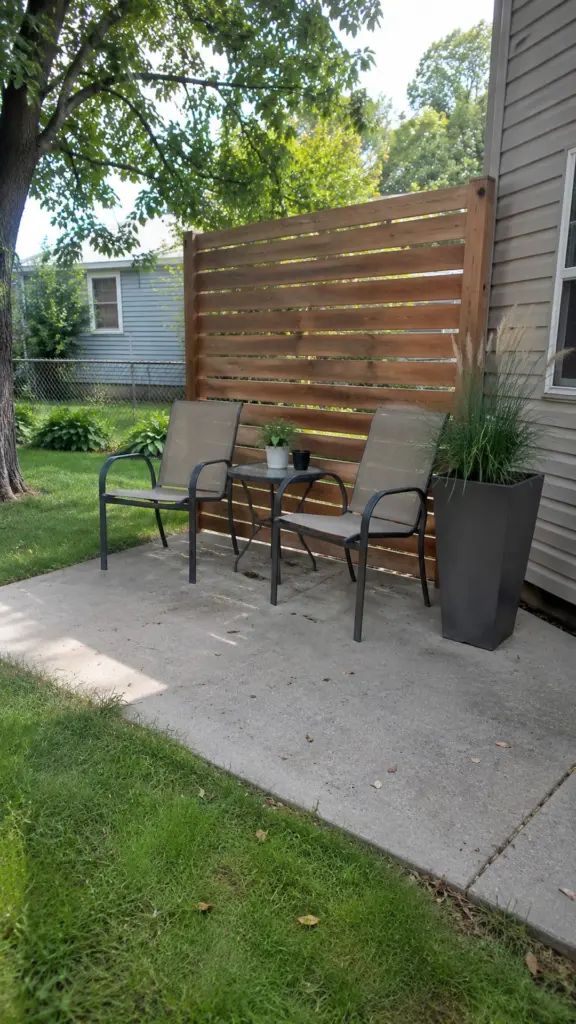
A small patio usually sits close to a neighbor's window or yard, and that exposure is often why it goes unused. You rarely need to wall in the whole patio. A freestanding privacy screen, a lattice panel with a climber like those in idea 7, or a row of tall planters on the one side that faces the neighbor gives most of the privacy and keeps the open side airy. Weigh or anchor freestanding screens so wind cannot tip them. Check your HOA or city rules on fence and screen heights before going tall, and keep screens clear of gas meters and utility boxes.
13. A Small Fire Feature, Placed by the Rules
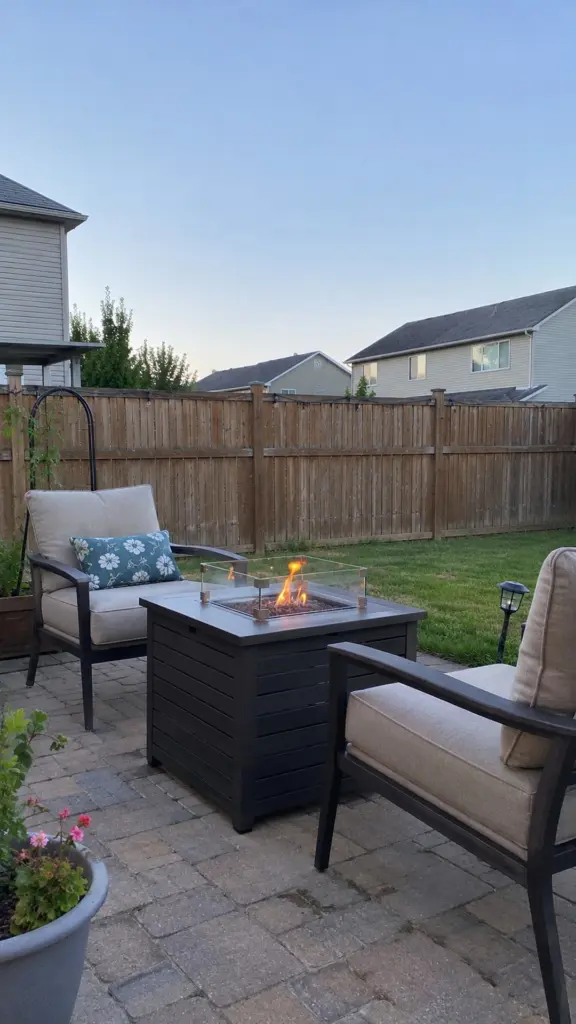
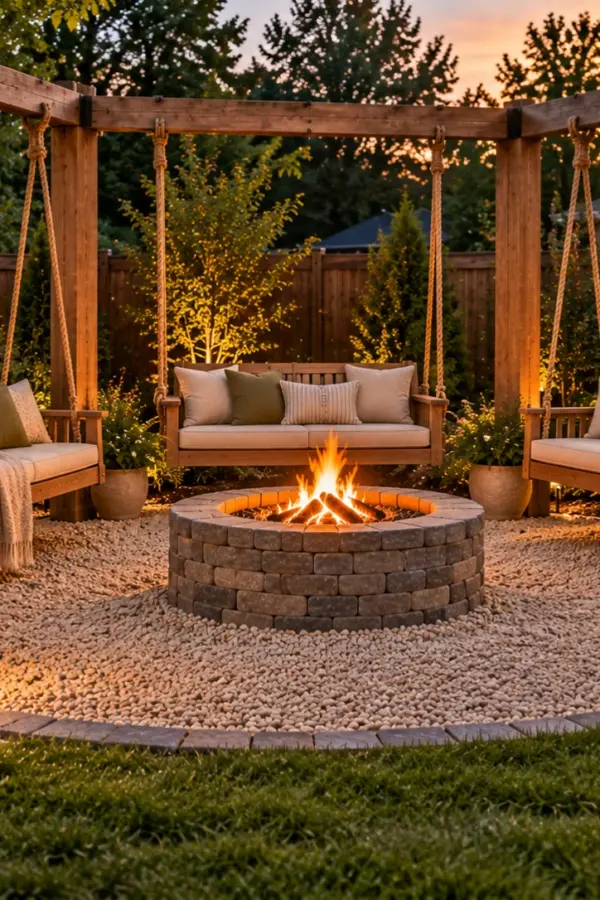
Even a tiny patio can hold a fire feature, and a small fire pit or propane fire table often becomes the place everyone ends up. On a small lot, distance is the problem: many cities and fire codes require a set distance from the house, fences and overhangs for wood fires, and some ban wood burning entirely. Propane fire tables have their own clearances, often to the sides and overhead, listed in the manual. Never set any fire under a low roof, umbrella or tree branch. These small backyard fire pit ideas cover layouts that fit tight yards.
14. Shade for a Small Patio: An Umbrella in a Weighted Base
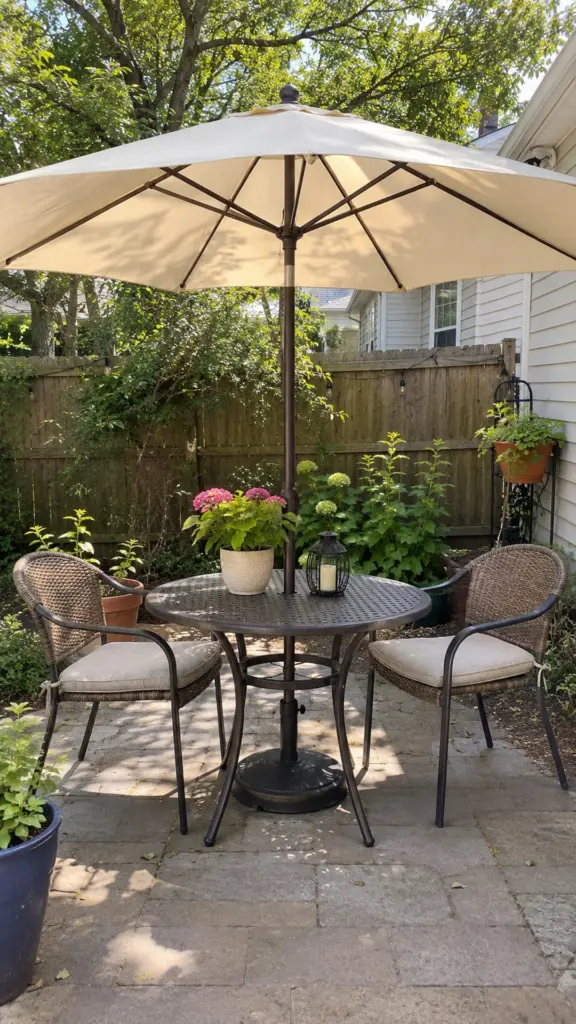
Pergola posts rarely fit on a tiny patio (though these small pergola ideas show a few that do), so a market umbrella through the bistro table from idea 2, or a small cantilever umbrella in a corner, is the practical shade. A table umbrella keeps the floor clear, since the pole goes through the table. A corner cantilever shades a lounge chair without a pole in the middle. Either way, use the base weight the maker asks for and close it in wind. If the patio sits right by a wall, a narrow retractable awning is another option worth pricing.
15. A Grill Corner That Does Not Crowd the Seating
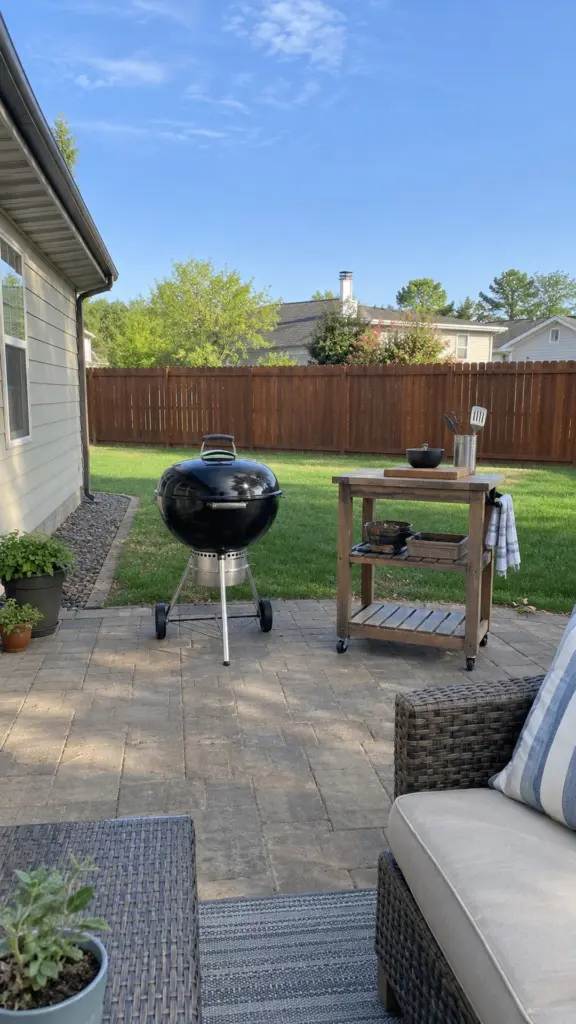
The grill is the piece that most often takes over a small patio. Give it a corner of its own, away from the seating and the door path, on a level, stable spot such as a paver section of the strip from idea 9. The National Fire Protection Association advises keeping grills well away from the house, deck railings and overhanging eaves and branches, and following the grill's own clearances. A small cart beside it holds tools and a plate, so nothing ends up on the patio table.
Final Thoughts
Start with the tape, not the shopping cart. Decide what one job the patio does best, whether that is coffee for two, conversation or dinner for four, and choose furniture that fits that job at its real size. Then move plants up the fence, add a rug and a ceiling of light, and screen only the side that needs it. That is usually what makes a small patio feel bigger than it is.
Frequently Asked Questions
On an 8×8 patio, a bistro table with two chairs. On a 10×10, a loveseat, two chairs and a small table. A 10×12 can hold a round dining table for four or a lounge set, but rarely both.
Keep the floor clear by moving plants up the fence, size the rug to the furniture so some patio shows around it, add overhead string lights, and screen only the side facing the neighbor so the rest stays open.
Leave a clear path about 30 to 36 inches wide from the door through the patio, and enough space behind dining chairs to pull them out. Taping the layout on the patio first is the easiest way to check.
Loved this? Pin it so you can find it later.
Pin this post
Sana Ahmed
Hi! I’m Sana, and I’m always looking for fresh ideas to make outdoor spaces more beautiful and enjoyable. I love exploring everything from cozy patios and pergolas to backyard fire pits, privacy solutions, and charming garden sheds. I’ll be sharing the ideas that catch my eye and hopefully help you find a little inspiration for your own outdoor space.
All posts