16 Backyard Lighting Ideas for Patios, Pergolas and Paths
 Save
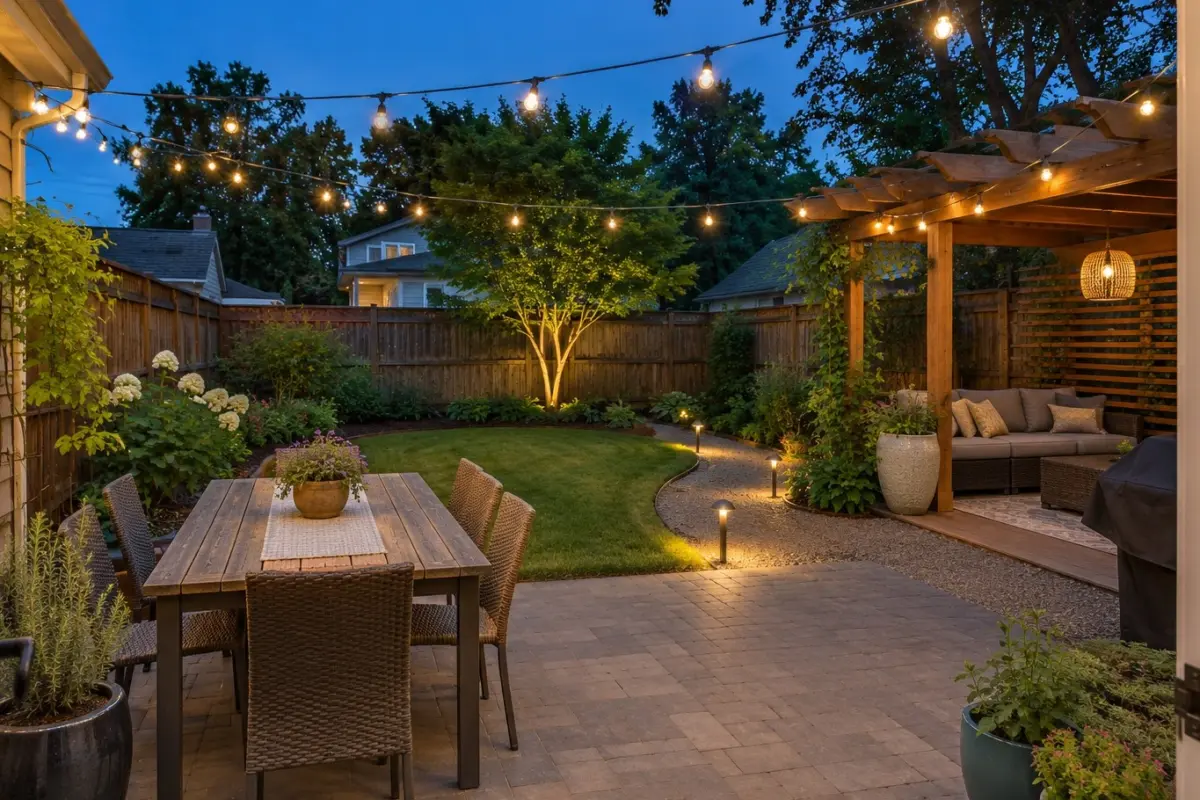
The best backyard lighting ideas start at dusk, not in a store. Walk outside as it gets dark and you will see what the yard needs: a safe path to the grill, a soft glow over the table, maybe one tree worth showing off. A useful starting point for most yards is three kinds of light, and the patio lighting ideas below follow that walk in order: light what's unsafe, then where you sit, then a few accents, then put it all on a timer.
1. Plan Three Layers Before Buying Anything
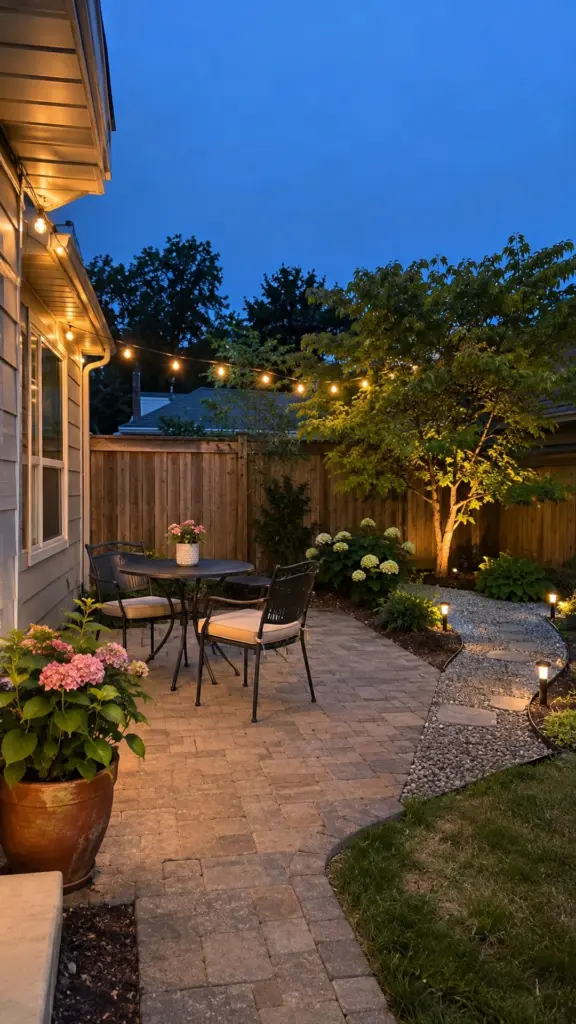
Good backyard lighting is usually three jobs, not one fixture. Task light gets you safely along paths, steps and the grill. Ambient light, like string lights or a lantern over the table, sets the mood. Accent light picks out one tree, a wall or a planter. The ideas below follow that order: safety first, then the places you sit, then a few accents, then the controls. That sequence stops the common mistake of one bright floodlight doing everything badly. Note where the outdoor outlets are too, because power decides what can plug in and what needs solar or a low-voltage run.
2. Step and Riser Lights on Deck Stairs
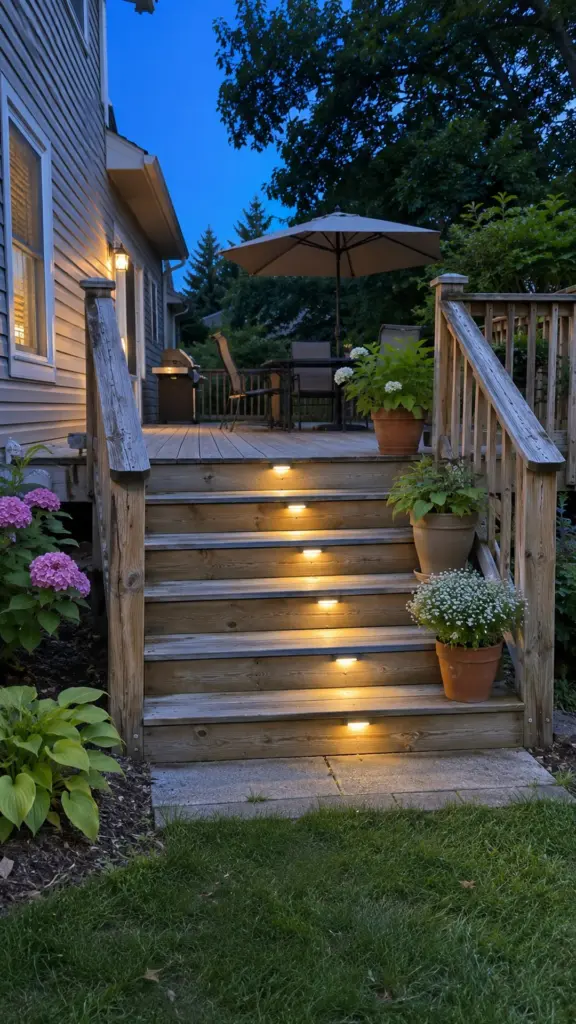
Stairs are where night falls happen, so they deserve light before anything decorative does. Small lights set into the risers or under the lip of each tread wash the step below and show exactly where your foot goes. On a deck, many systems run off the same low-voltage transformer as the path lights in idea 3. Pick fixtures with a warm color and a low output; the goal is to see the edge of every step, not to light the whole yard. Where risers are too thin to cut into, small lights on the side wall or stringer beside each step do the same job.
3. Low-Voltage Path Lights Along the Walk
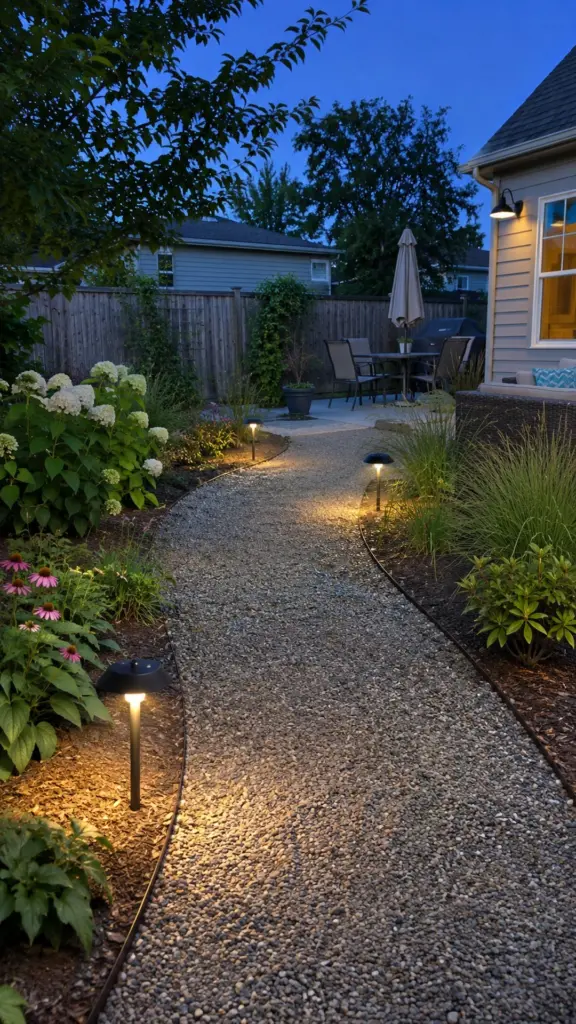
Low-voltage landscape lighting is the most practical upgrade for paths, and many kits are designed for homeowners to install. A transformer plugs into a GFCI-protected outdoor outlet and steps the power down, a cable runs through the beds, and the fixtures clip onto it. Space the lights so their pools of light just touch rather than lining the path like a runway. The same fixtures work out front too; our small front yard landscaping ideas show beds they suit. Kits usually bundle the transformer, cable and a set of fixtures, so price a kit against buying the pieces you actually need.
4. Shielded Wall Lights by Every Door
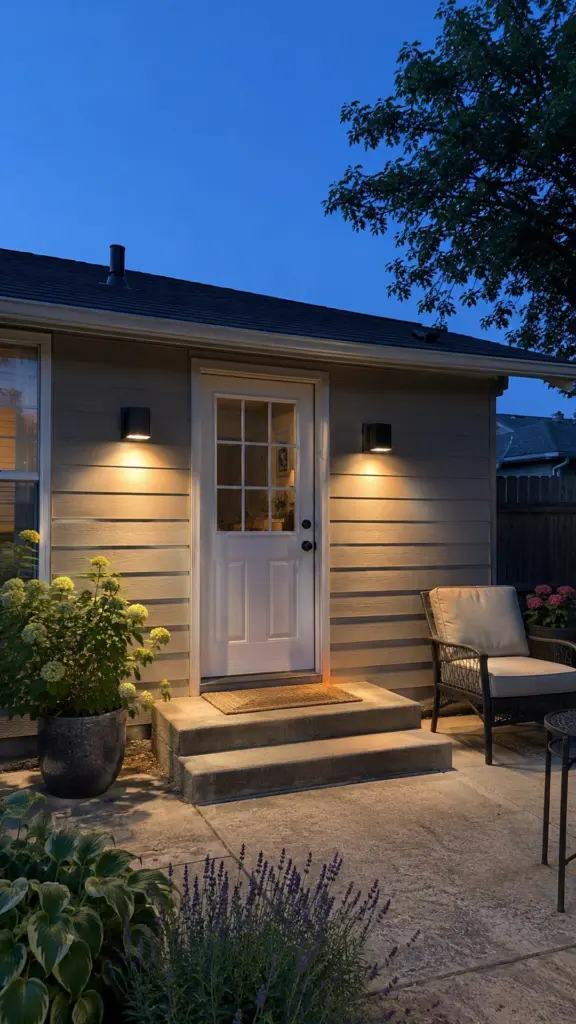
Door lights are about safety and finding your keys, but the wrong fixture blinds everyone on the patio. Swap bare-bulb fixtures for fully shielded ones that point light down, and use a warm white bulb. DarkSky International recommends shielded fixtures and warm color temperatures to cut glare and light trespass. A motion sensor lets the light stay off until someone walks up, which also keeps it from shining into a neighbor's bedroom all night. A dusk-to-dawn sensor with a low setting is another option where you want a little light at the door all night.
5. Zigzag Café Lights Over the Patio
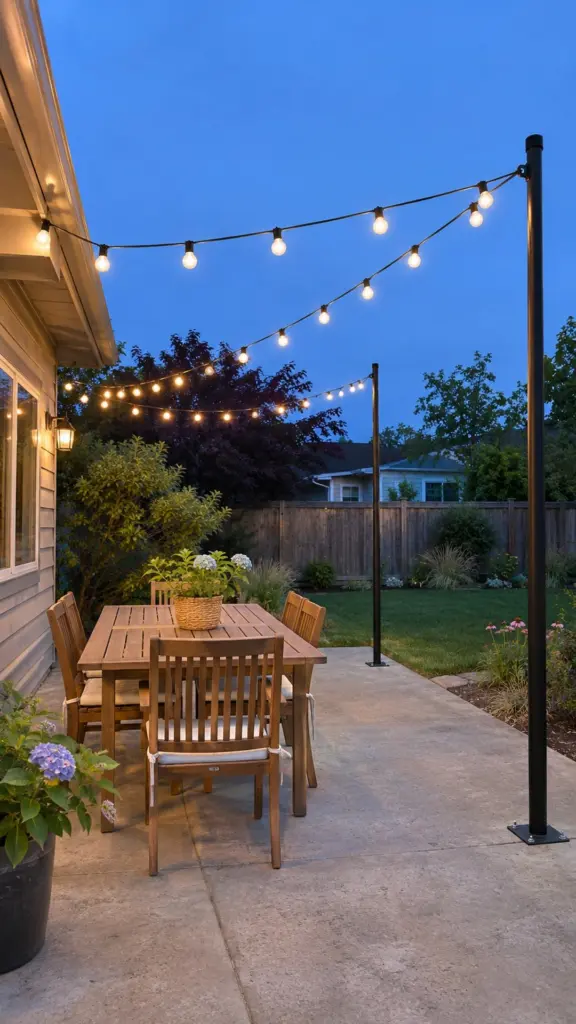
Café-style string lights strung back and forth over a patio give the most mood for the money, and they are the classic patio lighting idea for a reason. Anchor them to the house, a fence post set in concrete or a sturdy freestanding pole, and keep them high enough that nobody ducks. For longer runs, hang the strand from a tensioned steel guide wire so the cord isn't carrying its own weight. Shatter-resistant bulbs are worth the small extra cost over a hard patio. Sketch the zigzag first, count the anchor points and measure each span, so you buy enough strands and know where the plug end lands.
6. String Lights Along the Pergola Rafters
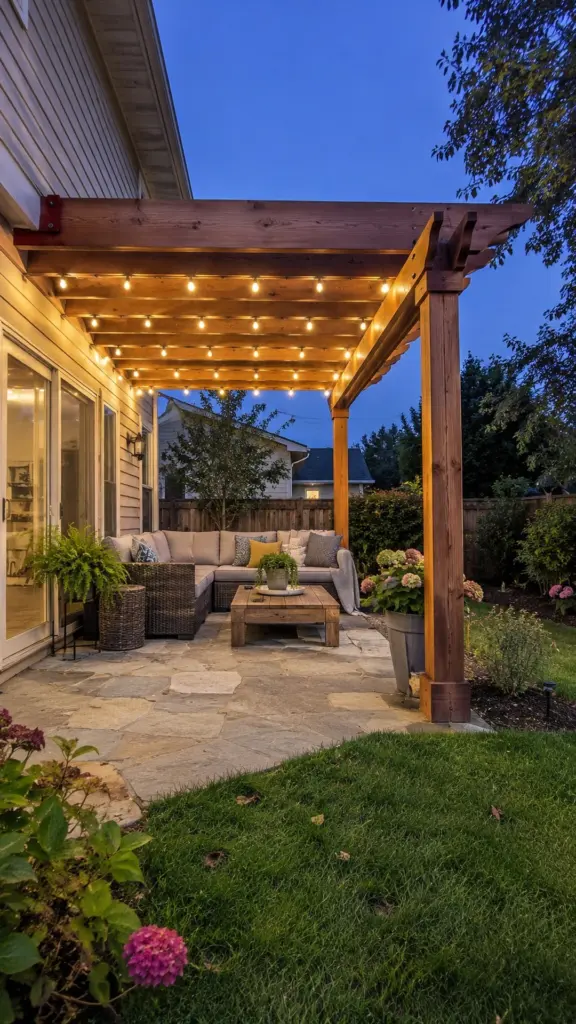
A pergola already gives you the frame, so lighting it is mostly a matter of hooks. Run strands along every other rafter or loop them across the beams, then add a dimmer so the light can drop low after dinner. Screw-in cup hooks or insulated clips hold the cord without damaging it. If you are still choosing a structure, our attached pergola ideas cover designs that tie into the house, which also puts an outlet closer to hand. Measure the full run along the rafters before buying, and plan it so the plug end finishes near the outlet, not across the patio.
7. One Oversized Lantern Pendant Under the Pergola
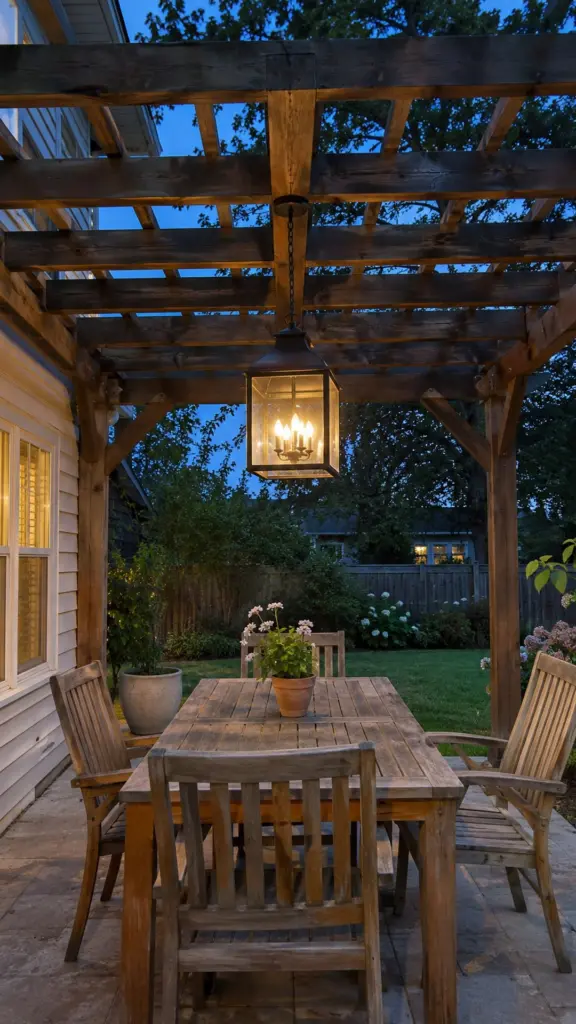
Instead of many small lights, a single big lantern hung over the dining table can anchor a pergola the way a chandelier anchors a dining room. Hang it from a center beam on a chain so you can set the height where it lights the table without glaring into anyone's eyes. Choose a pendant made for outdoor plug-in use, mount it the way the maker shows and plug it into a GFCI-protected outlet; an ordinary extension cord isn't permanent wiring. Pair it with the rafter lights from idea 6 on a separate switch. Size it to the table, not the pergola.
8. Task Light at the Grill
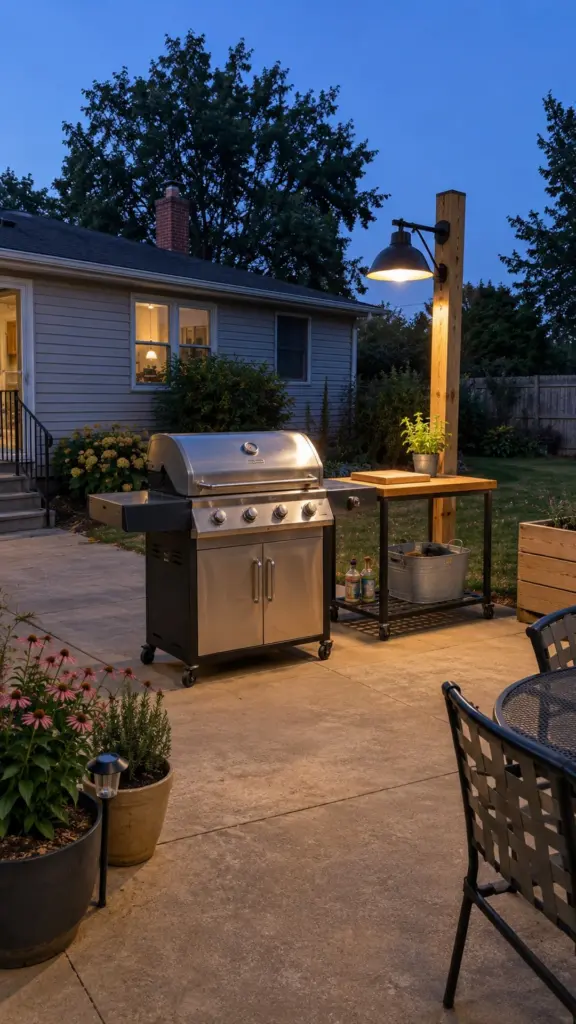
If you cook outside after dark, the grill needs working light, not mood light. A shielded wall light on the house aimed down at the cooking area, a light on a nearby post, or a battery clip-on grill light lets you see when the food is done. Aim it at the grill top and the prep table, not at the people eating, and put it on its own switch so it can go off when dinner starts. Keep every fixture, cord and string light well away from the heat and smoke, following the grill maker's clearances.
9. Lanterns and Flameless Candles on Tables and Steps
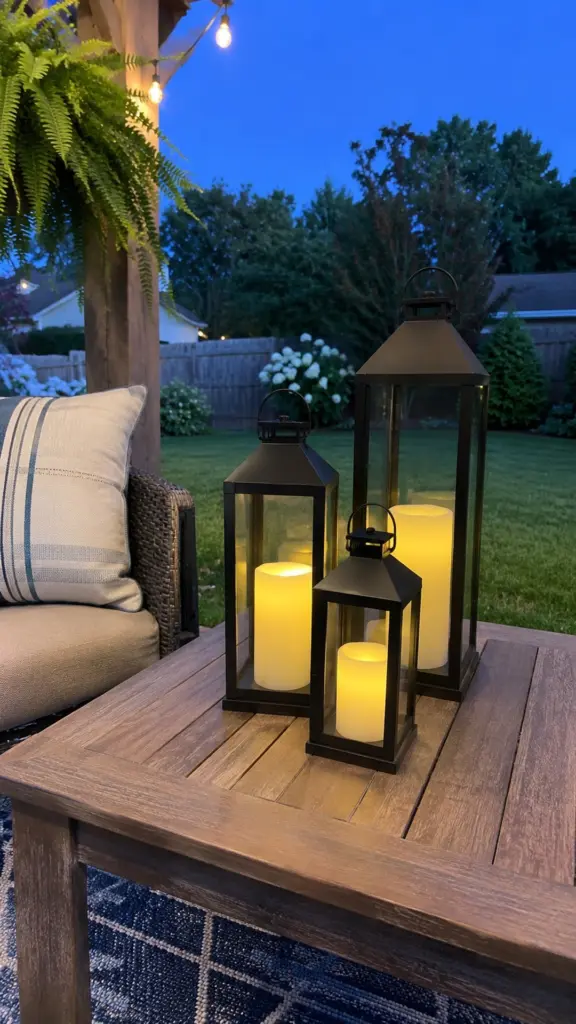
Lanterns are one of the simplest low-cost ways to make a patio feel finished, and you can move them wherever the evening happens. Group three of different heights on the table, at the top of the steps or beside an outdoor chair. Battery LED candles with a timer switch on by themselves each evening and can sit near cushions and dry leaves more safely than a real flame. Metal or glass lanterns made for outdoor use hold up better than decorative indoor ones. A single lantern on the top step also marks the edge of the patio without any wiring.
10. Low Light Around the Fire Pit
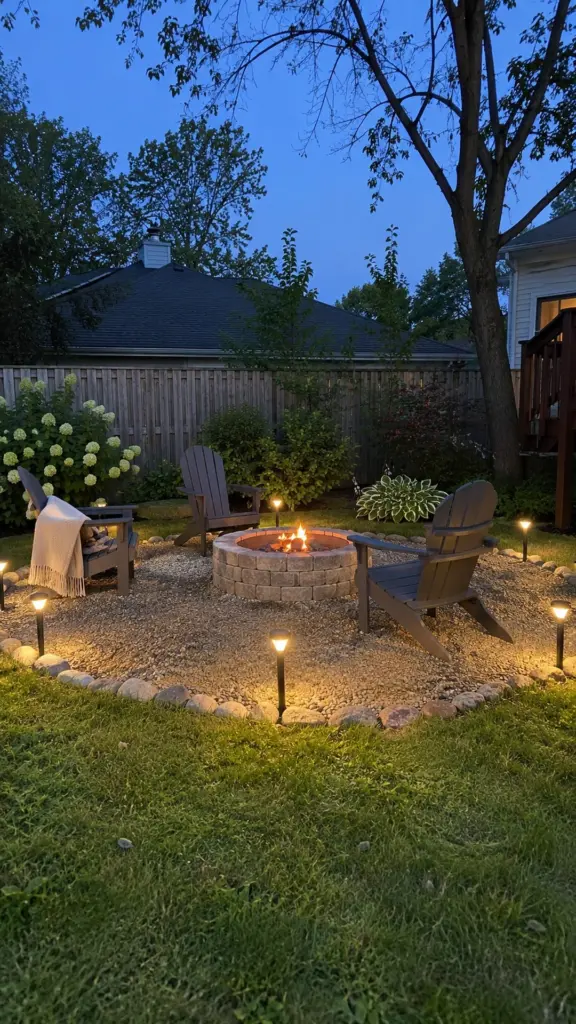
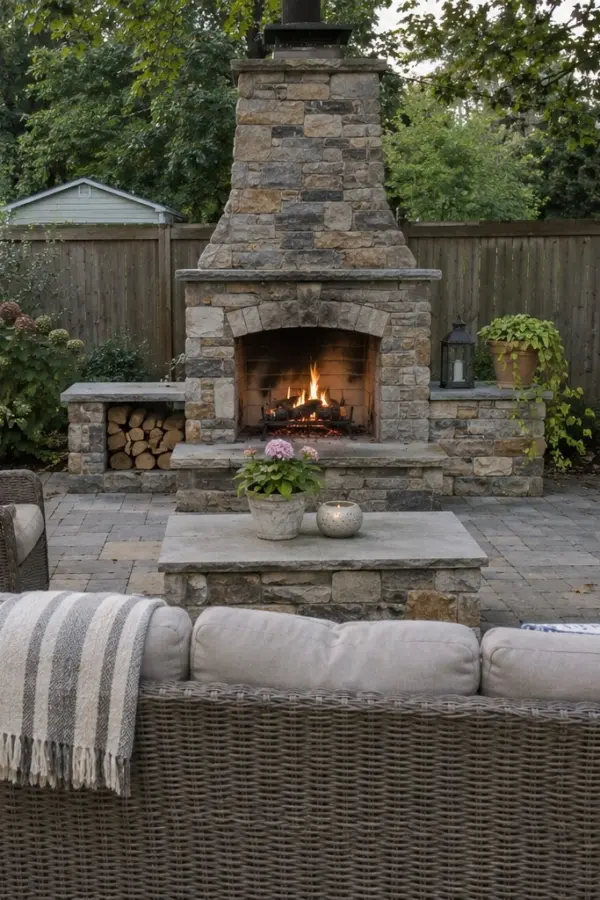
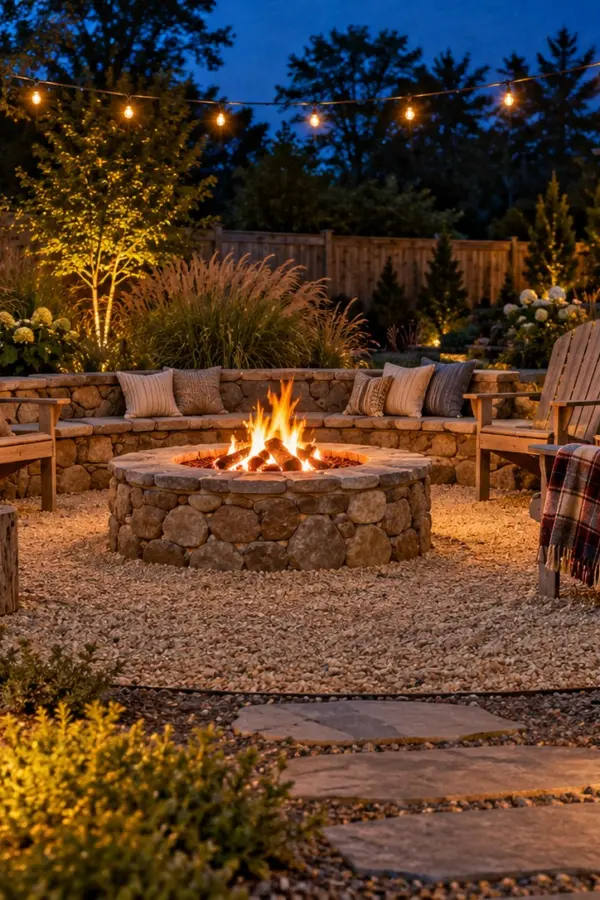
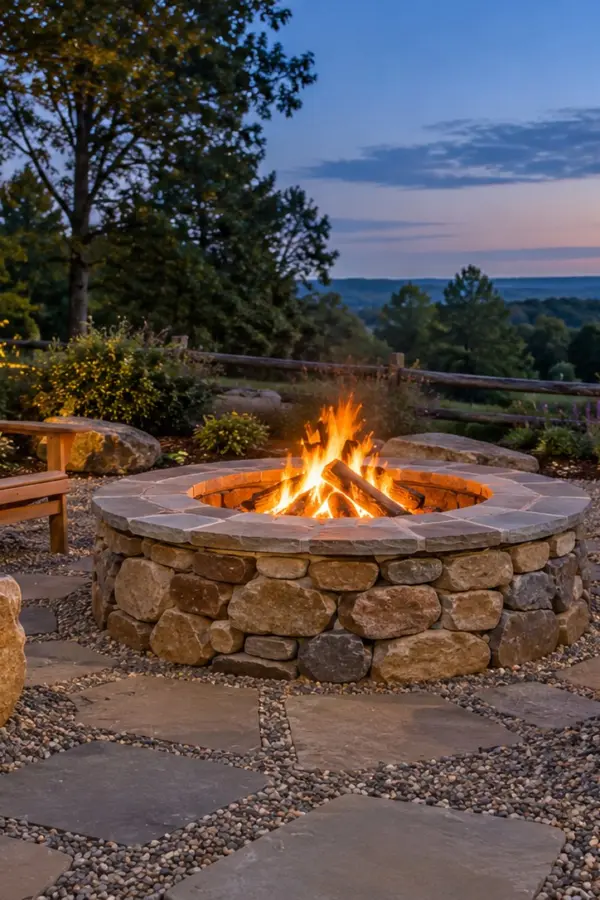
Around a fire pit, the fire itself is the main light, so anything else should stay low and soft. A ring of small path lights at the edge of the gravel area, or a few lanterns on side tables, helps people find their seat and the way back to the house without washing out the glow. Keep all cords well away from the fire and from where people walk. Our fire pit seating ideas cover how far back to set the chairs. Solar puck lights set flush in the gravel are another option, with nothing sticking up to trip over in the dark.
11. Uplight One Good Tree
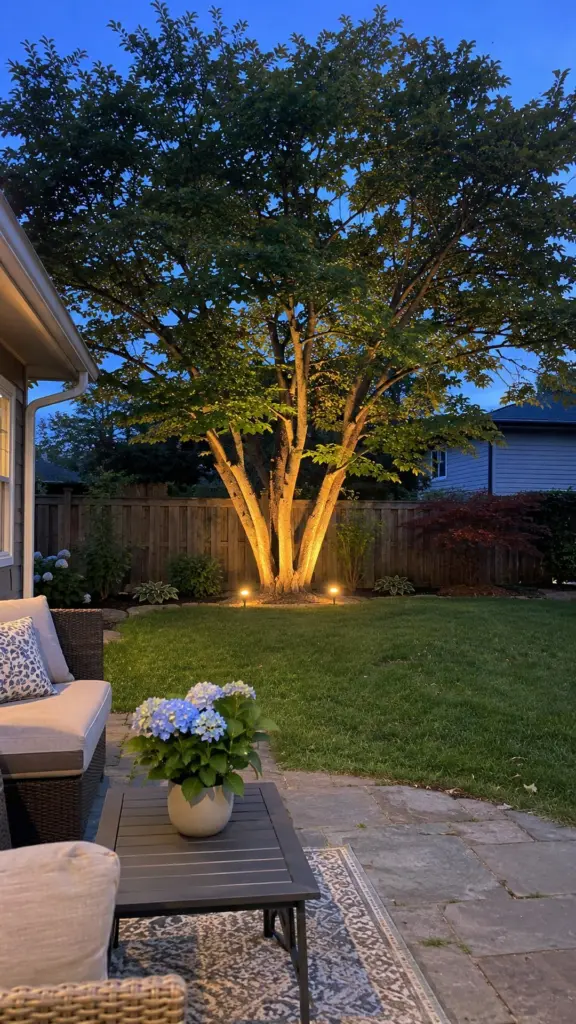
Accent lighting works best when it is choosy. Pick a single tree with an interesting trunk or canopy and set one or two spotlights at its base, angled up into the branches. It gives the yard depth at night, because your eye goes past the patio to something lit at the back. Small evergreens and multi-stem trees look good all year; a bare deciduous tree can look striking in winter. Keep the beam inside the tree so it doesn't spill toward the neighbors. Narrow spots suit a tall, slim trunk, while a wider beam suits a broad canopy; test positions at night with a flashlight before you fix them.
12. Light the Fence, Not the Neighbors
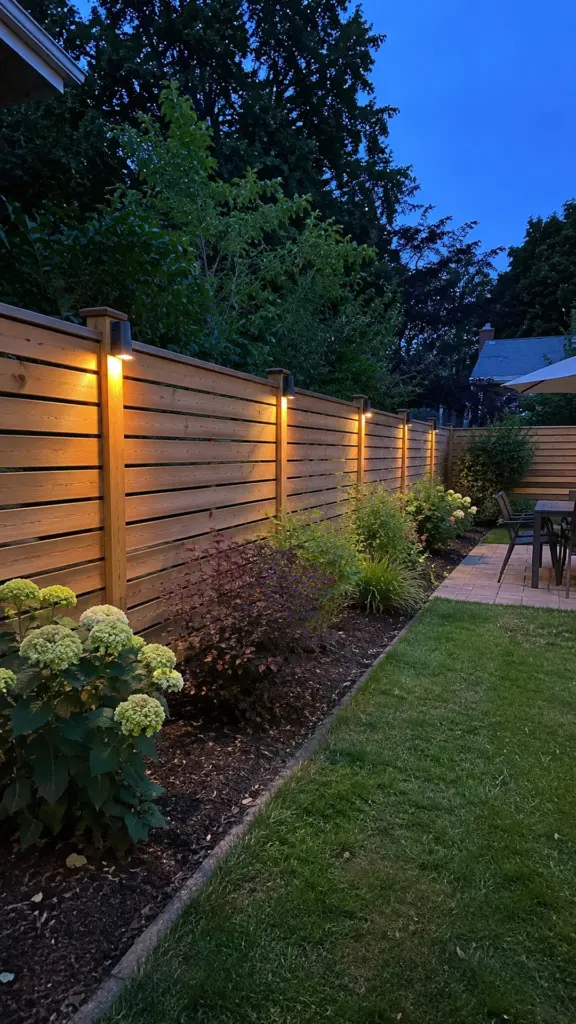
A long blank fence turns into a backdrop once it has a little light on it. Small solar or low-voltage fence lights spaced along the posts, aimed down, give a soft rhythm, and a string of lights along the top rail works for a party look. Hang everything on your side of the fence, and if it is a shared fence, talk to the neighbor first. Down-facing lights also keep glare out of their windows, the same idea as idea 4. Fence lights also mark the edge of the yard, which helps when you walk the dog or take out the trash after dark.
13. Under-Rail Lights Along the Deck
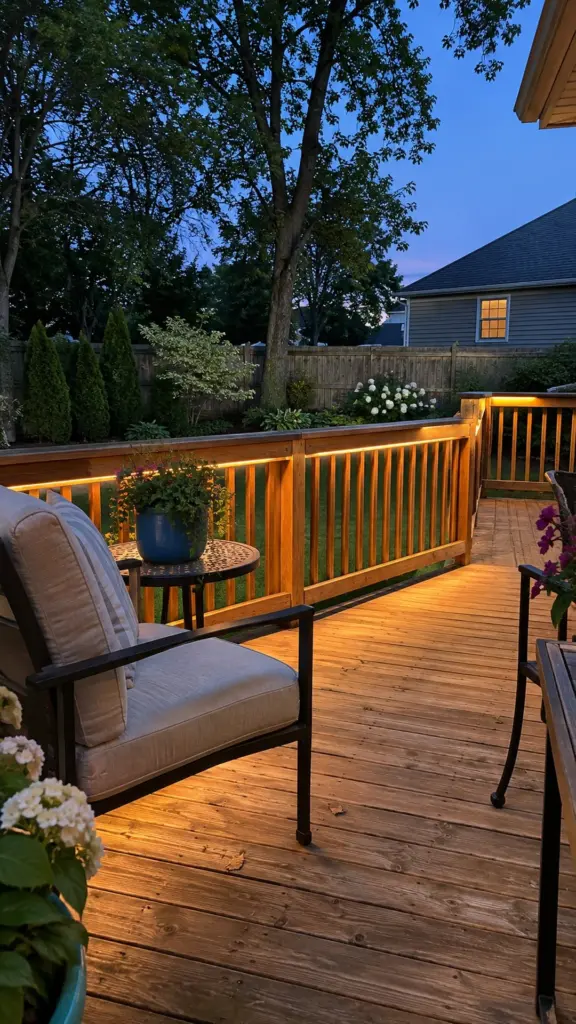
Lights tucked under the top rail of a deck railing wash the boards below without a single bulb in view. LED strips or small puck lights made for outdoor use are the usual choices, and many connect to the same low-voltage transformer as the path lights in idea 3. The deck edge becomes visible at night, which helps on raised decks, and the glow reads as calm rather than bright. Run the cable along the underside of the rail so nothing shows from the yard. Check the rail from the lawn after dark too; if you can see the strip itself, move it farther back under the rail.
14. Solar Stake Lights Where There's No Outlet
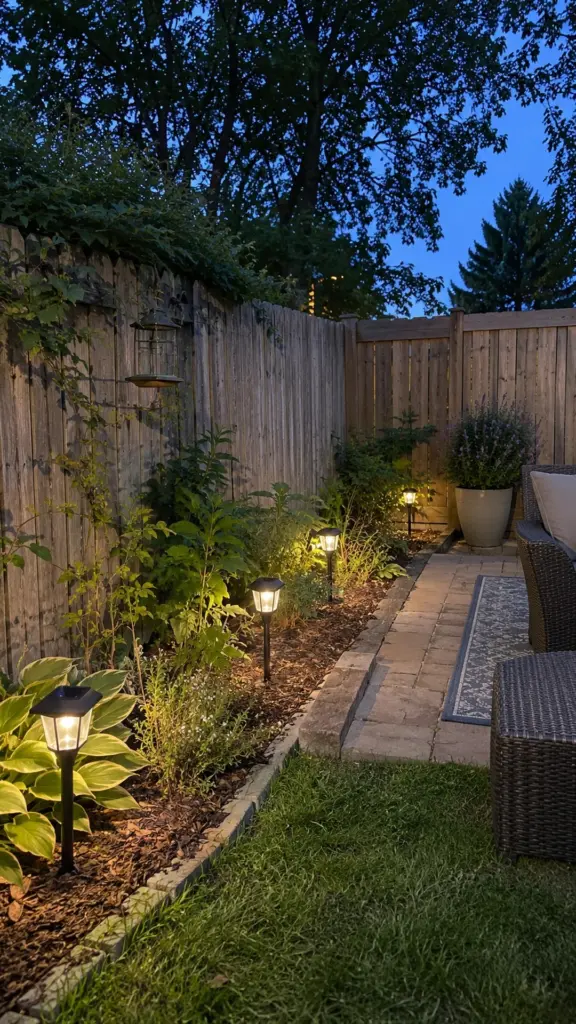
For a back corner, a fence line or a bed far from power, solar lights save running cable across the lawn. Choose ones with a separate panel you can aim at the sun if the fixtures sit in shade. Expect softer light than plug-in fixtures, and expect it to vary with the weather. They are a good fit for marking an edge or a path you use now and then, while the main seating area from idea 5 is better on mains power. Compare the run time on the box with the hours you actually sit outside, especially for the darker months.
15. Timers, Smart Plugs and Dimmers
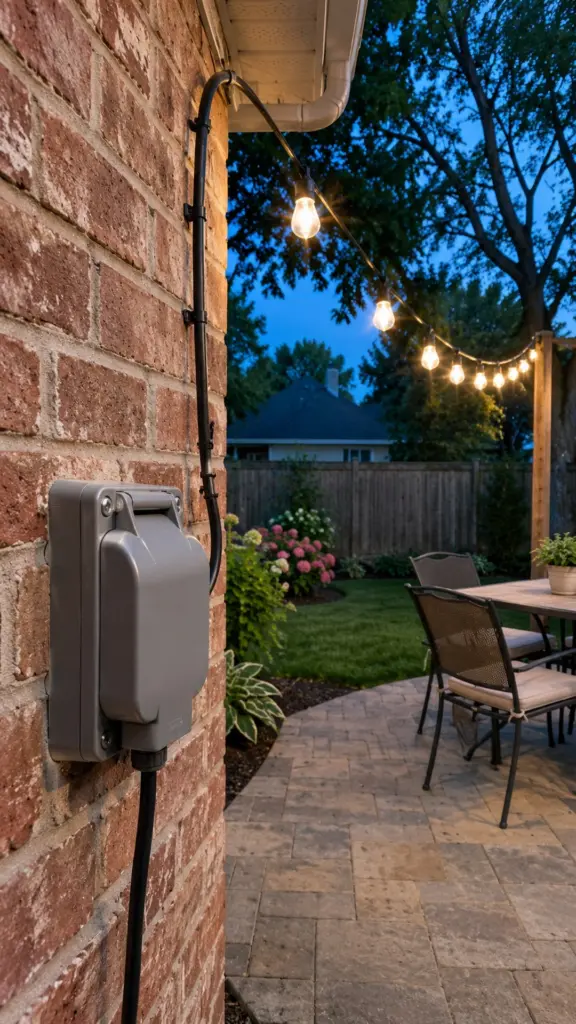
Lights that switch on by themselves get used; lights you have to remember don't. An outdoor-rated timer or smart plug, in a GFCI-protected outlet with an in-use cover, can turn the string lights on at dusk and off at bedtime, and a dimmer lets the patio go from dinner bright to late-evening low. Many low-voltage transformers have a built-in timer or light sensor. Set the path and step lights to stay on longer than the mood lights, since those are about safety. Give each zone its own timer or plug if you can, so the path lights don't have to follow the string lights' schedule.
16. Keep the Light Warm and Low
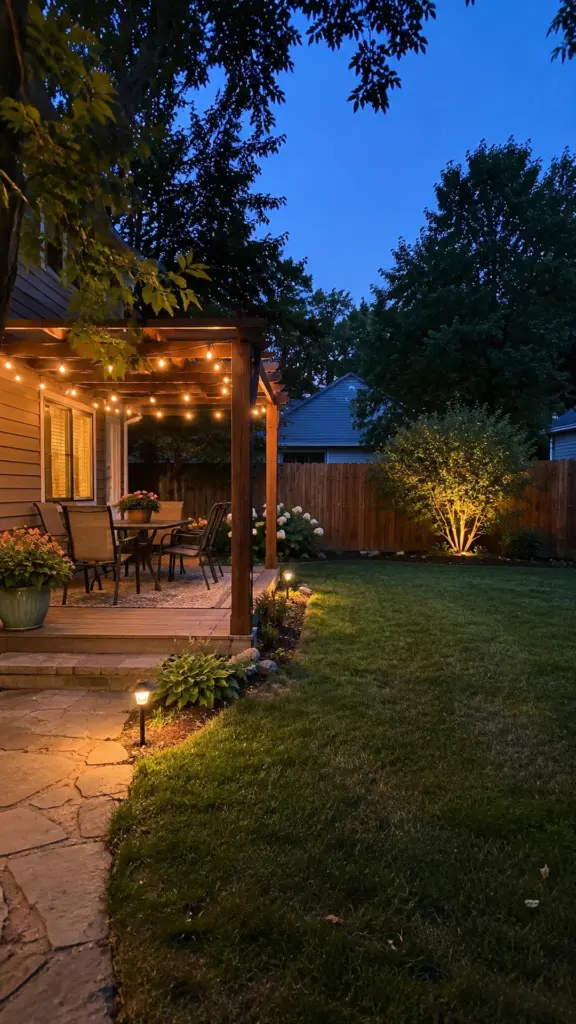
The most common lighting mistake outdoors is too much of it. A yard lit like a parking lot loses its depth and glares at the neighbors. Choose warm white bulbs, 2700K or lower for the softest, most night-friendly glow and no higher than 3000K, keep fixtures low and shielded, and leave some areas dark on purpose so the lit spots stand out. If one part of the yard looks too bright from the patio, dim it or move the fixture before you add anything new. Walk out to the street or the back fence once everything is on; the view from there shows glare you miss from the patio.
Final Thoughts
Start with safety, then mood, then one accent. Light the steps and paths first, add string lights or a lantern over the place you sit, and pick a single tree or wall to show off. Keep everything warm, low and shielded, put it on a timer, and live with it for a few evenings before buying more. The yard will usually tell you what is missing.
Frequently Asked Questions
Most yards look best with a mix: warm string lights or a lantern over the seating area, low path and step lights for safety, and one or two accent lights on a tree or wall. Warm white light at 3000K or lower keeps it relaxed.
High enough that the tallest person who walks under them never has to duck, with a little extra room for the drape between anchor points. Long spans are easier to keep tidy on a tensioned guide wire.
They work well for marking paths, edges and planters, but they are usually softer than plug-in lights and run shorter in winter. For the main seating area, plug-in string lights or low-voltage fixtures are more reliable.
Many strands rated for wet locations are sold for permanent outdoor use, but check the maker's instructions. Either way, look over the cords, sockets and anchors each season, and take down any strand with cracked insulation.
Plug-in string lights and low-voltage kits are often homeowner projects. New outdoor outlets, hardwired fixtures and ceiling fans should be installed by an electrician, licensed where local law requires it, with permits where local codes require them.
Loved this? Pin it so you can find it later.
Pin this post
Sana Ahmed
Hi! I’m Sana, and I’m always looking for fresh ideas to make outdoor spaces more beautiful and enjoyable. I love exploring everything from cozy patios and pergolas to backyard fire pits, privacy solutions, and charming garden sheds. I’ll be sharing the ideas that catch my eye and hopefully help you find a little inspiration for your own outdoor space.
All postsKeep reading