16 Outdoor Fireplace Ideas, From Prefab Kits to Covered Patios
 Save
The best outdoor fireplace ideas start with how you will use the fire, not with a photo of a stone chimney. Wood, gas and electric units need very different setups, and a fireplace on a covered patio has rules that one at the edge of a lawn does not. These ideas cover the choices in order: fuel, type, spot, finish, seating and the upkeep that keeps it safe.
1. Fireplace or Fire Pit: Pick by How You Sit
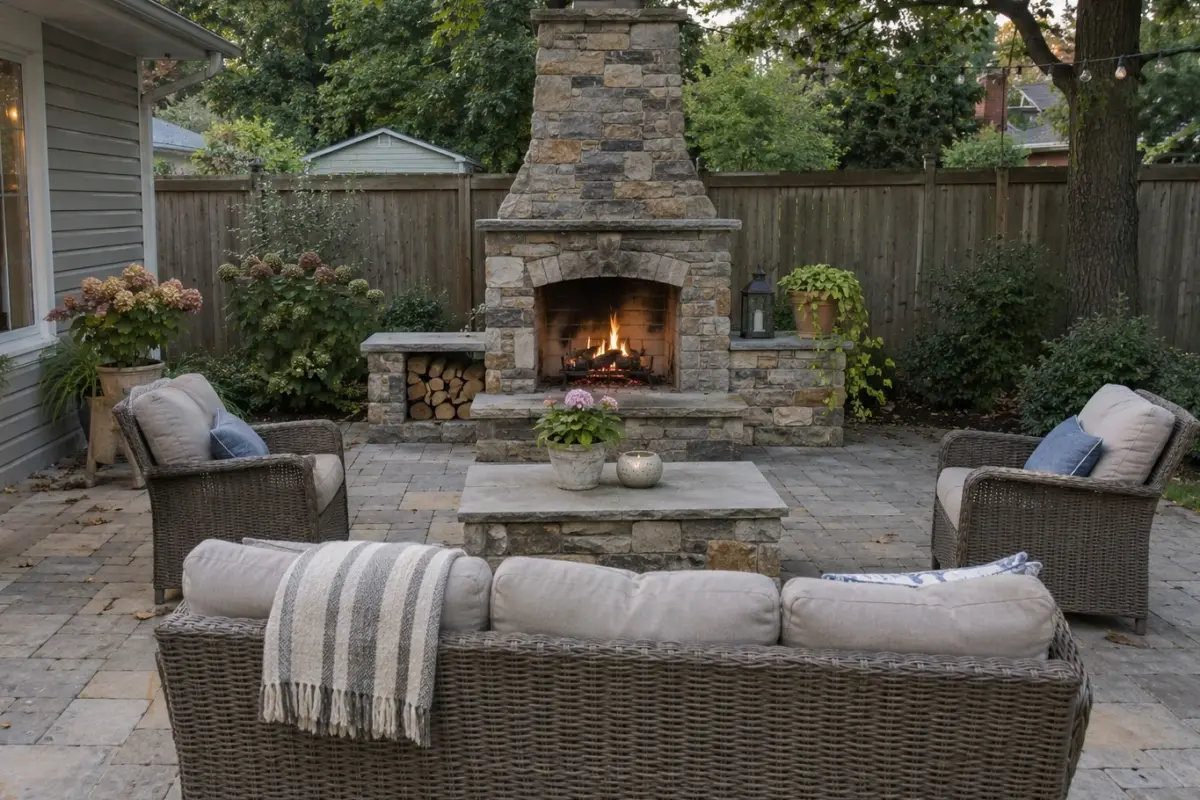
A fire pit puts people in a circle and works in the open middle of a yard. A fireplace throws its heat forward and gives the seating a solid wall to face, which makes a patio feel like a room, and placed well it can cut some wind. If you picture a loose circle of chairs, our backyard fire pit ideas will suit you better. If you picture a sofa and two chairs facing one warm spot, or you want privacy from one side, a fireplace is the stronger choice and the rest of these ideas apply.
2. Choose the Fuel Before the Look
Wood, gas and electric outdoor fireplaces look similar in photos but live very differently. Wood gives real crackle and smell, needs a chimney that clears nearby roofs and leaves ash to clean. Many gas models light with a switch, burn cleaner than wood, and needs a gas line run by a licensed pro. Electric avoids flame and gas but needs a proper outdoor circuit, usually GFCI-protected, and its heat is modest. Check town, building and HOA rules for the type you want first.
3. A Freestanding Masonry Fireplace as the Patio's Back Wall
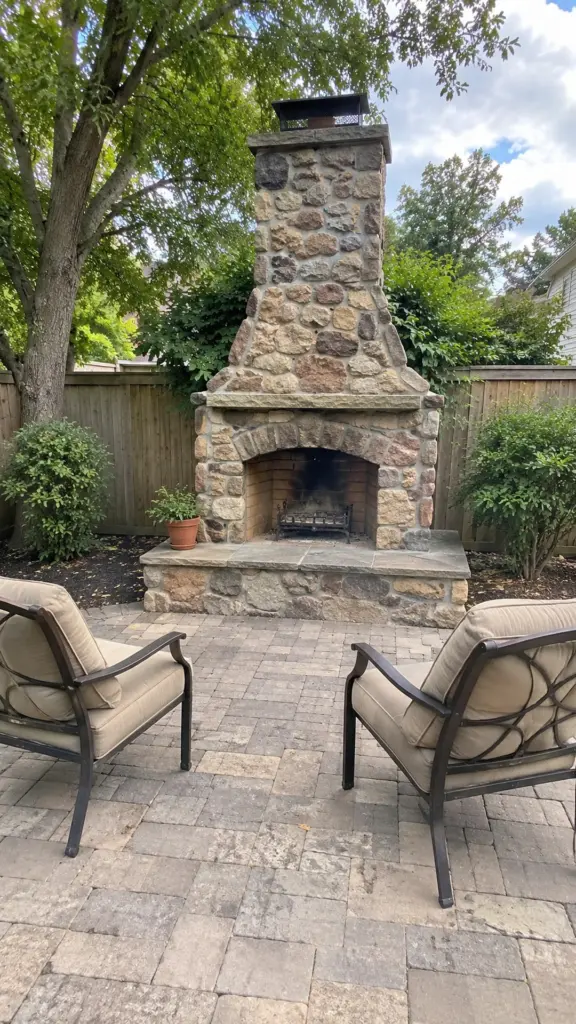
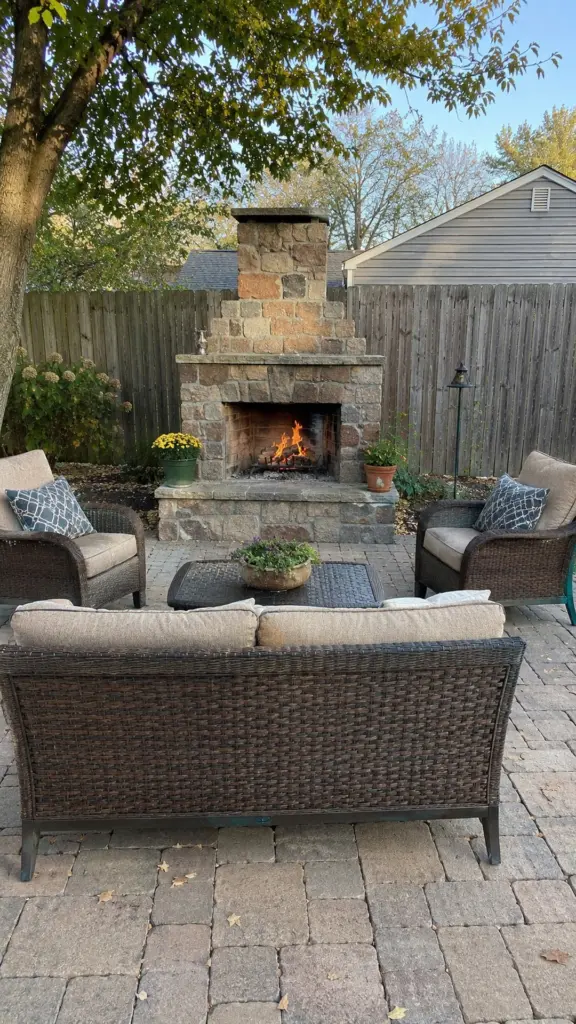
The classic outdoor fireplace is a stone or brick unit at the far edge of the patio, built so the seating faces it and the house stays behind you. It reads as a destination from the back door and doubles as a privacy wall. A masonry fireplace weighs several tons, so it sits on its own reinforced concrete footing, not on the patio pavers, and in cold climates the footing goes below the frost line. This is usually a job for a mason and a permit, not a weekend project.
4. A Prefab Block Kit for a Faster Build
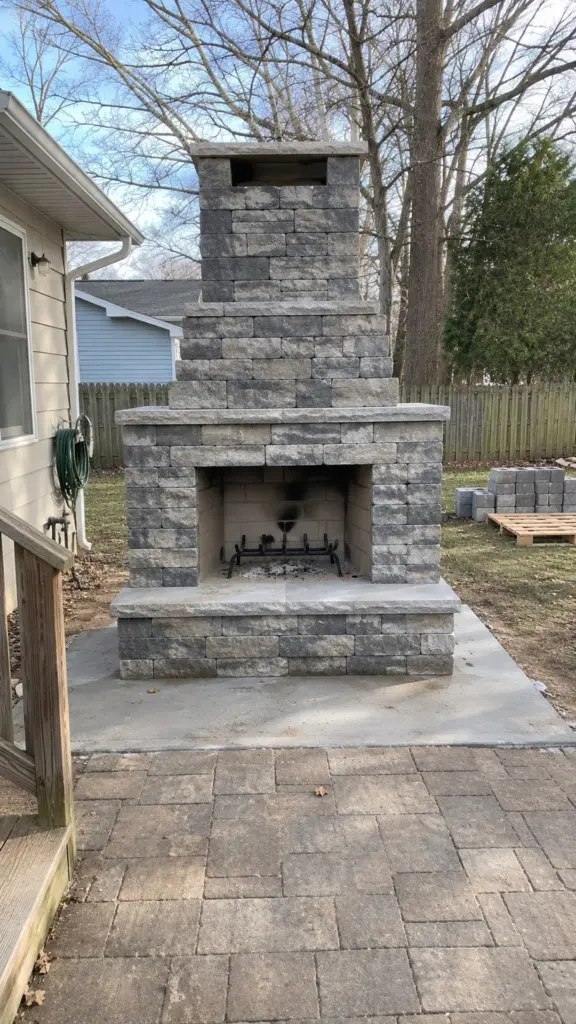
Fireplace kits from hardscape brands come as numbered concrete blocks, a firebox and a chimney cap, and they stack in a few days on a proper base. They cost less than custom masonry and still look solid, especially in a stone-look finish. Read the kit's base and clearance rules before you order, since most need a concrete slab or footing rather than gravel. A kit is the sweet spot for a handy homeowner, but the firebox and chimney steps deserve extra care.
5. A Corner Fireplace for a Small Yard
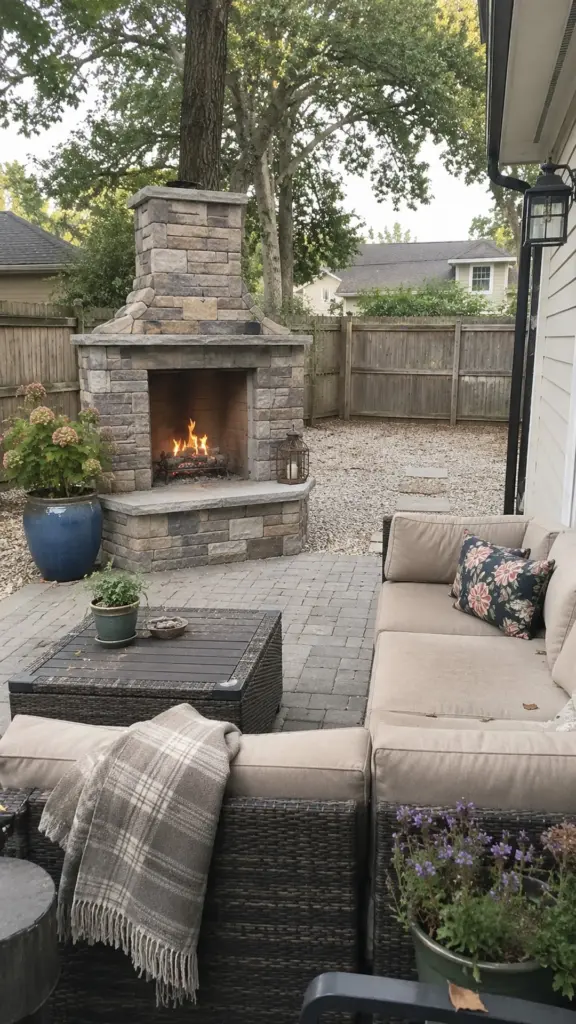
In a small yard, an angled fireplace in a back corner uses space that is usually wasted and faces the whole yard at once. Seating can wrap in an L in front of it, leaving the middle open. Pick a compact unit only if it still meets its required clearances from the fence and other things that burn; gas and electric models like idea 10 or idea 11 have clearances too. A corner unit also screens the view of a neighbor's yard from that angle.
6. A Fireplace on the Covered Patio
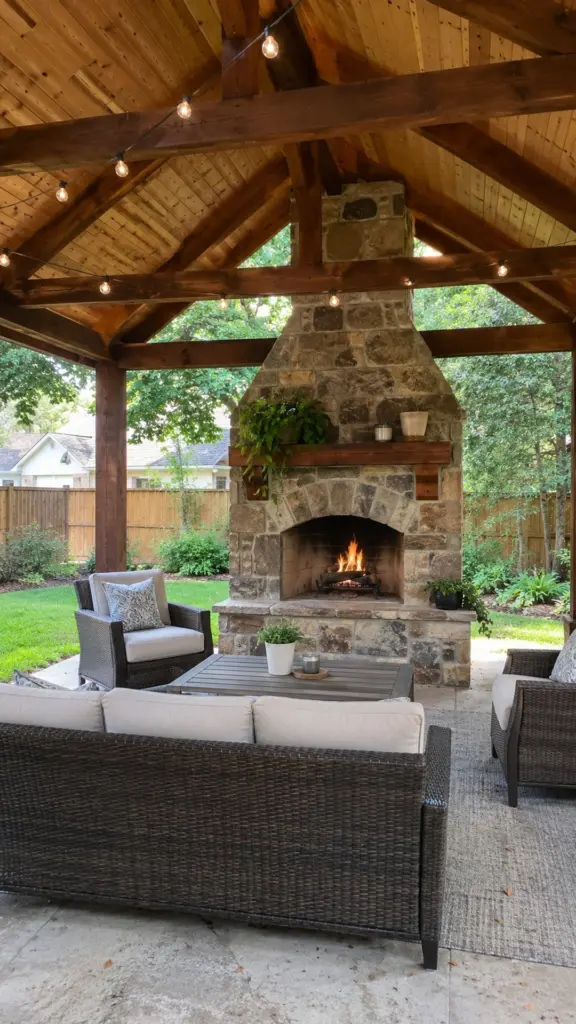
A fireplace under a covered patio turns it into a room you can use in cold weather, and the roof keeps the seating dry. It has to be designed with the roof: a wood-burning unit needs a proper chimney system, structural support and code clearances from the roof framing, and many gas units need specific venting. Have it designed by a pro, and plan it before the roof is built. Our covered patio ideas show roof types that can work with it.
7. Stone, Brick or Stucco: Pick a Finish That Ages Well
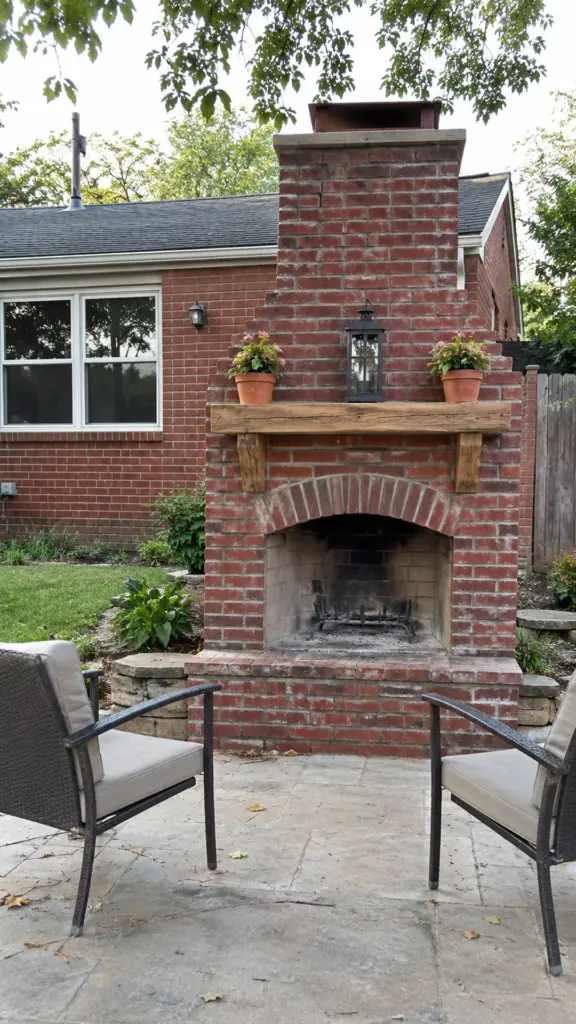
The surround decides the look more than the firebox does. Natural or manufactured stone suits cottage and rustic yards, brick matches many older houses, and smooth stucco or concrete looks modern and costs less to apply. Match one material from the house, like the brick or the trim color, so the fireplace looks planned. Rough, darker stone hides soot better than smooth light surfaces, which show smoke stains above the opening, though porous stone may need cleaning and sealing.
8. A Raised Hearth That Doubles as Seating
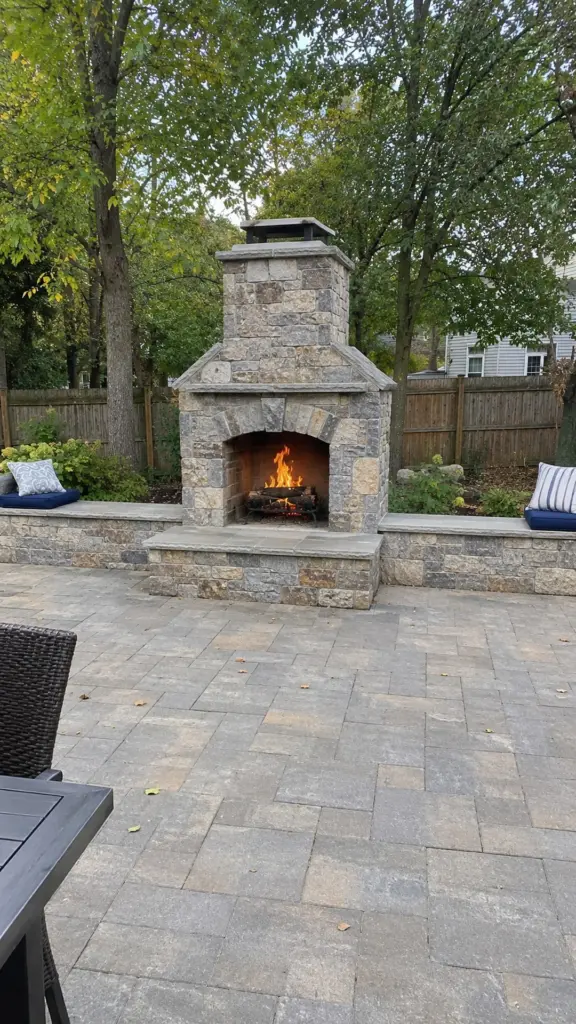
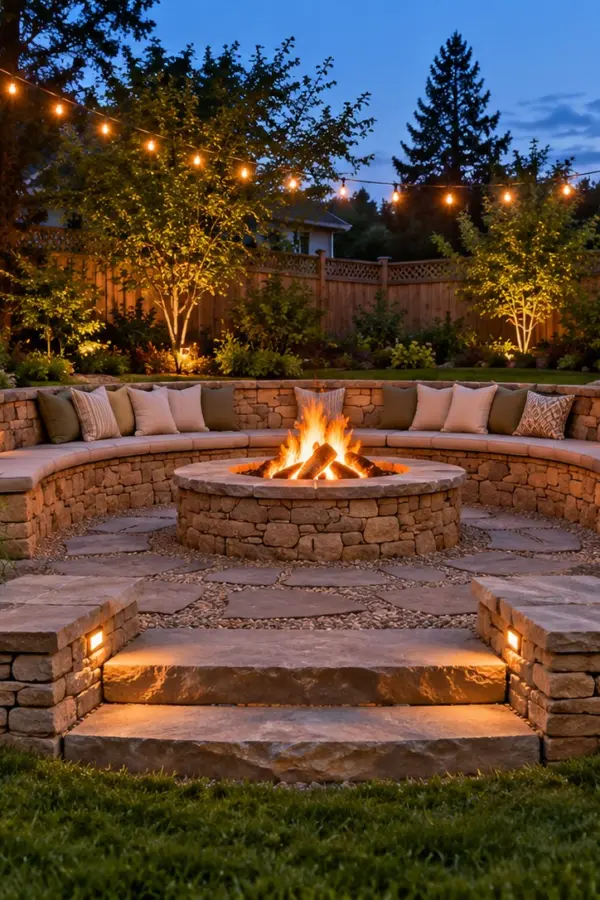
Extending the hearth into a low ledge or seat walls on both sides gives the fireplace extra seating without more furniture. Build it at a comfortable bench height and wide enough to sit on, and top it with smooth stone caps. The hearth in front of the opening also catches sparks and rolled embers, so make it noncombustible and long enough for your unit. Keep the seat walls outside the unit's heat and clearance zones so nobody sits close enough to get burned, and tell kids the hearth itself is not a seat.
9. Built-In Wood Storage Beside the Firebox
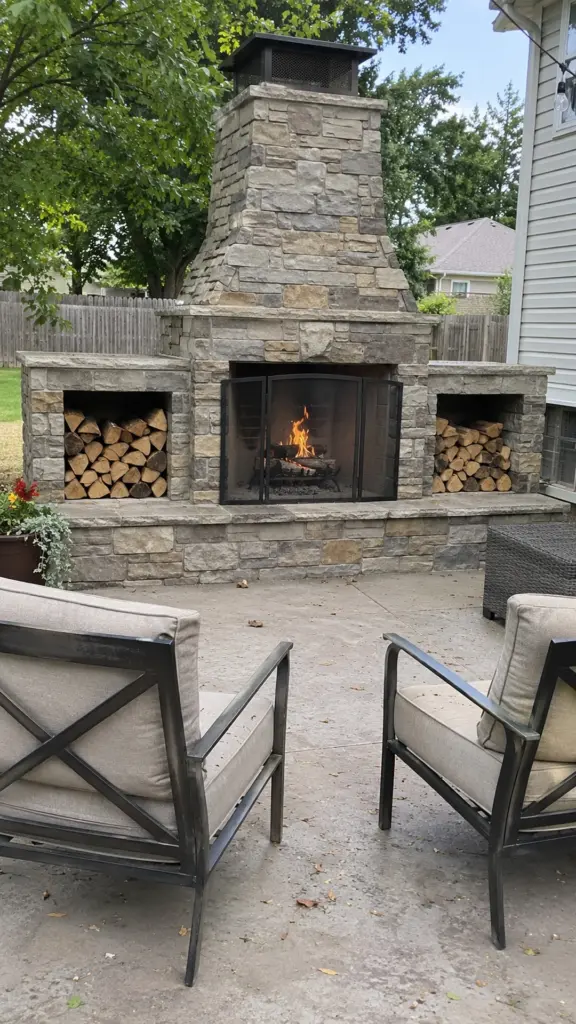
Noncombustible niches on each side of a wood-burning fireplace keep a night's firewood within reach and give the unit a fuller look. Build them only where the design allows, with the wood outside all required clearances from the firebox and hot surfaces, and keep a small amount there, since the main woodpile belongs farther from the fire and the house, and raise the niches a few inches so the logs stay off wet ground. Our firewood storage ideas cover racks and sheds for the rest of the season's supply, and idea 16 covers the ash. On a gas or electric unit, the same niches can hold baskets or planters instead.
10. A Gas Fireplace With a Clean Modern Surround
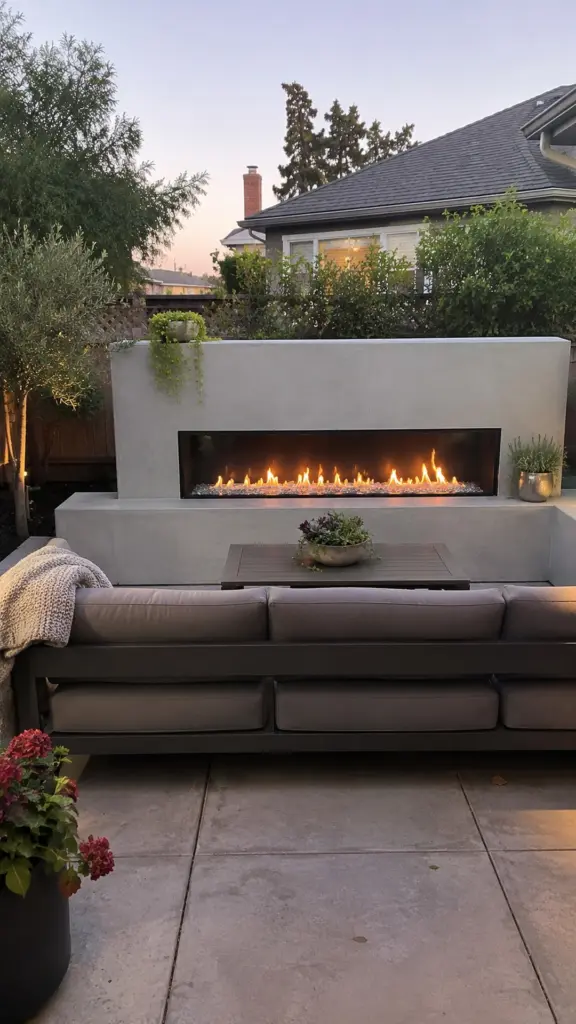
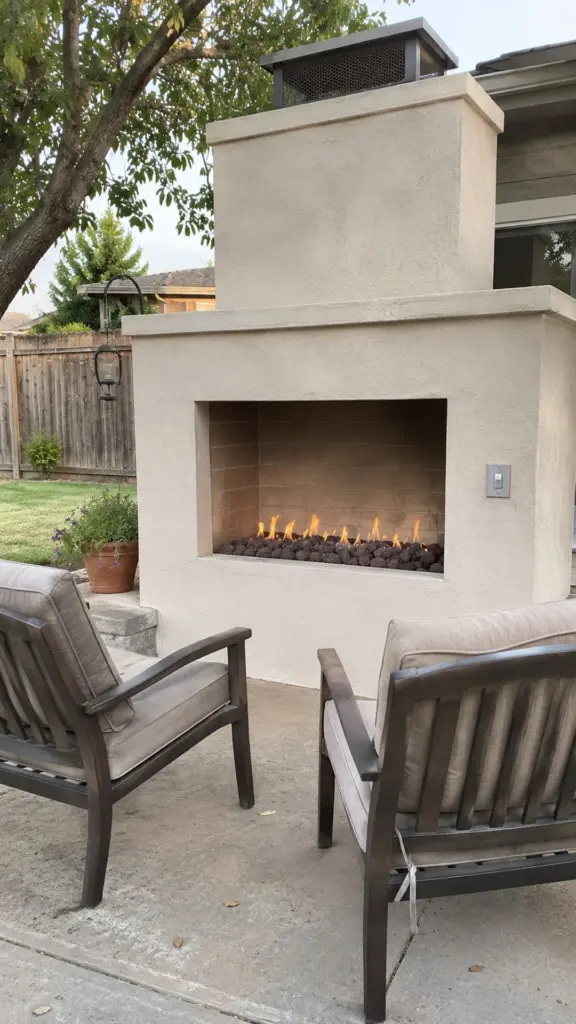
A gas outdoor fireplace suits modern patios, small yards and anyone who wants fire on a weeknight without hauling wood. Linear burners with fire glass or lava rock and a smooth stucco or concrete surround keep the look simple. It still needs proper clearances and air around it, and a licensed installer must size and run the gas line. Ask about an automatic shutoff and a wall switch or remote so lighting it is as easy as indoors.
11. An Electric Fireplace for a Deck or Condo Patio
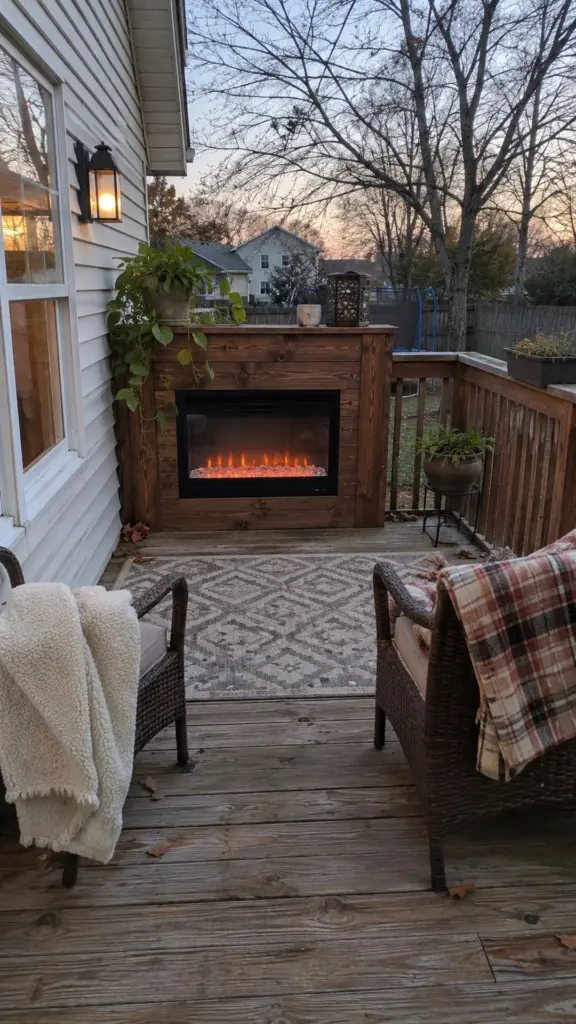
Where wood and gas fires are not allowed, as on many condo balconies, an outdoor-rated electric fireplace can give the glow and some warmth with no smoke, if building and HOA rules allow it. Choose one listed for outdoor or wet locations, set it in a simple surround, and connect it by plug or hardwiring as its manual says, with the GFCI protection required. Expect a cozy look and mild heat, not the warmth of a wood fire, so add blankets or a patio heater for cold nights.
12. A Chiminea or Small Outdoor Stove for Tight Spaces
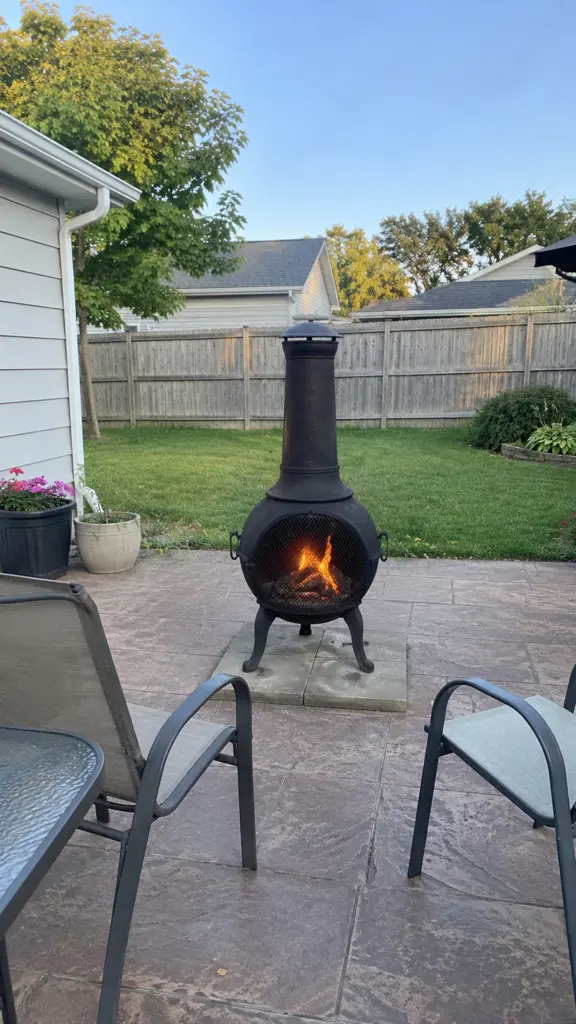
A chiminea, the pot-bellied fireplace with a short chimney, gives fireplace-style fire in a footprint about the size of a large planter. Clay ones look charming but crack if overfired or left out wet in freezing weather; cast iron or steel lasts longer. Put a layer of sand or lava rock in the bowl as the instructions suggest, keep fires small, and set it on a noncombustible pad away from fences and overhangs. Check local burn rules, since it is still a wood fire.
13. Seating in a U Facing the Fire
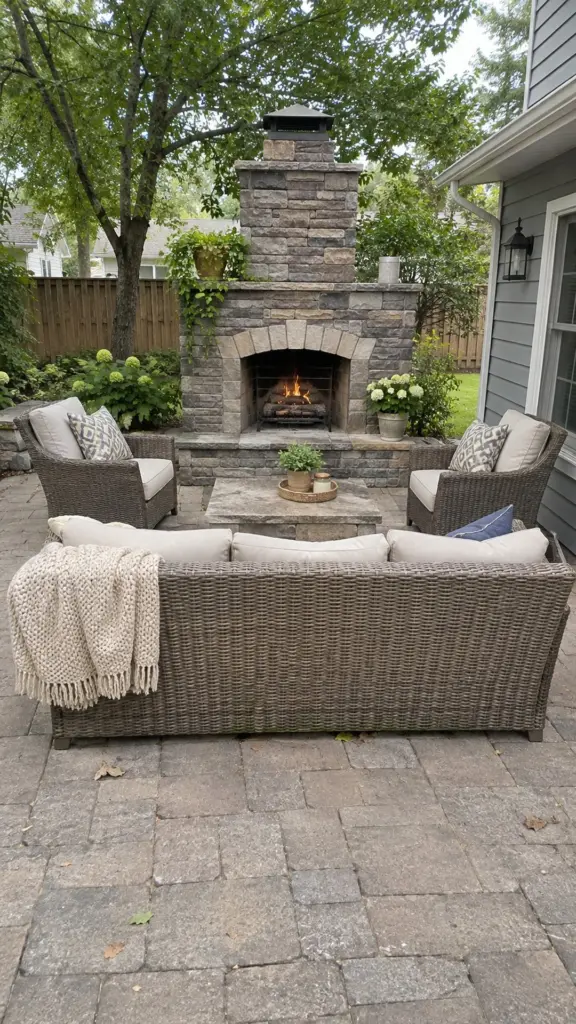
Heat from a fireplace goes forward, so arrange seating in a U: a sofa facing the opening and a chair on each side, angled in. Leave room between the hearth and the chairs to add a log without brushing knees, and a clear path behind; the seat walls from idea 8 add more places to sit. For example, a 7-foot sofa about 6 feet back from the hearth, 30-inch chairs on the sides and a 3-foot path behind fill roughly 14 by 14 feet. That is an illustration, not a minimum, and the unit's clearances come first.
14. A Mantel, Not a TV, Over a Wood Fire
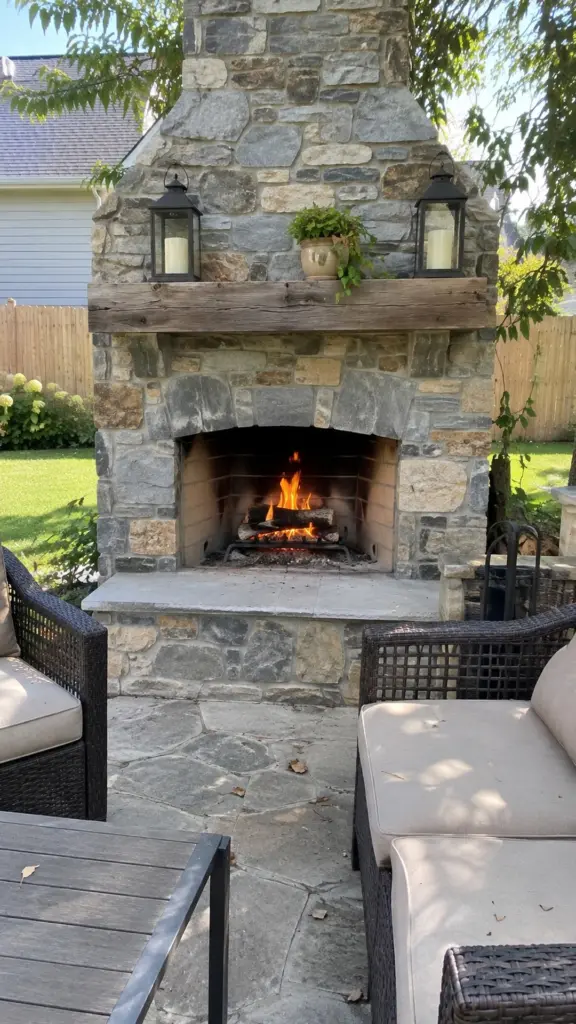
A wide stone or reclaimed-wood mantel finishes an outdoor fireplace and holds lanterns, plants or seasonal decor. A TV above the firebox is popular in photos, but heat rises straight into it, and most TVs are not built for outdoor heat and weather. If you want one, choose an outdoor-rated TV, follow both the TV and fireplace instructions on clearance, or mount it on a side wall instead. Keep mantel decor that can burn well away from the opening.
15. Place It for the Wind and the Neighbors
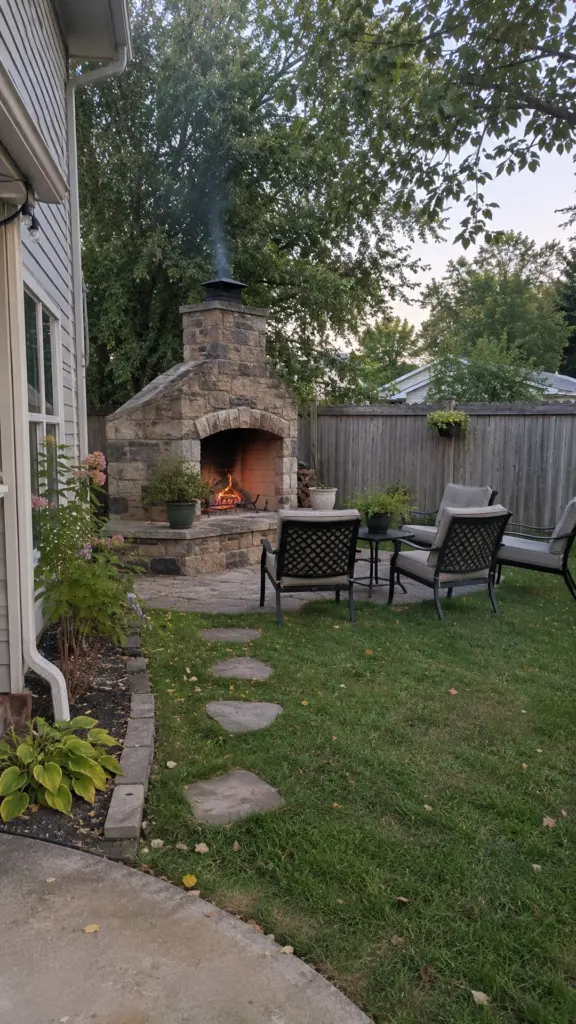
Smoke follows the wind, so the best spot keeps it away from your seating, your windows and the neighbor's yard. Watch where the wind usually comes from on evenings you would use the fire, and how walls and roofs nearby bend it. Aiming the opening away from the usual wind often helps, but it is a starting point, not a guarantee. A chimney of the right height, as in idea 3, helps the fire draw. If smoke would drift straight into a neighbor's window or patio, a gas unit is the friendlier choice.
16. Clean Ash Safely and Keep Rugs Back
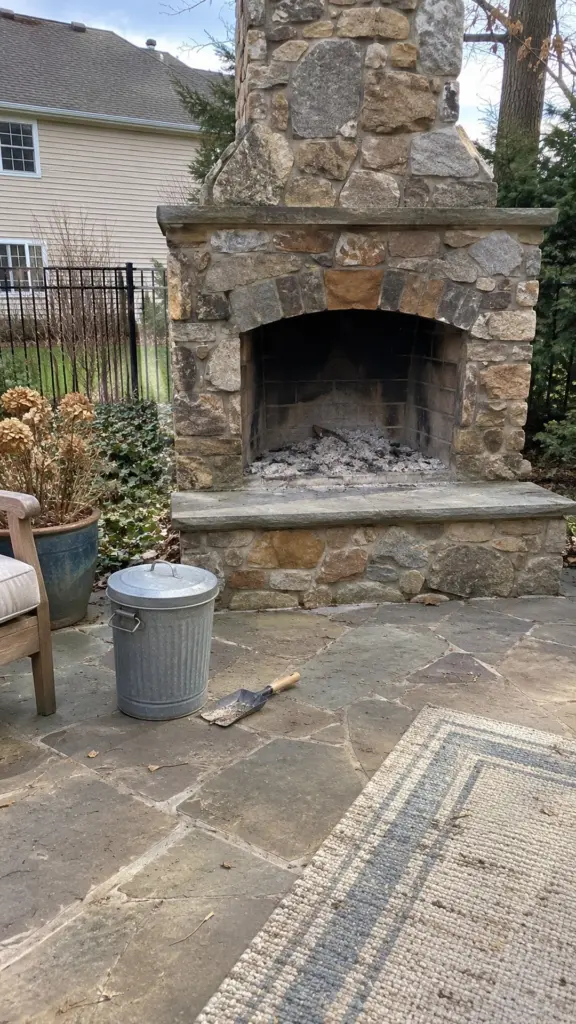
Ash from a wood fireplace can hide live embers for days. Shovel it into a metal can with a tight lid, set the can on a noncombustible surface away from the house and deck, and wait until the ash is fully cold before dumping it. An outdoor rug makes the seating cozy, but keep it back from the hearth so sparks land on stone. A chimney cap with spark-arrestor mesh helps hold in embers and keep animals out; clean the mesh so soot does not clog it.
Final Thoughts
Pick the fuel first, then the type that fits your yard and budget, and settle the spot with a wind test before anything gets built. Give the fireplace a solid base, a proper hearth and a chimney or vent that meets the rules, then arrange the seating to face it. Done in that order, an outdoor fireplace becomes the place everyone heads to on a cold evening.
Frequently Asked Questions
A fireplace is better for a sofa-and-chairs setup, blocking wind and adding privacy, since it throws heat forward. A fire pit is better for a circle of chairs in the open. Many yards with room use one of each.
Often yes, especially for masonry units, gas lines and anything near the house. Rules vary by town and HOA, so check with your local building department before ordering a kit or hiring a mason.
Yes, if the unit is listed for it and a pro designs the chimney or vent, support and roof clearances to meet the manufacturer's instructions and code. A fire pit or open fire bowl under a roof is not the same thing.
A basic chiminea is often among the least expensive, and some plug-in electric models are affordable too, though wiring can add cost. A prefab block kit is usually the cheaper route to a built-in wood fireplace.
Far enough that people can add wood and walk across the hearth without bumping knees, with a clear path behind the chairs. Follow the unit's clearance rules and keep rugs and cushions back from the opening.
Loved this? Pin it so you can find it later.
Pin this post
Sana Ahmed
Hi! I’m Sana, and I’m always looking for fresh ideas to make outdoor spaces more beautiful and enjoyable. I love exploring everything from cozy patios and pergolas to backyard fire pits, privacy solutions, and charming garden sheds. I’ll be sharing the ideas that catch my eye and hopefully help you find a little inspiration for your own outdoor space.
All postsKeep reading